By Bhavya Balamurali
What do decaying surfaces of architecture, plants wired to a polygraph machine, and a body of archival research that traces the strange history of environmental media have in common?
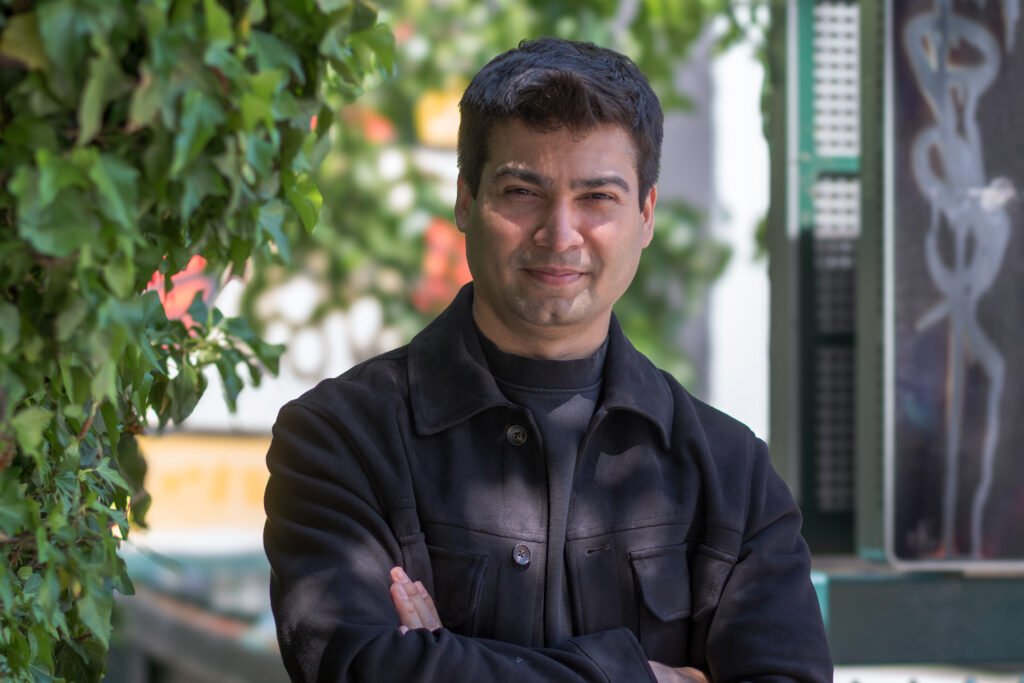
For Himil H. Ramani, they become different ways of asking the same question: how do we understand the environments we inhabit, and what might we miss when we only look at them from a human-centric point of view?
Trained as an architect, Ramani followed these questions beyond the discipline. His practice gradually moved across research, installation, performance, film, publishing and curating. While architecture remains an important point of departure, his practice continually moves beyond the traditional discipline to examine the relationships between bodies, environments, technologies and the systems through which we understand them.
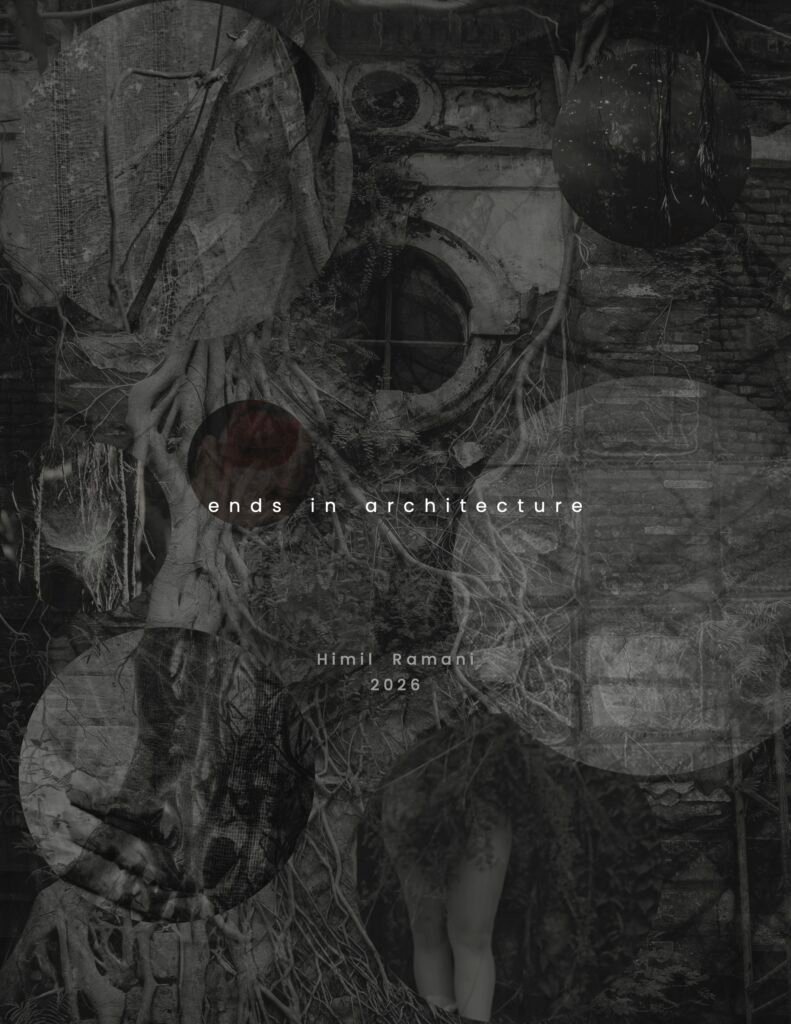
This approach can be traced to his early engagement with architecture practice in India. Ramani was moved by the distance between the architectural pedagogy and the everyday realities of the spaces around him. Over time, this expanded into a broader enquiry into the systems, scales and assumptions through which we can possibly understand our surroundings. For instance, in Ends in Architecture, Ramani looks at the architecture of Mumbai’s abandoned textile mills. Rather than approaching the mills simply as architectural ruins, Ramani considers what happens when a built environment begins to exist outside the systems of use and maintenance for which it was designed.
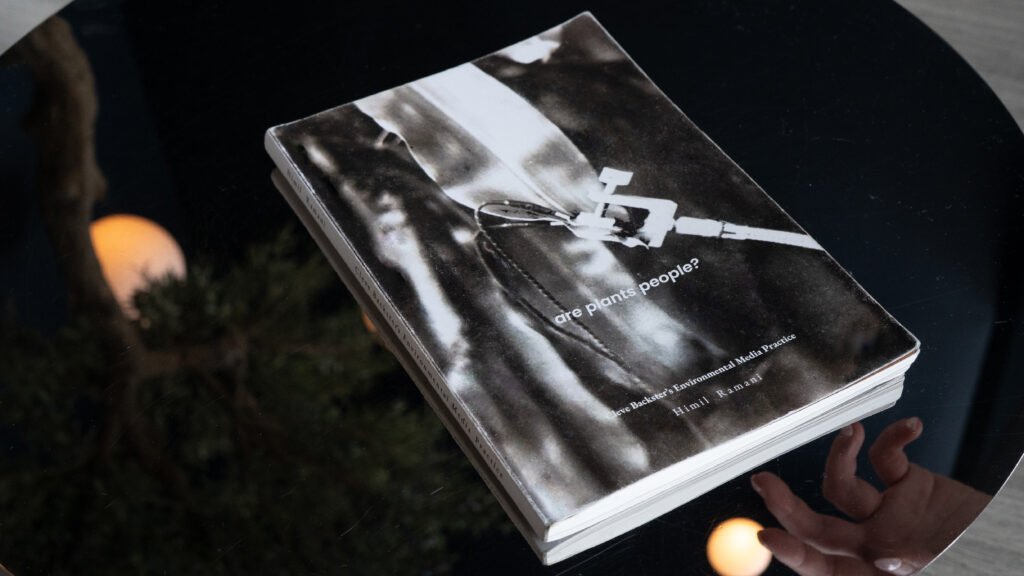
This focus beyond human systems continues in his upcoming book, Interrogating Plants: Cleve Backster’s Environmental Media Practices. Foregrounding famously retired CIA agent Cleve Backster’s archives, Ramani examines the larger history surrounding his experiments with plants: Cold War-era interests in biofeedback, surveillance, cybernetics and attempts to develop new forms of communication with other species through architecture. The project has developed through archival research, a book publication, performance, installation and exhibition-making, allowing the research itself to determine the form it takes.
His journey from architecture practice in India, to the shift with his training in Critical, Curatorial and Conceptual Practices in Architecture at Columbia University’s Graduate School of Architecture, Planning and Preservation, his work has further expanded this interdisciplinary approach, leading him across research, curating and teaching.
In this conversation with ACF India, Ramani reflects on the evolution of his practice, the limitations and possibilities he encountered within the architectural discipline, his engagement with ecological and more-than-human systems, the role of archives and language in his work, and how research, performance, curating and teaching have shaped the way he approaches architecture today.
ACF India: How did your training in architecture, and professional practice as an architect shape the way you began thinking about space and spatial practice?
Himil: During my training in architecture in India, I felt somewhat out of place with the pedagogical lineage that borrowed language from Western training in modern architecture, without questioning the complexity of positioning it in a context such as India. The visual vocabulary learned during the course did not resonate with my daily experiences of interacting with the streets of Mumbai. This resulted in an independent project in collaboration with similarly out of place architectural minds such as Kevin Dsouza, Saniya Nalband, Swati Jain, and Vinit Kadam. We organized a public lecture titled “Of Processes and Pedagogies” focusing on the multifaceted layers of architectural domesticities, specifically in an urban context such as Mumbai. The lecture raised some of the performance and material rituals, such as feeding crows outside the window sills in memory of late family members; hanging objects such as nimbu-mirchi (lemon tied to seven or five pieces of green chillies) to the door frames as an offering to keep the goddess of bad luck from entering inside, and many others. All these spatial rituals have their own smell, aesthetics, texture and sense of behaviour. The research for this project resulted in an exhibition installation titled “Indian Futures”, where an alternative architecture model was presented at the Art 35 Festival at Nine Fish Art Gallery, Mumbai.
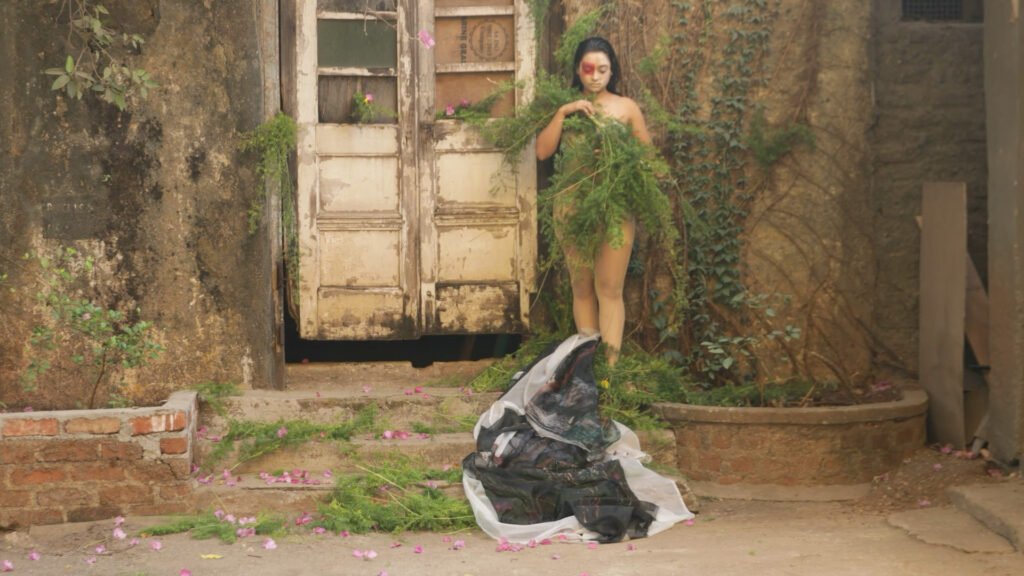
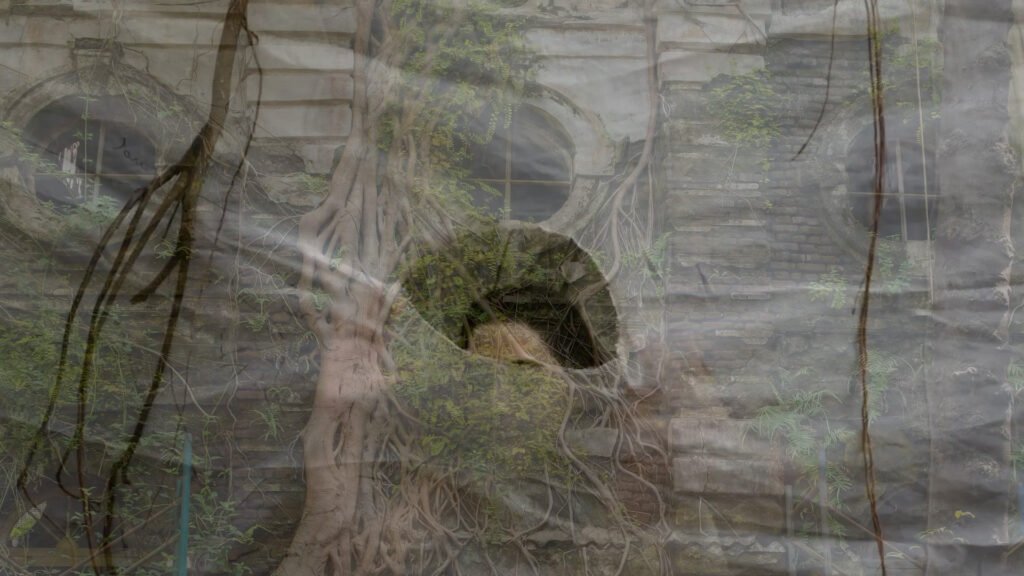
Stills from Ends in Architecture (Image courtesy- Himil Ramani)
ACF: Your multidisciplinary practice gradually moved from architecture towards research and critical inquiry. What prompted this transition, and was there a particular experience, project or period of study that marked this shift?
Himil: In 2019, I began working at the Great Eastern Home as an architectural designer. Situated in a 200 year old textile mill, it houses an antique furniture showroom, carpentry workshops, ceramics workshop, an art gallery, actively exhibiting new works of architects and artists across all disciplines. It allowed a space to engage with disciplines to broaden the scope of my work there as an architect. In 2023, I moved to New York City to pursue an MS in Critical, Curatorial and Conceptual Practices in Architecture, with co-directors Felicity D. Scott and Mark Wasiuta. One of the possibilities of the program is to be able to test different classes at Columbia University’s campus with different forms of scholarships and different forms of research. Over the time of my practice, I have come to appreciate that my real interest lies within the scholarship of architecture history and theory, while having worked across different formats of research allows my project to take form into exhibitions, media installations, performances, short-films, architecture, furniture, and so on. It opened up my approach to facilitate the multifaceted practice of architecture.
ACF: What initially led you to develop Ends in Architecture, and how did the project influence the direction of your practice and the questions you began pursuing beyond architecture?
Himil: In 1982, the Great Bombay textile strike involving around 250,000 mill workers led to the widespread closure of the city’s mill infrastructures. While most are gone, some remnants are present as abandoned structures, with the ruins of its original facade and walls overtaken by plants and trees on its site. In the absence of humans, ecology has taken over the abandoned architecture of textile mills leaving an alternative landscape of what the site might look like, if it wasn’t controlled and monitored by human standards. To me, it provoked questions of the architect’s violence to a site by creating a static environment, and encapsulating time in the object (or a building) that is frozen and doesn’t evolve or adapt to changes. My work ‘Ends in Architecture’, shot in 2023 and released in 2026, attempts to articulate this idea of ‘ending’ through the lens of abandoned textile mill architecture– a space constructed on a human scale, opens up a possibility of provoking questions of maintenance in architecture, or neutralizing surfaces through cosmetics and maintenance.
ACF: ‘Interrogating Plants’ has developed across research, performance, installation, publication and exhibition-making. Could you introduce the project and explain how it began?
Himil: My most recent work, a book publication titled ‘Interrogating Plants: Cleve Backster’s Environmental Media Practices’ explores the unseen connection between media and ecology during the Cold War in the United States; a time when US military and intelligence agencies engaged in numerous forms of biofeedback experimentation intended to operate in the thresholds of consciousness, and to mobilize bodies and ecosystems as sites for surveillance and control. On February 2nd, 1966, a retired CIA agent Cleve Backster in his research lab in New York, decided to attach his dracaena plant to a polygraph machine, also known as a lie detector. Surprisingly, the plant recorded a brief response similar to that of a human subject that might be afraid of being detected. Through Backster’s polygraph readings, photographs, videos and other forms of documents, the project investigates the role of interdisciplinary media practices emerging from cybernetic communication systems, and the shifting image of environmental consciousness during the Cold War in the United States. The research involved carefully constructing a network of interlocutors as I developed my work, through performances, installations, and other forms of engagements, responding to the different languages found in the archives, so that the work reaches audiences far beyond the academy without sacrificing its rigor. This not only keeps the work informed and critically alive, but also invites the audience to expand the research and disseminate it.
ACF: How do you negotiate the tension between attempting to communicate with another species and inevitably interpreting that communication through human systems?
Himil: Projecting plants as people that can talk to humans circulated in mainstream media during the early 1960s, when the United States was developing Agent Orange, a chemical used to kill trees and plant life on a large scale in Vietnam to trace Vietnamese soldiers from aerial space. This idea has continued to be circulated as a form of distraction from higher damage done to natural ecosystems outside our domestic spaces. In Cleve Backster’s experiments, Backster attaches the polygraph machine’s electrodes on the surface of plant leaves in order to record emotional responses. By doing so, Backster clearly imagines plants as a human subject that rests vertically above ground, communicating through a human scale, undermining the plant’s way of communication through the network of fungi attached to the roots. A relationship that not only constituted deep violence towards a more intelligent species, but also privileged an epistemology of machines as the driving force in building an interspecies environment.
ACF: Could you tell us about your curatorial research work, particularly with Richard Lowenberg, how the project developed, and what this experience contributed to your practice?
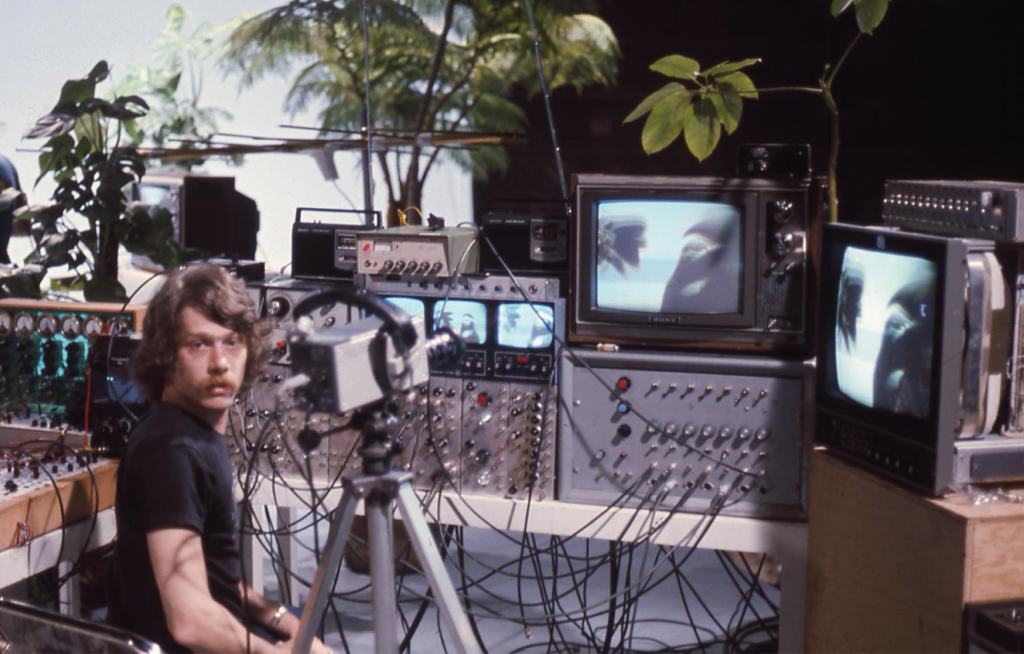
Himil: During my research for Interrogating Plants, I came across Richard Lowenberg’s works, especially the segment created for ‘The Secret Life of Plants’. Lowenberg collaborated with John Lifton, Tom Zahuranec, and Jim Wiseman to recreate John Lifton’s audio installation titled ‘Green Music’, originally showcased at the Whitechapel Gallery in 1975, using electrodes attached to the plant’s roots to create music. The more sophisticated version created for the ‘The Secret Life of Plants’ was positioned at the centre of the Glass Plant Conservatory in San Francisco’s Golden Gate Park (modeled on Kew Gardens in London), with around six different plants with six human performers attached to electrodes to sync music. The installation resulted in a non-rhythmic sound, however, when the film was released to a larger audience, the audio from plants electrical signals were replaced by Stevie Wonder’s music score, refabricating the knowledge to a larger audience. The film even described the change in electrical signals from plants as ‘change in the mood of plants’ as they interact with humans.
This led to a curatorial project for me to compile Lowenberg’s life works under the title “Info/Eco: Richard Lowenberg”, looking into 30 years of his practice using military grade technologies to document performances, bio-media arts, interspecies communication, ultra-spectrum sensing, thermography, and many other projects spanning from early 1970s to 2000s, often in collaboration with NASA and Pentagon at the time.
ACF: You have recently begun teaching architecture. How does teaching connect with your research and broader professional practice, and what are you currently working towards?
Himil: As part of my recent teaching experience at Columbia GSAPP with Andrés Jaque, titled ‘Transscalar Architecture: Construction Detail as Cosmopolitical Enactments’, we undertook a detailed examination conducted through the very lens of the construction detail drawings. Some of the most influential buildings and architectural projects produced over the past five decades have questioned the notion of black and white drawings as a site of architectural thinking and knowledge production. Black lines being a neutral signifier of materiality, and white being the space of immaterial. However, Jaque rightly argues that construction, and particularly construction detailing, is too often framed as the exclusive domain of experts, a space that is governed by technocratic authority and presented as if it were neutral, inevitable, or apolitical. Rather than treating details as the endpoint of design, the course positioned them as generative instruments for rethinking architectural practice itself. A terrain where alternative societal and ecological articulations can be prototyped and contested.
ACF: Across your work, there seems to be a recurring enquiry into ecology and the relationship between humans, space and the non-human world. How do you understand this enquiry within your practice, and how does architecture serve as a way of engaging with these questions?
Himil: If you think about it, there’s something urban about our bodies. We have about 160 major species of bacteria in our bodies, and they all form complex ecosystems. Our mouths are different ecosystems than our intestines, or our skins, or our airways. So we are not anatomically individuals at all. Architecture, inseparable from performance of the body, in recent years has extensively pushed the boundaries of what constitutes a body relationship to the space, the expected behaviour and its relationship to architecture. Architecture, to me, is a didactic social tool to categorize and separate the distinction between interior and exterior, human and non-human, private and public, and so on. However architecture is made up of materials that are in constant flux of fluidity with our environments, which is asymmetrical, and non-static. There’s a history of architectural violence to shape our bodies into a more symmetrical form, into a neutral shape, through corsets, boots, heels, furniture, and so on. But if you think about it, the state of our bodies ‘walking’ itself is not symmetrical, neither are the proportions of the right side of our bodies to the left. But it is constantly trapped inside the corrective structures of our built environments.
ACF: Your work moves between architecture, research, performance, curating and teaching. What connects these different modes of practice for you, and what questions remain constant across them?
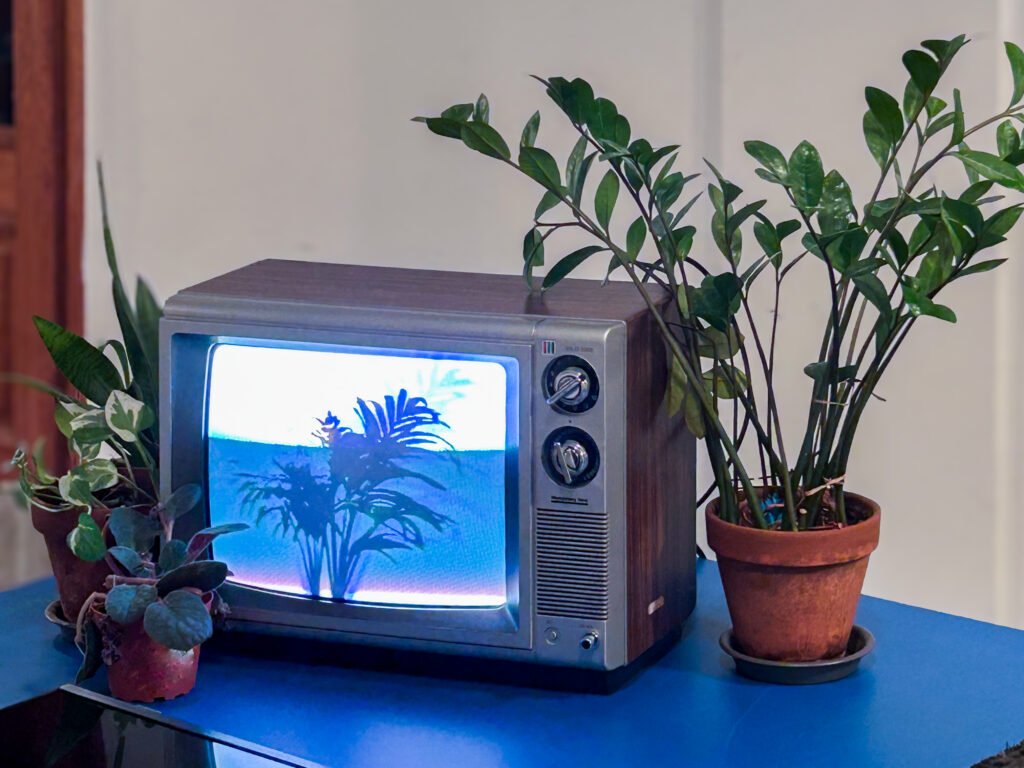
Himil: I’m interested in how language inhabits the space of our built environments, from wall surfaces to paper documents—across all of the surfaces and sites of inscription—to mediate the relationship between viewers and objects. Architecture, far from a neutral surface, serves as an active surface of information, writing, and reading. As I develop my work, through performances, installations, and other forms of disciplines, language takes influence from the primary archival documents that are used as evidence of my research. My work with plants deliberately foregrounds the technologies of communication such as polygraph machine, to learn how an-other species engages with the world through other means of signalling communication, a world that is potentially outside the spectrum of our fixated fabrics of society, a form of liberation, a form of knowledge of an unstructured body. The video work on textile mills explores the language of architecture in absence of humans, and driven by the growth of ecological presence on its abandoned surfaces. The question of language is constantly reappearing through my research in the process and shaping the final outcomes to mediate engagements.
ACF: Much of your research appears to question how humans perceive, measure and make sense of the spaces and forms of life around them. How has your understanding of the human relationship with space and the non-human world evolved through your practice?
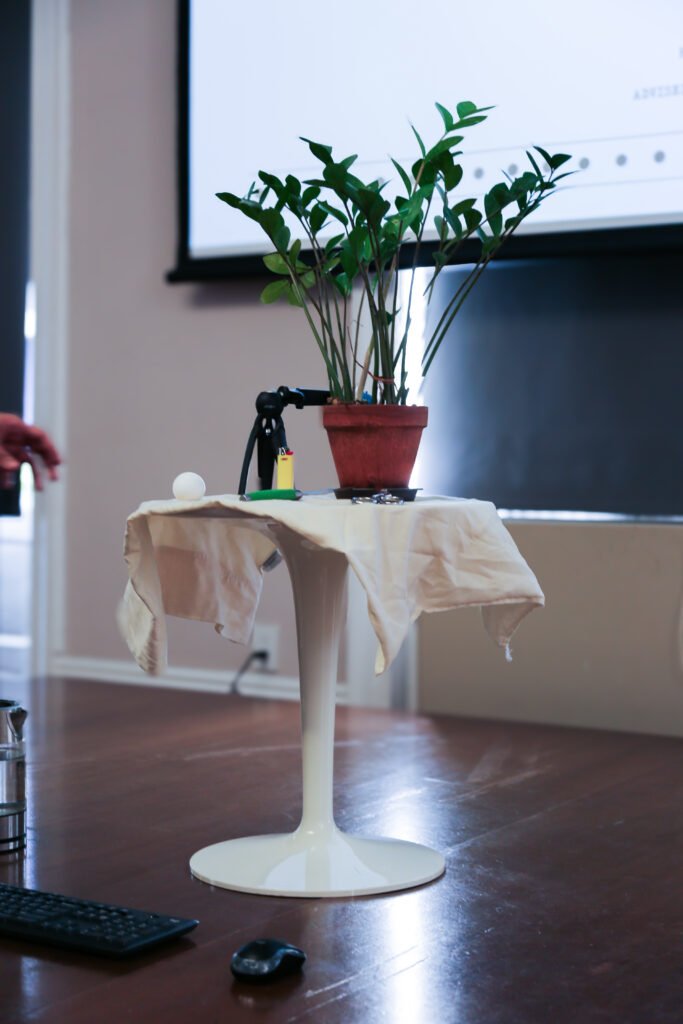
Himil: The system of knowledge production post-cybernetic conferences has developed a sense of limitation of validating knowledge, taken from scientific rules of experimentation, reputation in outcomes, transcription of knowledge in anthropocentric languages, and the politics of being able to store information in a binary computing system, including digital file types and its sizes. Due to which, knowledge production gets confined into the binary social systems of understanding the world, such as native and alien, true and false, left or right, living or dead, existence or non-existence, human or non-human, legitimate or illegitimate, and so on. It devalues knowledge that is not tested in these controlled spheres of laboratorial environments. What plant studies have proven to me is that it is possible that the ‘other species’ may co-exist in a way that we may not understand, sharing the agency to build architecture, given our limitation of understanding the world through the senses on our human bodies. Perhaps the ‘other’, might interact with the world in a less verbal, non-visual and entirely different set of sensorial experiences. It would be unfair to rationalize knowledge through languages that are familiar, therefore my practice experiments with different forms of engagement, outcomes and disciplines to activate senses that might have been suppressed within the research subject.