By Bhavya Balamurali
Every two years, countries arrive in Venice carrying something intensely their own, and by the time it’s hung on a wall or projected into a dark room, it somehow stops needing translation. A story that begins in one small town rarely stays there once it enters the room.
This year, the Pavilion of Bosnia and Herzegovina takes that room with Domus Diasporica. Commissioned by Sarita Vujković and produced by the Museum of Contemporary Art of the Republic of Srpska, the exhibition is curated by Isidora Živković around the work of artist Mladen Bundalo. Its subject is home, not as an address but as something a person carries, loses, and has to keep rebuilding.
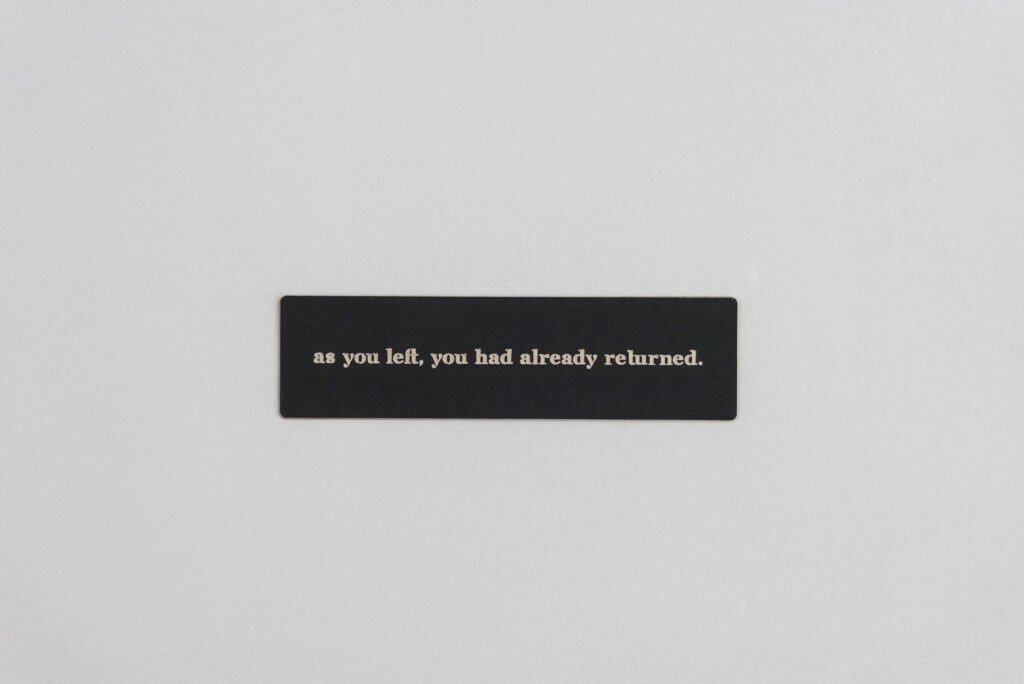
The exhibition itself is conceived as a circular movement through the space, and it closes, in a sense, with Bundalo’s grandmother. Every time Bundalo leaves her house in Prijedor to return to Brussels, she follows his car to the gate and throws water behind it. Srećan put, she says. Safe travels.
The specifics of leaving change by geography. But the instinct underneath does not change. Every culture around the world seems to insist on marking the departure somehow, even when the gesture serves no practical purpose. Nobody agrees on what the gesture should be, but almost nobody skips it either. Maybe because departure, however routine it becomes, never stops being a small rupture. Bundalo has spent this project trying to name what that rupture actually does to a person, and what allows them to feel at home again on the other side of it. The bigger question, one that has become difficult to avoid anywhere in the world, especially right now, is how does a person decide that a place belongs to them?
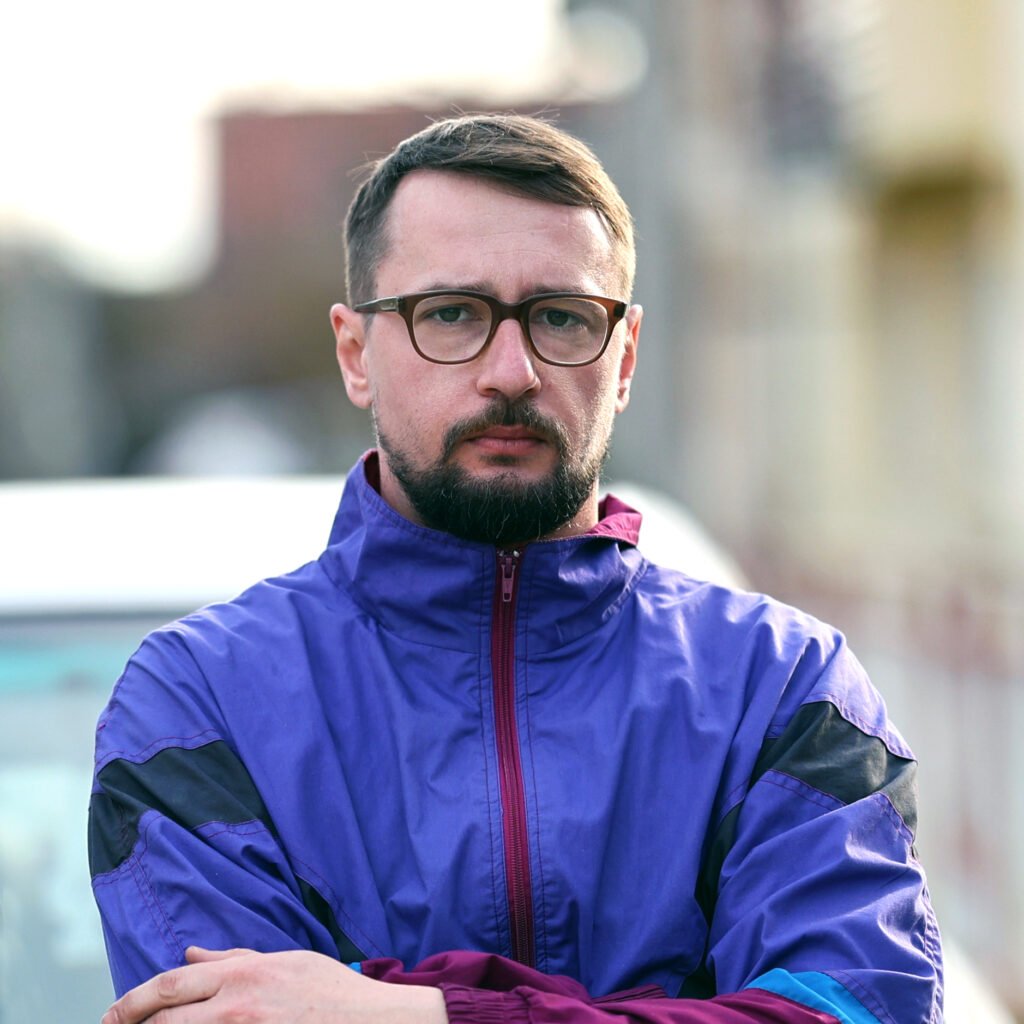
Mladen Bundalo is an interdisciplinary artist, filmmaker, and author whose work returns again and again to questions of migration, identity, and belonging. Domus Diasporica, his presentation at this year’s Venice Biennale, is the latest chapter in that ongoing inquiry. His own life gives him plenty to work with, Prijedor to Banja Luka, Brno to Mons to Brussels, a decade and a half of packing and unpacking. To make sense of it, he built his own vocabulary which is visible in Domus Diasporica.
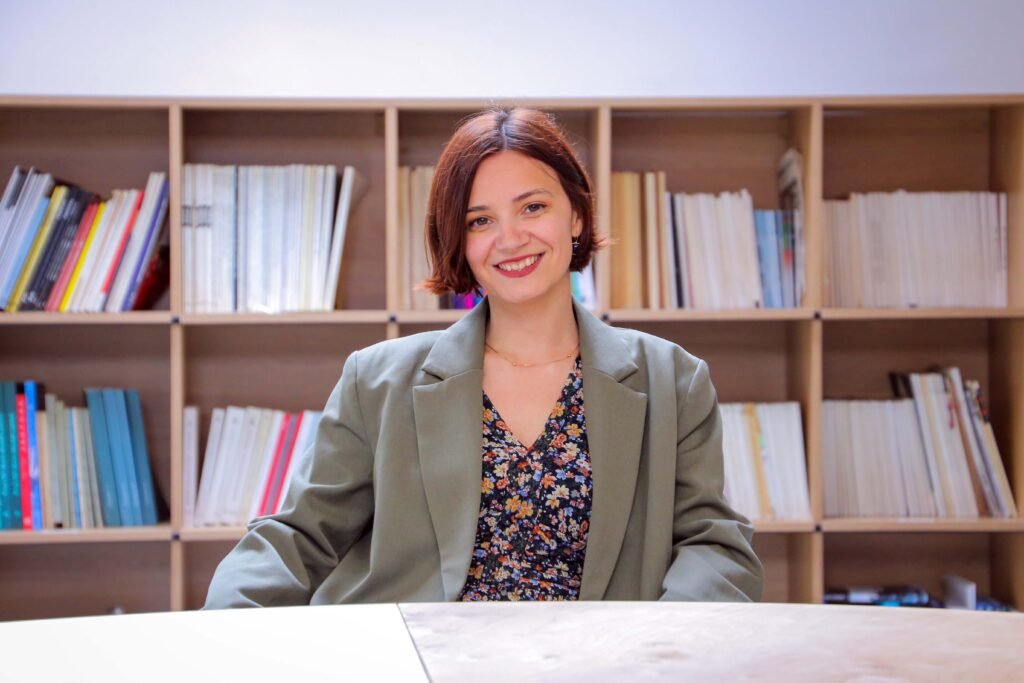
Isidora Živković, the curator of Domus Diasporica, took this private language and gave it a wider frame, reading Bundalo’s strings and knots against the idea of the rhizome, a concept she borrows from philosophers Deleuze and Guattari. In her reading, home stops being a fixed address to defend or mourn and becomes something closer to a structure that keeps reforming wherever a person lands.”
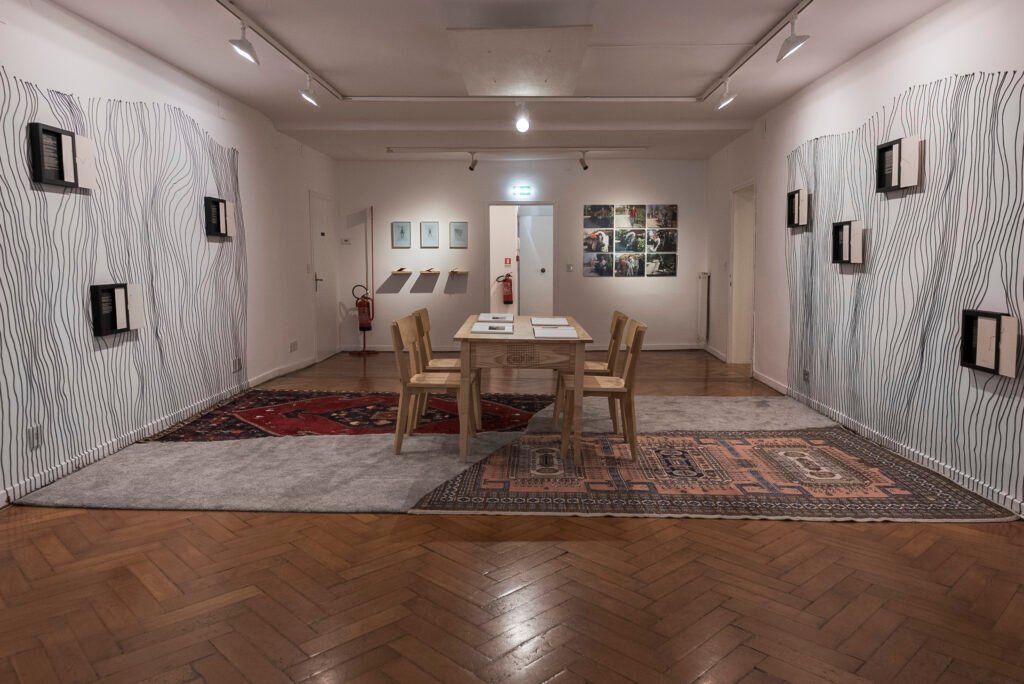
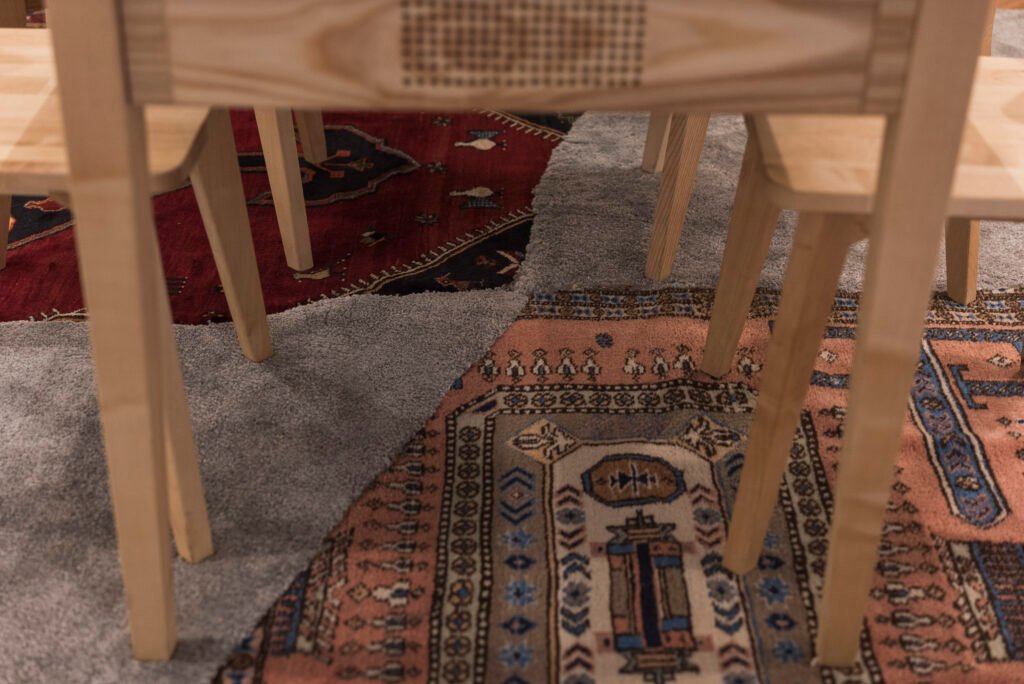
The Bosnian pavilion makes this literal across its three rooms, helped along by a venue that feels almost too fitting to be coincidence. Palazzo Malipiero is part exhibition space, part short-term rental apartments, at the same time, all year. A building that’s always a little bit of a home and a little bit not. A rug, cut from four separate rugs, half patterned and oriental, half plain and industrial, is rebuilt into one hybrid whole. Strings run from it across the wall, each one tagged with a real journey Bundalo has taken. A film sets a Neolithic settlement on the Danube beside the Brussels home he built with his own hands, asking the same question of both, seven thousand years apart. And somewhere in all of it, a grandmother keeps throwing water behind a departing car, the oldest and simplest knot in the entire show.
The specifics of the exhibition belong to Bosnia, the war, the exodus, the particular geography of Prijedor and Brussels, but the underlying grammar of leaving and returning is recognisable almost anywhere displacement has ever occurred. Every culture keeps some version of Baba Rada’s ritual. Long before he had a vocabulary of strings and knots to explain any of it, Bundalo already understood what his grandmother was doing at that gate. Domus Diasporica is simply the room he built large enough to hold it.
ACF India in conversation with Mladen Bundalo and Isidora Živković, artist and curator of Bosnia and Herzegovina’s Pavilion at the 61st Venice Biennale.
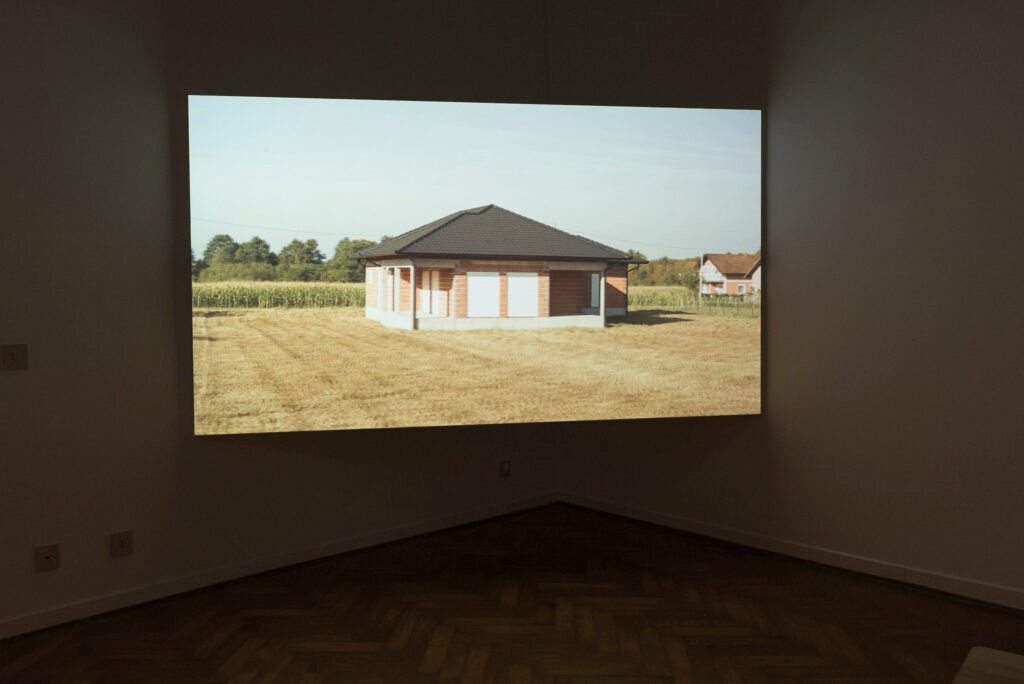
No matter how far you’ve moved—Brno, Mons, Brussels—something from Prijedor seems to travel with you. Is there a language you still think in without meaning to, or a habit from home that’s never left, no matter how long you’ve been away? And do you think growing up there had any real part in you becoming an artist at all?
Mladen Bundalo: Language is certainly one of those things, even though I think and work in several languages today. Recently my partner and I, after fifteen years together, began couples therapy. The first four sessions were spent almost entirely discussing the cultural differences between the Balkans and France. That alone says a great deal about the lasting influence of the culture we grow up in.
The same is true of everyday habits and rituals. They can be very small things: our relationship to food, the way we welcome guests, how we arrange the spaces we live in, or the objects we instinctively carry with us whenever we move. It is only after changing cities or countries several times that you begin to understand how deeply culture shapes your sense of home.
Prijedor is always present in my work, though not as a subject I want to illustrate. It is more like the original landscape of my experiences, family relationships and memories, a place that continually flows into every new place I inhabit, and from there somehow returns again.
Would I have become an artist if I had grown up somewhere else? I honestly don’t know. Growing up in Prijedor, and more broadly in Bosnia and Herzegovina, in a society marked by war, transition and continuous departures, undoubtedly shaped the questions I ask through my work. Whether it determined my decision to become an artist is impossible to say, but it certainly determined the subjects I continue to explore.
Over time, home has become something much larger than an address, a floor plan or the cost of rent. We carry it through language, memories, relationships and small rituals that survive every move. I believe multiple homes are not a contradiction. They form a distinct emotional system with its own atmosphere, its own logic and even its own taste. Living between homes is not only possible; for many of us, it has become a fundamental way of being in the world.
You and Mladen were both born in Prijedor. Did growing up there shape your interest in art at all, or was that a separate thread in your life entirely?
Isidora Živković: It is interesting that Prijedor has long held the symbolic status of a “city of artists,” a notion that has gradually become part of the city’s local narrative and even its identity. A number of artists who were born or raised there have made significant contributions to the arts, some of them internationally, although whether this reputation is entirely justified is a question that deserves a much broader discussion. I found it interesting to mention this in relation to your question, but I still don’t think I’ve fully reflected on how much it shaped me personally. But growing up among people who valued art, in a town that did have an artistic scene, however modest or fragile it may have been, probably had some influence on the path I eventually chose.
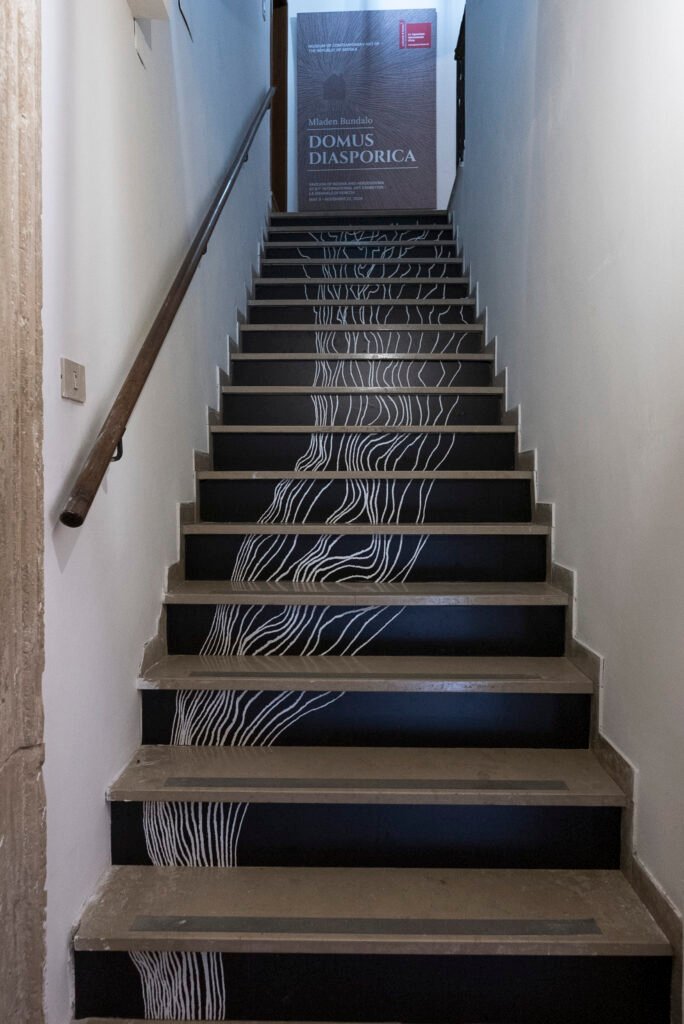
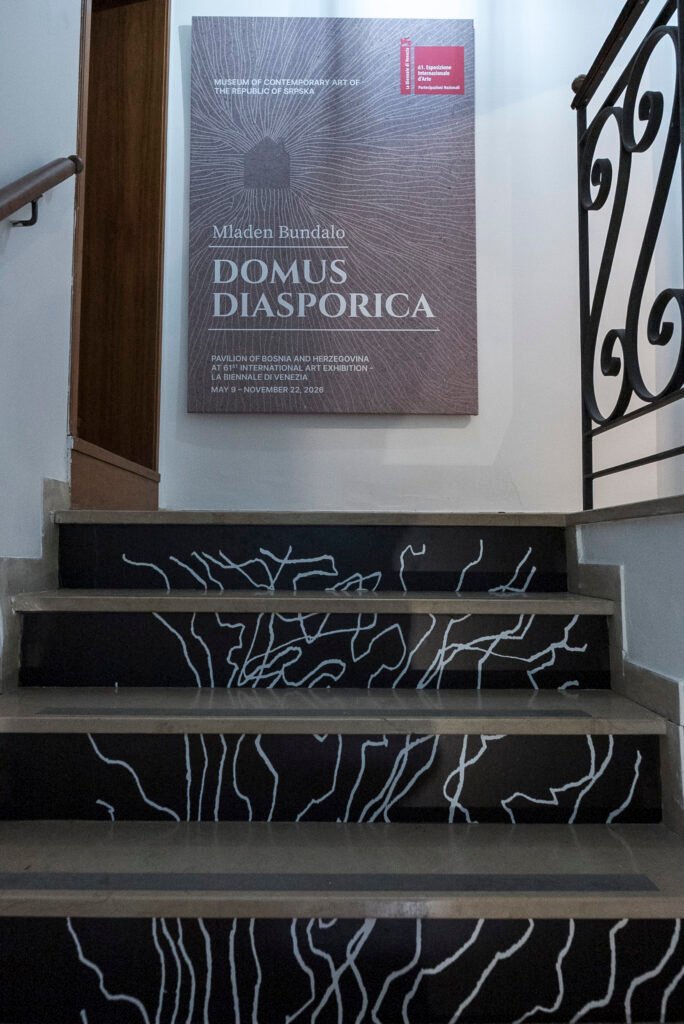
You’ve built your own vocabulary for this work—domiton, strings, knots. Take me through how that language actually came to you. Did it arrive all at once, or did it build up slowly over years of making this kind of work?
Mladen Bundalo: It developed gradually through years of research into diaspora and migration. I often felt that the languages we speak, including most European languages, lack the precision to describe certain contextual emotions. We have many words for broad emotional states, but far fewer for the subtle emotional conditions that emerge through migration, displacement or belonging.
My working vocabulary grew out of that need for greater precision. As the work evolved, certain motifs kept returning until they formed a larger conceptual system, a kind of meta-system through which different ideas could speak to one another.
Knots emerged from knot theory in topology, the mathematical study of loops. For me, they became a reflection on the tangled experience of movement and the search for home. They are not simply visual elements within the installation; they are a way of thinking about relationships between people, places and experiences. I also find it fascinating that knots are one of the rare examples where visual culture preceded scientific knowledge. Human beings have been making knots and ornamental knot patterns for thousands of years, while the mathematics describing them is only around two centuries old.
The strings originate from string theory in quantum physics, where vibrating strings are proposed as the most fundamental form of matter. Translated into lived experience, each string represents a particular trajectory through space, a path we repeatedly travel. Some of those paths gradually acquire greater emotional weight, such as the journey between home and school, becoming more massive within our personal universe. They eventually shape the fundamental particles of who we become. Around ten years ago I began cataloguing these strings, and seven of them now orbit the central installation in the Venice exhibition.
Domiton emerged from my search for a word capable of describing both the attraction of a particular place becoming home and the deeper human need for home itself. It is a neologism combining domus and graviton. Archaeologist Ian Hodder describes domus as the domesticated part of nature, a place we cultivate and gradually come to trust as home. The graviton, meanwhile, is the hypothetical particle thought to carry the force of gravity, although it has never been detected experimentally. In that sense, the Domiton also remains hypothetical: an imagined particle expressing both the force and the emotional state through which home draws us towards itself.
Ultimately, strings, knots and Domitons are not codes waiting to be deciphered. They are invitations for viewers to recognise their own connections, their own trajectories and their own ideas of home.
A rhizome, by your own definition, has no centre. But people still seem to carry something specific from where they started, a language, a habit, a way of seeing. Does the rhizome allow room for that, an origin that shapes without ever fully governing?
Isidora Živković: The rhizome does not deny origin, but it rejects the idea of origin as a fixed center to which everything ultimately returns. Instead, it understands origin as a knot that remains present while the rhizome continues to grow and extend in new directions. The knowledge, experiences, and habits that people carry with them become part of the distinctive character of this diasporic rhizome, intertwining with everything that is gained through movement and encounter. The sense of origin you mention therefore remains both present and important, but it exists alongside the new experiences, relationships, and perspectives that emerge through entering unfamiliar places. Together, these elements shape the particular experience of diaspora.
Bosnia and Herzegovina carries a very specific history of migration. How much of what you make feels like it’s speaking to that national story, versus something personal that just happened to grow out of it?
Mladen Bundalo: My interest in this subject comes from my own experience of moving between countries, cultures, languages, administrative systems, emotional landscapes and social contexts. That personal position is inseparable from my work, but the experience itself is far from unique. Bosnia and Herzegovina has been profoundly shaped by migration; today, almost half of the people born in the country no longer live there.
When I began researching diaspora more intensively around fifteen years ago, the dominant critical discourse in Bosnia and Herzegovina was still largely focused on the legacy of the civil war and ethnic divisions. I wanted to approach emigration differently: as a condition shared by a community that once inhabited the same living space, and as one of the few experiences capable of uniting people across political and ethnic boundaries in a country marked by war and its aftermath.
At the same time, I don’t see myself as speaking on behalf of Bosnia and Herzegovina, nor am I trying to illustrate a national history. What interests me is how large-scale social processes leave traces within the most intimate spaces of our lives: the living room, family rituals, language, the objects we choose to carry with us, or the ways we imagine home.
I am particularly interested in what I would call meta-histories and meta-processes, those deeper cultural structures that allow us to understand not only historical events, but the underlying culture of a place. Home becomes a kind of intersection where personal and collective histories continuously fold into one another.
It was important to me that Domus Diasporica did not remain an autobiographical project. Instead, I wanted it to create space for the experiences of many people who live between different places, languages and forms of belonging. What does it mean to leave, how do we build a sense of belonging, and is it possible to have more than one home? Those questions extend far beyond Bosnia and Herzegovina. That is why I believe the story of the Bosnian diaspora can resonate with people from very different backgrounds, including those who have never experienced migration themselves.
What do you hope someone who has never experienced displacement takes away from walking through this pavilion?
Isidora Živković: The experience of displacement can be understood through movement in a much broader sense. Even leaving one’s parents’ home or moving from one street to another involves a shift. Although we may remain within the same social and cultural context, something changes, however subtly. Mladen’s work approaches migration and movement as fundamental aspects of the human experience. Rather than presenting diaspora solely as a condition of loss, it understands it as a transformative process that encourages us to step outside our comfort zones and grow. I hope that visitors, regardless of whether they have experienced displacement themselves, will connect with the exhibition and with the idea that we continuously create our own sense of home. Every new place carries with it new stories, new memories, and new ways of understanding ourselves and the world around us.
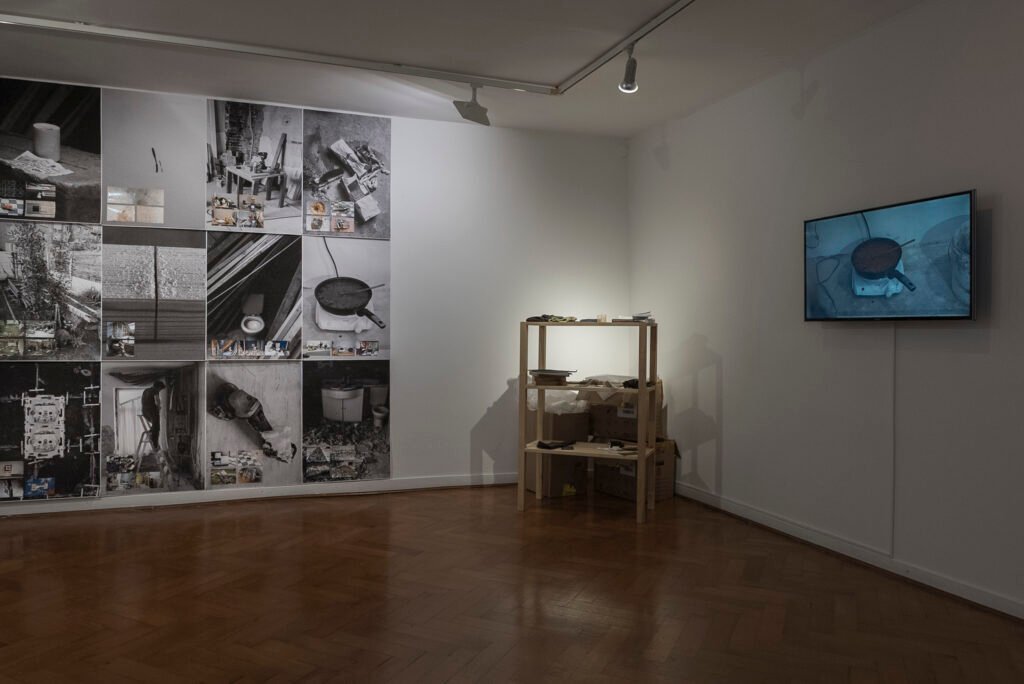
Bosnia’s displacement has taken many forms, some chosen, much of it forced by war and economic collapse. Where does your own story sit inside that range, and has making this work changed how you think about that difference?
Mladen Bundalo: My own experience of migration belongs to the post-war generation. I left not because of direct violence, but because of the long-term inability of the state to create conditions in which culture, and the people working within it, could genuinely thrive.
During the war, my family was fortunate not to become refugees, although for the final month we lived beside packed suitcases, expecting that we might have to flee at any moment. I remember one night when heavy gunfire echoed through the city. There was no electricity, we had no idea what was happening or where we would go. Then a neighbor came running to tell us that the shooting was celebrating the end of the war. It remains one of the happiest days of my life. I was nine years old, drank two glasses of rakija for the first time, and fired two shots into the air with my father’s pistol. It’s an absurd memory, but one that captures the emotional complexity of that moment.
I think it is important to distinguish between different forms of displacement, because not all migrations are the same. Migration is never simply a geographical movement. It is always shaped by circumstances, possibilities and the degree of choice available to those who move. There is an enormous difference between leaving in search of new experiences or professional opportunities and leaving because of war, violence or economic conditions that leave very little alternative.
My own story belongs to what I describe as soft migrations. These experiences often remain below the radar of both cultural policy and artistic discourse, even though they probably represent the dominant form of migration globally today. They may not appear as humanitarian crises, yet they profoundly reshape how people relate to family, friendship, language, home, law and personal freedom. I believe they will become one of the defining human experiences of the coming decades.
In my work, migration is not primarily a story of loss. It is a transformation in our relationship to the world, to belonging and to the idea of home. Home is not simply the place we left behind or the place we eventually arrive. It is something we continuously construct through people, memories and experiences carried with us. Migration is perhaps humanity’s oldest cultural condition. That is why I find it extraordinary that we still allow ourselves to moralise it as though it were something exceptional.
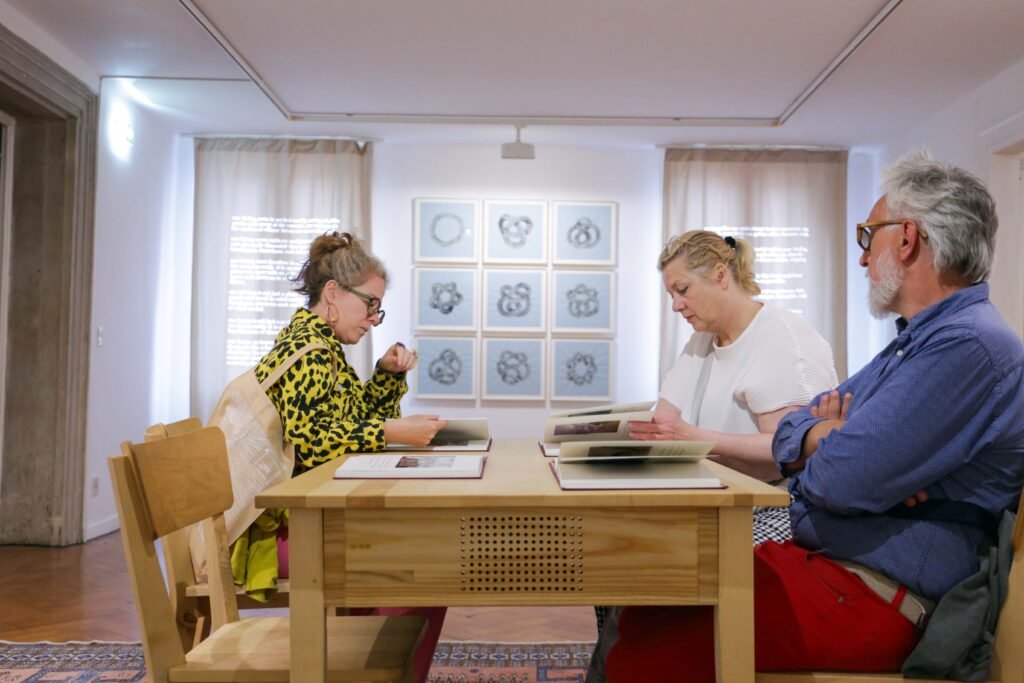
This year’s Biennale theme, Kouoh’s in Minor Keys, reframes quiet, intimate work as something powerful rather than simply melancholic. How did that theme shape the way you approached this exhibition, if at all?
Isidora Živković: It was interesting to reflect on this year’s Biennale theme because it arrives at a moment when we seem to be globally overwhelmed by constant sensations and upheavals, with one crisis following another, making it increasingly difficult to find our bearings. In that context, the idea of turning our attention towards quieter, more intimate registers felt important, offering a different perspective on the world around us.
It certainly influenced the way Mladen, the rest of the team, and I approached Domus Diasporica. Having collaborated with Mladen before, I was already familiar with his artistic practice, and I felt that it naturally resonates with the ideas behind In Minor Keys. Our pavilion addresses the experience of diaspora, which is a significant aspect of Bosnian and Herzegovinian society, but it does so through Mladen’s personal story. From there, it expands towards a broader social, historical, and political reflection on displacement.
Another important aspect was our attempt to evoke the idea of home, one of the central concepts when we think about diaspora. Mladen’s practice is fundamentally research-driven. It begins with an attempt to understand his own position, yet it carefully avoids clichés, acknowledging the many layers that this subject inevitably carries. I think this is what allows his work to move from the personal towards something collective, creating points of recognition even for visitors who have never experienced displacement themselves.
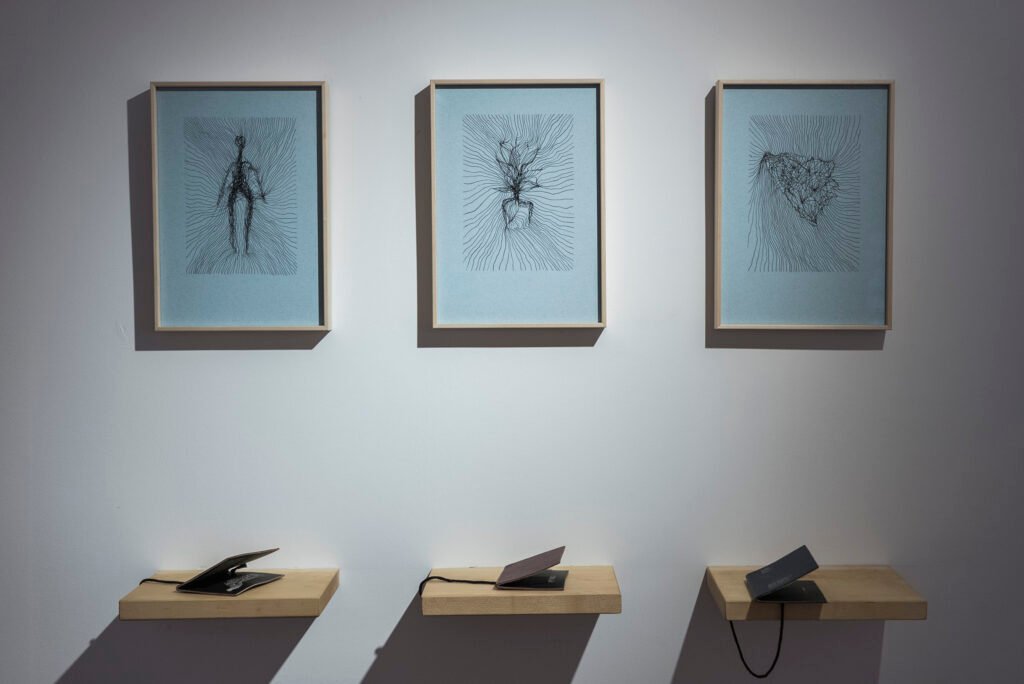
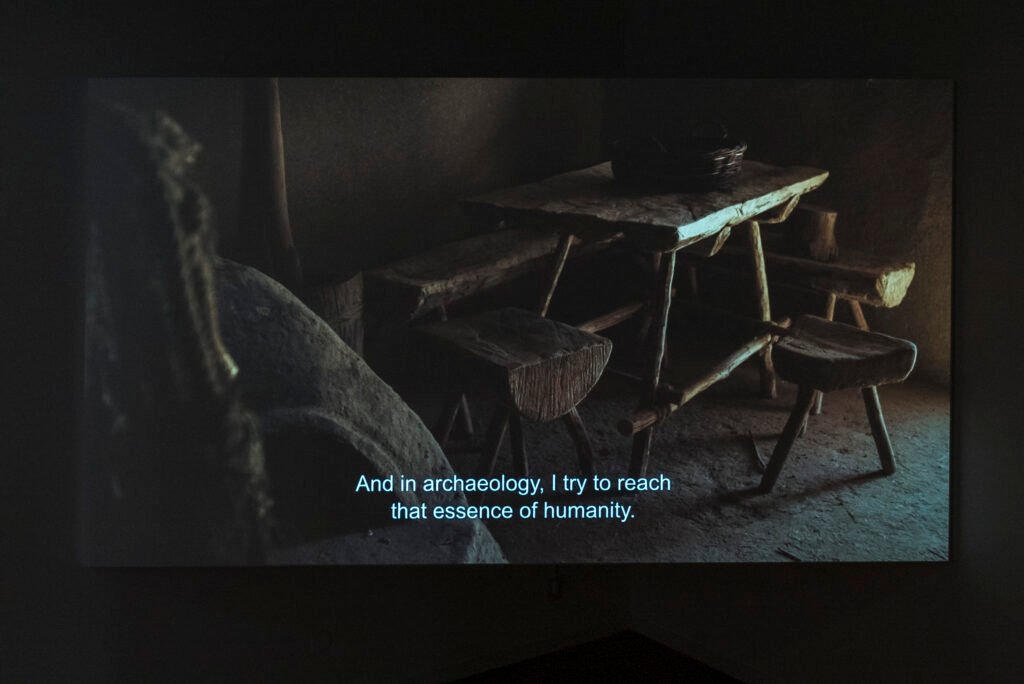
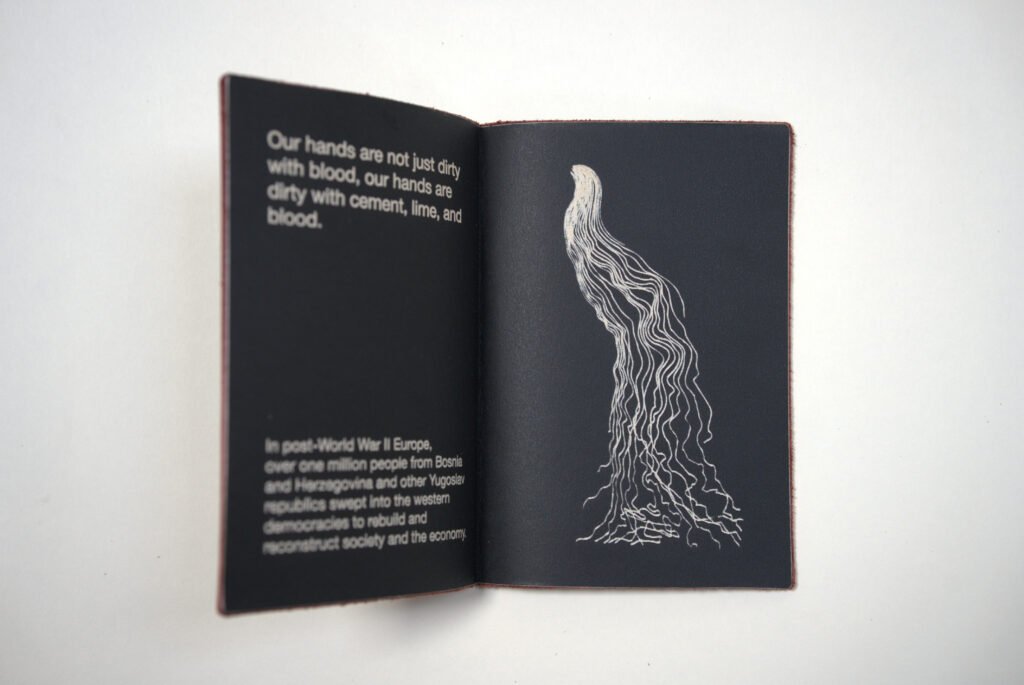
You move between film, photography, drawing and installation, often within the same project. How do you know which medium a particular idea belongs to?
Mladen Bundalo: I think of the process as a form of experimental gardening.
At the beginning, I plant many different ideas, and each of them receives a little image, a little text, a little sound or an object. Then I simply observe how they grow. Some ideas thrive through images, others through writing, sound or human relationships.
If one idea begins growing too quickly within a single medium, I often deliberately move it into another. That slows it down and allows it to develop more organically alongside the others. I don’t believe in grand ideas; I believe in systems of ideas with deep roots. Every idea will eventually suffer damage from the outside world, so it has to be capable of growing again from something deeper. In many ways, I don’t think this is so far from how David Lynch spoke about the relationship between ideas and artistic form.
During the last eight years my work has been centred primarily on cinema, but I rarely think of media as separate choices. I begin with a question or an experience I want to understand, and that research naturally moves across different forms. Film becomes a kind of container in which image, sound and narrative collaborate.
Interestingly, installing an exhibition feels remarkably similar to editing a film. Curators and film directors, particularly documentary filmmakers, face many of the same questions: rhythm, relationships, atmosphere, sequencing and spatial perception. In Venice, the very first conversation was not about individual artworks but about the apartment itself. Together with curator Isidora Živković, we began by listening to the space and allowing it to shape the exhibition.
Questions of home, migration and belonging are too layered to be contained within a single medium. Regardless of whether I am working with film, drawing, photography or installation, I think of space as an equal collaborator. I’m interested in how the works affect one another, how the architecture transforms them, and ultimately how the audience experiences the whole environment rather than any individual piece.
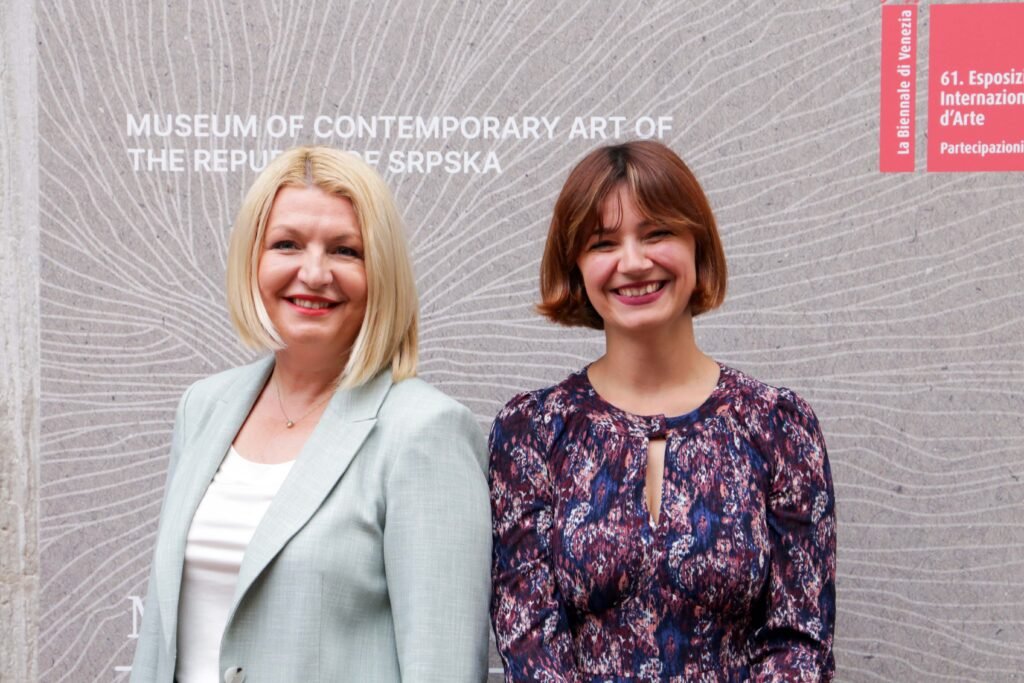
A lot of curators talk about the “unsexy” side of building a national pavilion, budgets, permits, working inside a historic building with real restrictions. What was the hardest practical problem you had to solve that had nothing to do with the art itself?
Isidora Živković: I was fortunate to work alongside colleagues who had already been through the process of organizing a national pavilion at the Venice Biennale, which made a significant difference. As the organizer of this year’s Bosnia and Herzegovina Pavilion, this is the third time that Museum of Contemporary Art of Republic of Srpska has participated in the Biennale, so my colleagues were already very familiar with the administrative procedures and practical steps involved.
Although the entire process was new to me, their experience made it much easier. It was my first opportunity to take part in organizing an exhibition abroad and to coordinate the work of a larger team. Perhaps the greatest challenge was preparing all the documentation and navigating the administrative procedures required to transport the artworks safely to Venice. In the end, we managed to overcome those challenges together and bring the project to fruition.
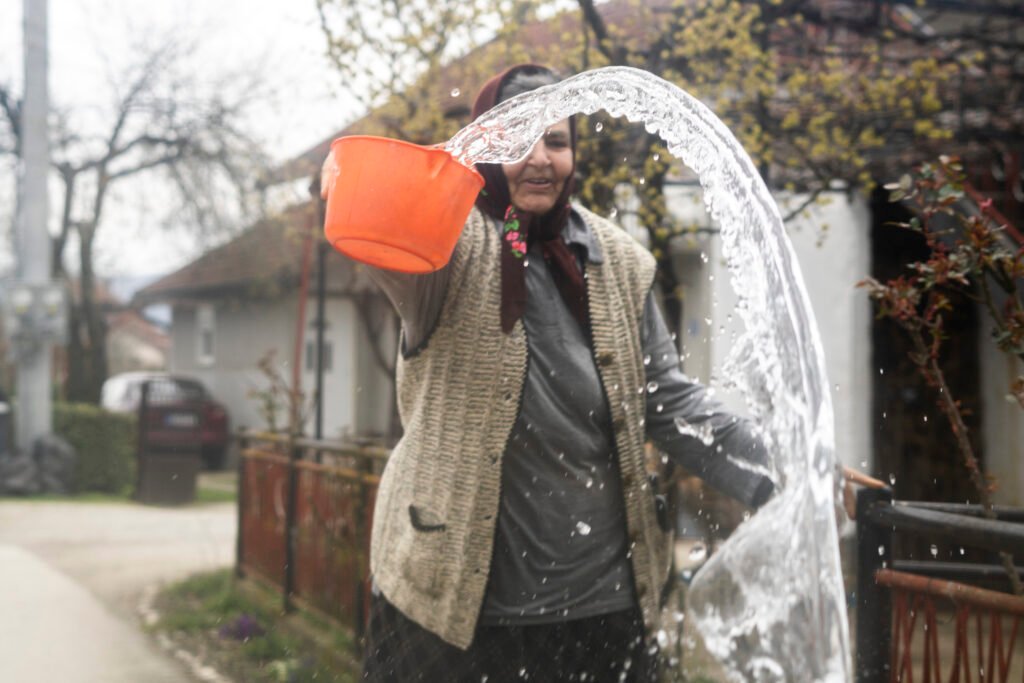
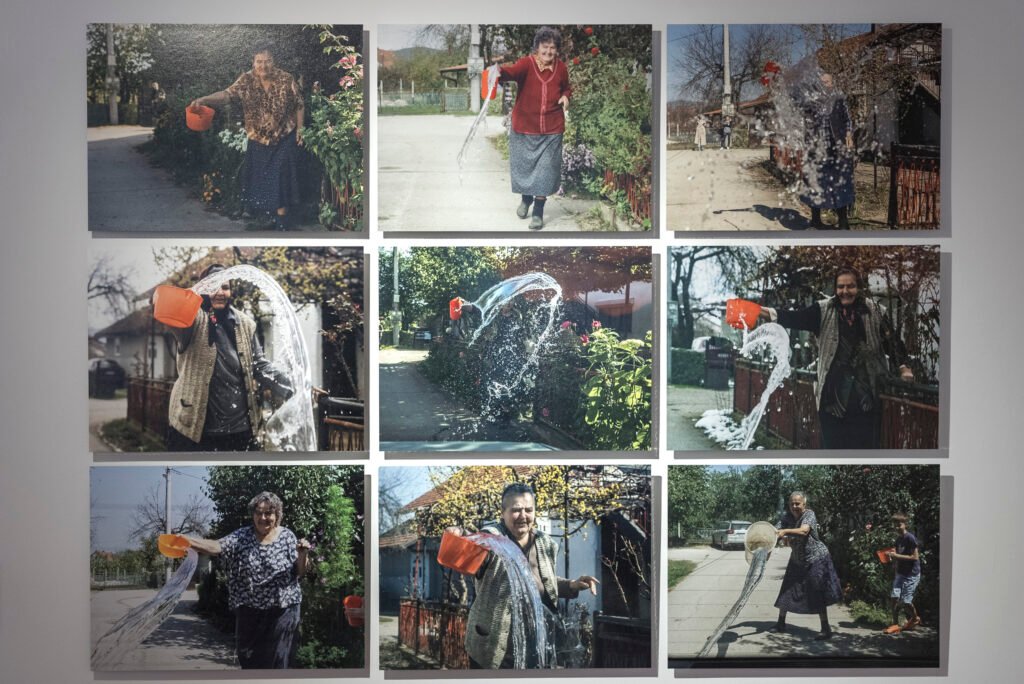
Your grandmother has done the water ritual for you since 2019, and you keep photographing it. What are you actually trying to preserve there—the ritual, or your own fear of forgetting it?
Mladen Bundalo: My grandmother Rada has performed this ritual throughout her life, although I only began photographing it in 2019. In a way, I’m trying to preserve both.
Alongside the photographs, I also explored the ritual in my documentary film Every Time You Leave, You Are Born Again. For me, the moment of departure is a unique space, something that can be paused, inhabited, examined and experienced from within.
The film approaches that moment from three perspectives. The first is ethnographic, understanding the ritual as a symbolic passage from the community and as a way for the community itself to inscribe departure into memory through shared gestures. The second is dramaturgical, looking at the ritual as a performance with its own structure, rhythm and transmission between generations, while also acknowledging that rituals continue to evolve over time. The third perspective is psychological, focusing on the emotional bond the ritual maintains between those who leave and those who remain. That is perhaps the most important one for me. I experience the poured water as an extended hand, something that, for a brief moment, returns us to the instant of departure and transforms it into something magical, intimate and quietly healing.
The gesture itself is extremely simple. There is nothing spectacular about it, yet it carries enormous emotional weight. Across much of the Balkans, water is poured “for good luck and a safe return” whenever someone leaves home. In other cultures, water is poured after someone dies and is used to mark the passing of time after their departure from this world. In both cases, water functions as a threshold between worlds, between here and elsewhere.
Every time I leave my family home in Prijedor, where my parents and grandmother still live, she pours water after me.
So I wouldn’t say the work is simply about preserving the ritual or preserving memory. That is certainly part of it, but it also explores the emotional trauma of repeated departures and the complex network of relationships that migration creates between people, places and time.
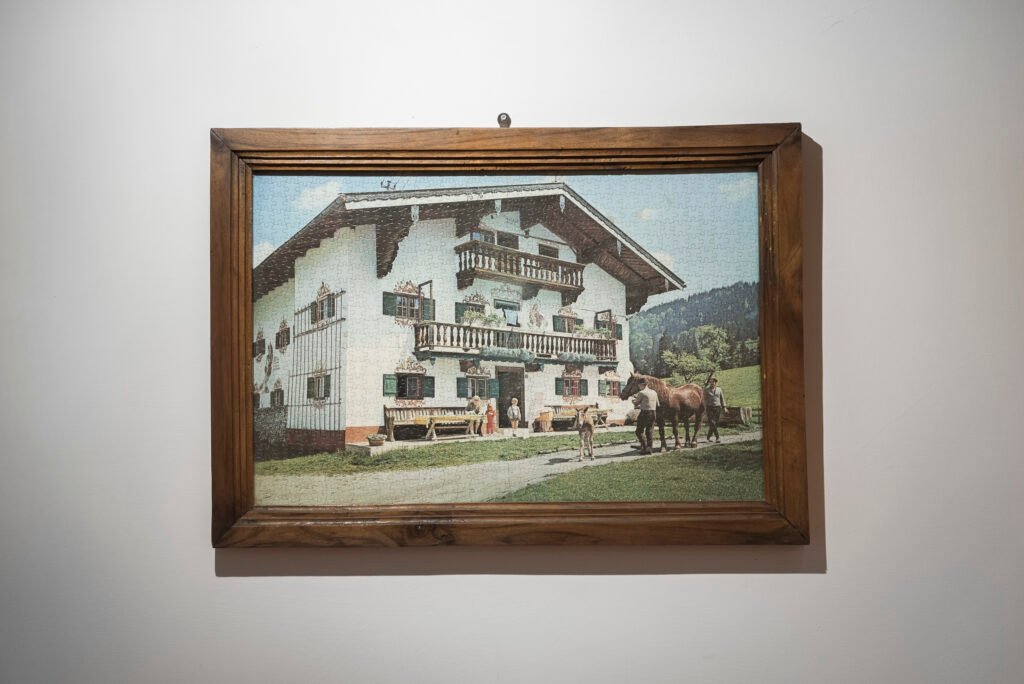
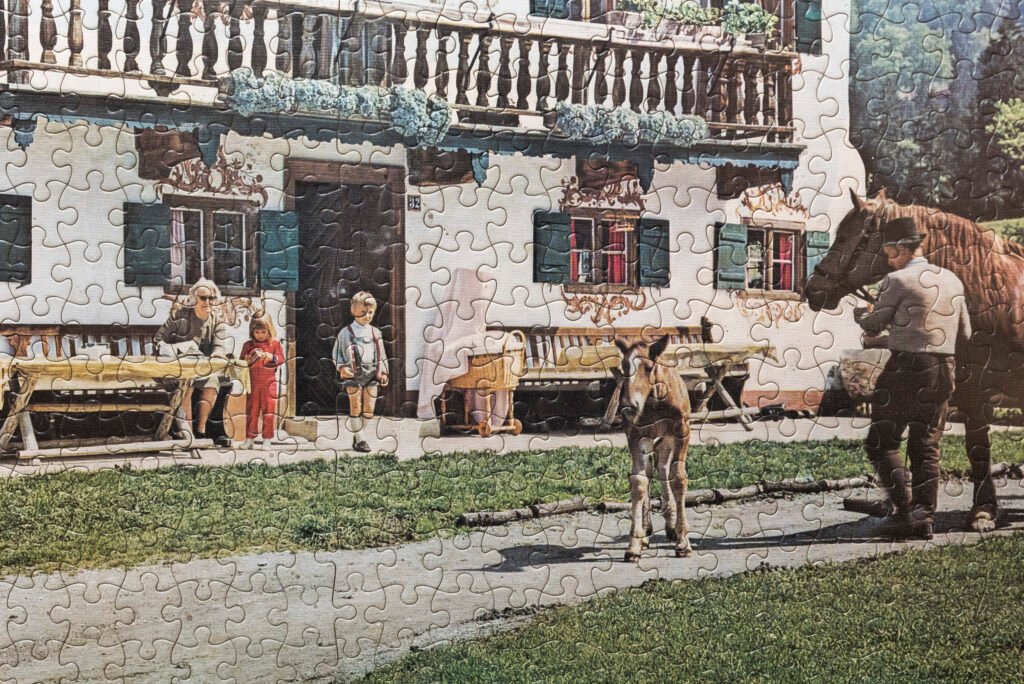
You’ve called your practice auto-ethnographic, studying your own life the way an anthropologist studies a culture. Does that discipline hold in the moment? Are you documenting as life happens, or does the material only reveal itself as usable in retrospect?
Mladen Bundalo: Autoethnography has become an increasingly important methodology within the social sciences because it acknowledges lived experience as a meaningful way of understanding culture. I think socially engaged art is fundamentally autoethnographic. If it isn’t grounded in lived experience, it risks becoming either ideological propaganda or a form of cultural colonialism.
My first responsibility is to understand my own emotional relationship to the culture I inhabit, and that happens quite naturally through everyday life. I photograph, write notes or collect objects, but I rarely know at the time why they matter. Only after a certain temporal distance do I begin to understand why I keep returning to them and how they connect with other experiences.
I think that is precisely what distinguishes autoethnography from autobiography. I am not trying to tell the story of my own life. I am using my own life as a way of asking questions that extend far beyond me. That possibility continues to motivate everything I do.
Culture exists in four dimensions; it unfolds through time. Every cultural experience has its own temporal rhythm, and it is only through that passage of time that certain patterns, repetitions and relationships begin to reveal themselves. In that sense, my work is never the documentation of a single event. It is a gradual process of understanding.
I have never been particularly fascinated by isolated major historical events. What interests me far more are the slower cultural processes that quietly shape how we live, remember, relate to one another and imagine home.