How a Latin Christian island community became the keeper of one of Kerala’s most extraordinary, and least understood, theatrical traditions
By Ros Elizabeth Thomas
Boats arrive at the various wharfs on the small island of Gothuruth, situated about 20 kilometers from Kochi and a brief canoe ride from Muthakunnam, as dusk descends over the Periyar River. Stepping ashore at any of these docks, one finds themselves on land that has served as a stage for 500 years. The island’s approximately 2,000 acres have been dominated by an art form so physically demanding and sonically powerful that it has left an indelible mark on the landscape. This art form, known as Chavittu Nadakam, or stamping drama, is celebrated as the birthplace of this unique tradition.
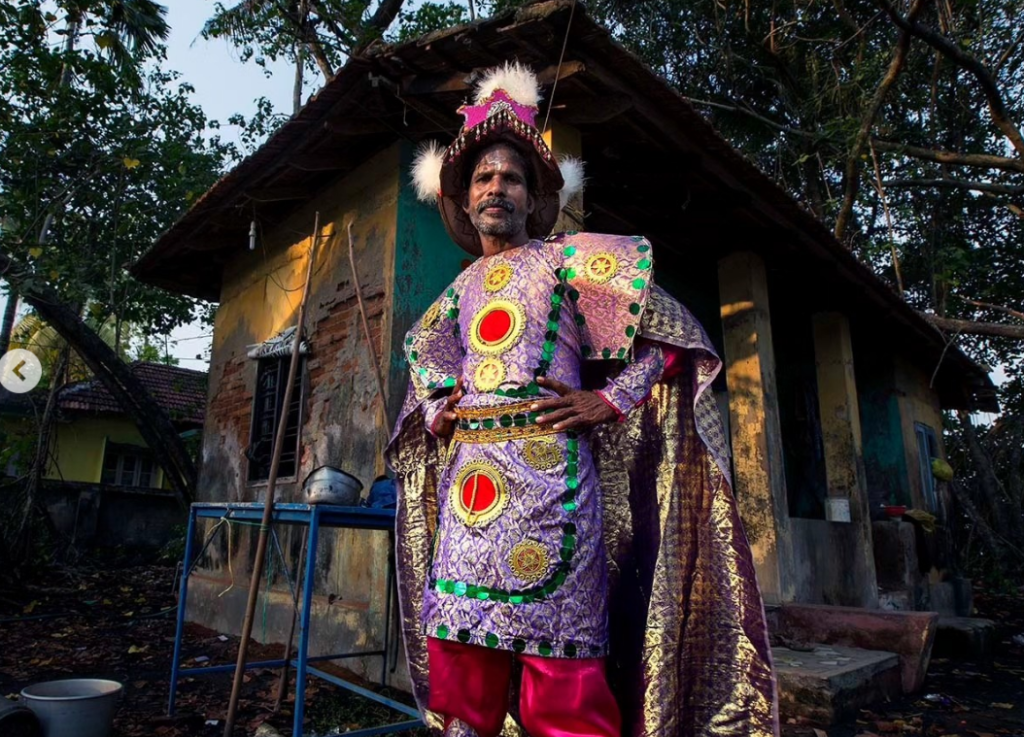
Near the Holy Cross Church, Kadalvathuruth, stands a statue honoring Chinna Thampi Annavi, the Tamil Catholic scholar credited with penning the first Chavittu Nadakam plays after arriving in Mattancherry in the sixteenth century. This tribute to a playwright reveals the island’s cultural priorities. The majority of Gothuruth’s residents are Latin Catholics, working as fishermen, coconut farmers, coir makers, and sand miners. Yet, come evening, many of these individuals transform into kings, soldiers, monks, and queens, donning elaborate costumes and imposing crowns to create a powerful rhythm on the wooden stage, accompanied by an orchestra of chenda drums and elattalam cymbals.
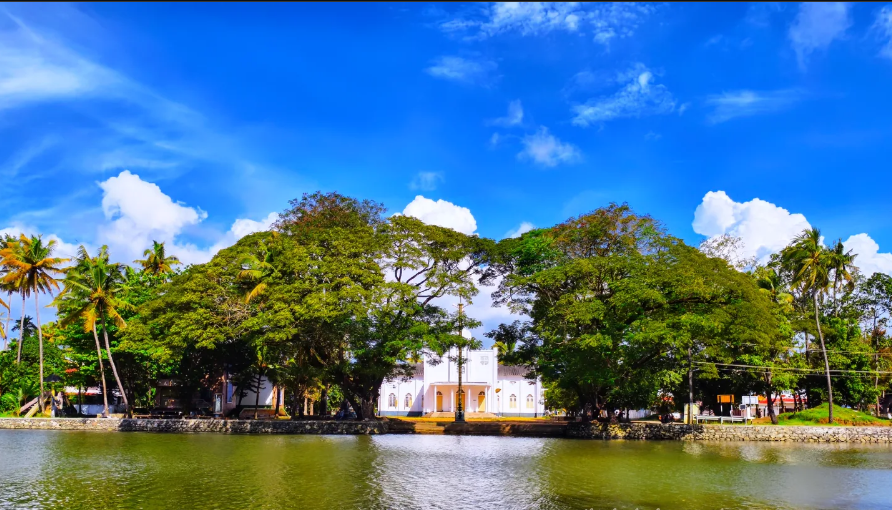
Chavittu Nadakam, which made its way to India with Portuguese missionaries in the sixteenth century, found a home among Kerala’s fisherfolk. It absorbed local theatrical traditions and evolved into something distinctly its own. Once thriving along the coast from Chavakkad in the north to Kollam in the south, today, the number of places where this art form flourishes are limited, with Gothuruth standing out as a primary bastion.
Theatre: The Identity of a Place
To grasp how Gothuruth remains a stronghold of Chavittu Nadakam, one must delve into the island’s history. Geographically situated in the Muziris region of Ernakulam district’s Paravur taluk, Gothuruth once enjoyed close ties to the ancient Muziris port, a hub for traders from Rome, Arabia, and China. According to local lore, the island’s name derives from Konthuruth, meaning “the king’s island,” reflecting its historical connection to Kottapuram Palace.
Home to a predominantly Latin Catholic population, Gothuruth’s identity plays a significant role in the history of Chavittu Nadakam. When the Portuguese arrived on the Kerala coast following Vasco da Gama’s journey to Calicut in 1498, they encountered a society rich in performance art traditions. Art forms such as Kathakali, Kudiyattam, Kalaripayattu, and Krishnanattam were deeply intertwined with Hindu temples and religious festivities. The Portuguese sought to establish a Christian theatrical tradition, collaborating with local performers and scholars to create one that would resonate with the island’s culture. The term “chavittu,” meaning step or stamp, reflects the art form’s essence, while “Nadakam” translates to drama.
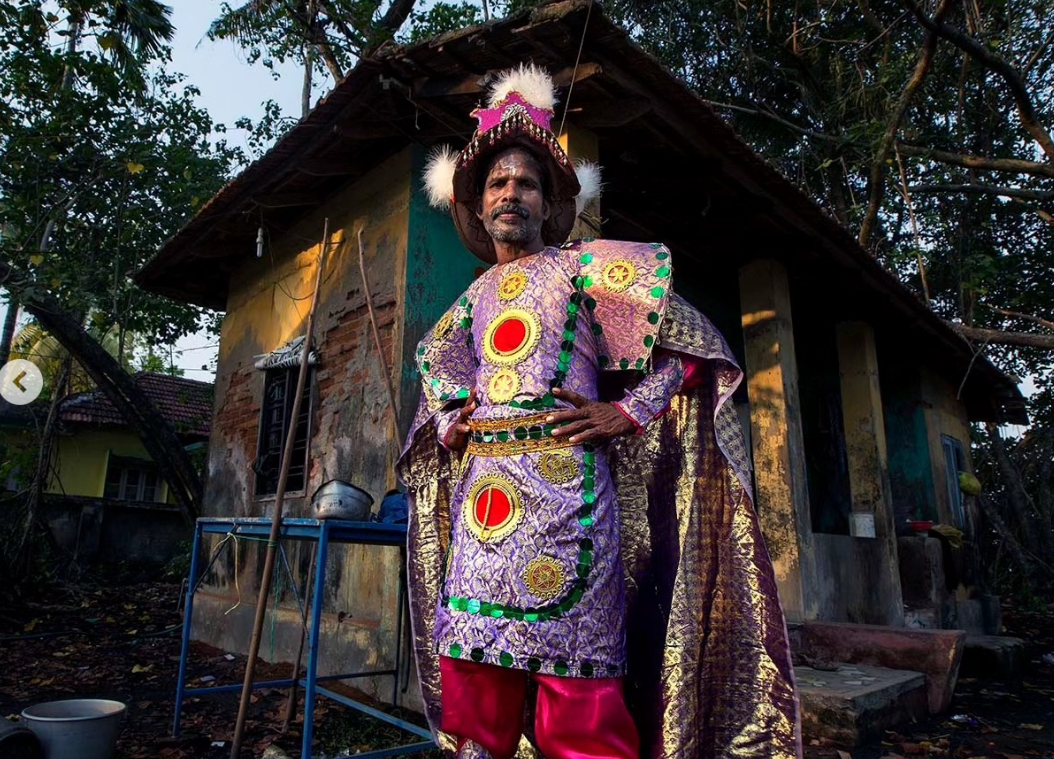
In Gothuruth, the art form was not merely appreciated; it became a way of life. Generations of families nurtured lineages of performers, and the asan, or teacher, was held in high esteem, often achieving celebrity status. A.N. Aniruddha Asan, for instance, boasts performances across approximately 2,000 venues and has trained nearly 3,000 disciples throughout Kerala. In recent years, islanders like Thambi Payyapilly have devoted their lives to teaching and performing Chavittu Nadakam.
What the Portuguese Brought, and What Kerala Made of It
The origins of Chavittu Nadakam are both historical and oral, necessitating a distinction between documented facts and generational storytelling. What is evident is that this art form emerged in the sixteenth century along the coastal stretch between Kodungalloor and Kollam. The Portuguese, recognizing a population inclined toward performance, adapted European theatrical elements—operatic structure, dramatic presentation, and narratives of kings—to further their Christian mission in India. Madhavi Puranam, writing for Attakkalam, notes that Chavittu Nadakam, with its biblical and European historical themes, made a significant impact on the local populace, aiding the spread of Christianity.
Chinna Thampi Annavi, a Tamil Catholic from Tamil Nadu who settled in Mattancherry, is revered as the father of the written Chavittu Nadakam. He is credited with composing the first plays in Tamil, while another key figure, Vedanayakam Pillai from Neyyoor, also wrote in Tamil. Initially performed in Tamil, the tradition continues to incorporate ancient Tamil plays, alongside a growing repertoire of Malayalam-language works.
The narratives often draw from European legends and history. The most renowned and frequently performed tale is “Karalman Charitham,” which recounts the story of Charlemagne, his twelve peers, and the reclaiming of Jerusalem from the Saracens. Other stories include “Brijeena Charitham,” detailing the tribulations of Queen Brijeena, and “Daveedhum Goliyathum,” which tells the tale of David and Goliath. These narratives resonate with the Latin Christian fisherfolk of Kerala, reflecting their own experiences with pride.
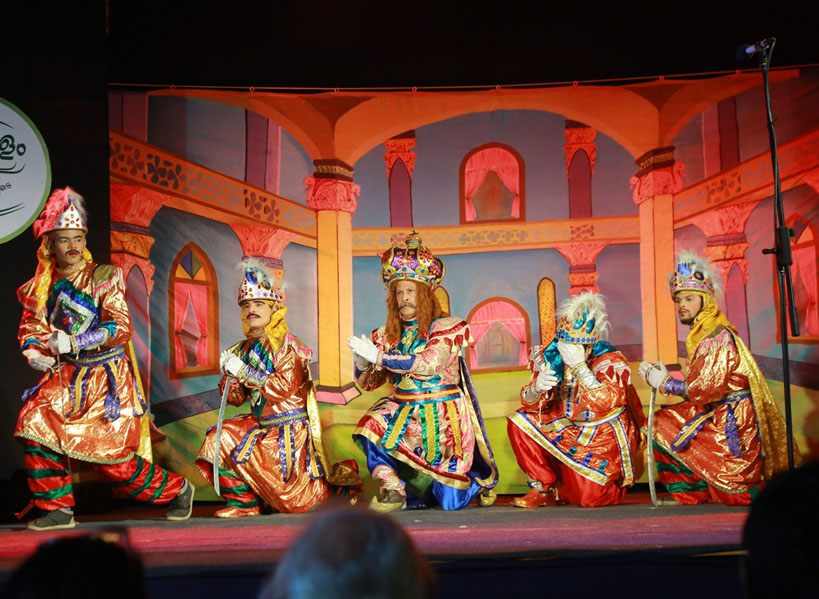
What is particularly striking is the way Kerala has enriched this imported art form. The distinctive footwork, characterized by stamping, is influenced by Kalaripayattu, while the chenda and elattalam provide the rhythmic backbone. Traditional training occurs in the kalari, where students learn to express emotion through body movement, eye gestures, and interactions with the chorus. The result is not merely Portuguese operatic theatre set in India, but rather a unique East-West cultural tapestry, as Madhavi Puranam observes.
In this traditional training environment, students are assigned roles based on their skill levels. They practice rhythmic stamping in unison, their powerful stomps creating a cloud of dust. Once the master is satisfied, the performance is ready for the stage. Historically, before the adoption of elevated wooden stages, Chavittu Nadakam was performed on the ground, where the stage was prepared by saturating it with cow’s milk to create a muddy surface. By the end of each performance, the imprint of countless well-placed stamps bore witness to the story told.
Thunder on the Stage
Experiencing a Chavittu Nadakam performance offers insight into the survival of this art form. The thattu, a layered wooden platform, serves as an instrument in its own right. When a king or warrior stamps his foot, the stage resonates, producing a sound that blends percussion with thunder. This stamping, known as chuvadu, is integral to the performance, punctuating the drama and signaling emotion in concert with the drums. The audience, having grown up with these stories, possesses an innate understanding of the rhythm.
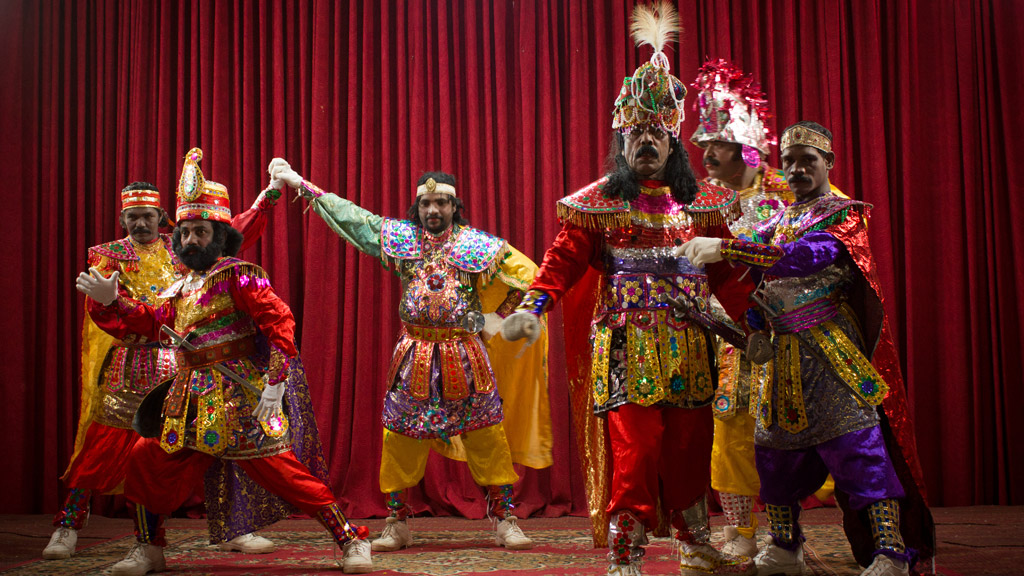
Visually, the performances are strikingly vibrant. Characters don elaborate costumes reminiscent of medieval European royalty, complete with crowns, brocade capes, and Greco-Roman-inspired armor. Feathered helmets shine under the lights, while groups of fighters wield shields and swords. The spectacle is designed for outdoor stages and evening shows, catering to audiences who gather in church yards or open spaces, where costumes evoke a sense of occasion rather than otherness. Since 1956, women have also taken to the stage, breaking the tradition where male actors portrayed female roles. A troupe of entirely female performers is believed to have emerged in Gothuruth during the 1960s.
Chavittu Nadakam eschews spoken dialogue; instead, the story is narrated and acted out through song. Actors sing as they enter, with a chorus responding. The narrative unfolds through songs known as chuvadi, structured into distinct phases labeled Varna Mattukal, Virutham, Kavi, Kappu, Thuyarm, and Kalithura, each marked by shifts in mood. A clown figure, the Katiyakaran, provides comic relief, while young boys known as Stutiyogar begin the performances with prayers and guidance. What once spanned several nights has now been condensed into three or four hours—an adaptation lamented by exponents of Chavittu Nadakam.
Struggles, Survival, and What Was Lost
The narrative of Chavittu Nadakam is also one of near extinction. In the coastal belt where this art form once thrived—spanning areas like Pallipuram, Thiruthipuram, Vaduthala, Kumbalangi, and Njarakkal—most troupes have dissolved. Valuable manuscripts have vanished, and the traditional chuvadu movements, once marked by the powerful sound of leather boots, have been muted by the introduction of rubber footwear. Additionally, performances now often feature tabla and keyboards instead of the traditional chenda and elattalam, altering the sound in ways that many veteran practitioners find hard to accept. Elaborate costumes have frequently been replaced with shiny, low-cost materials. The relationship between asans and their students has also weakened, as many artists juggle demanding jobs alongside their passion for this art form.
A deeper social context also warrants consideration. As folk dance researcher Sajitha Madathil points out in her essay collection “Chavittu Nadakam,” this art has traditionally been practiced by the Latin Christian community, which is largely lower caste. Despite being four centuries older than Kathakali, it received official recognition from the government only in 2010, and even now, it enjoys corporate sponsorship primarily in Gothuruth, overshadowed by Kerala’s more renowned classical forms.
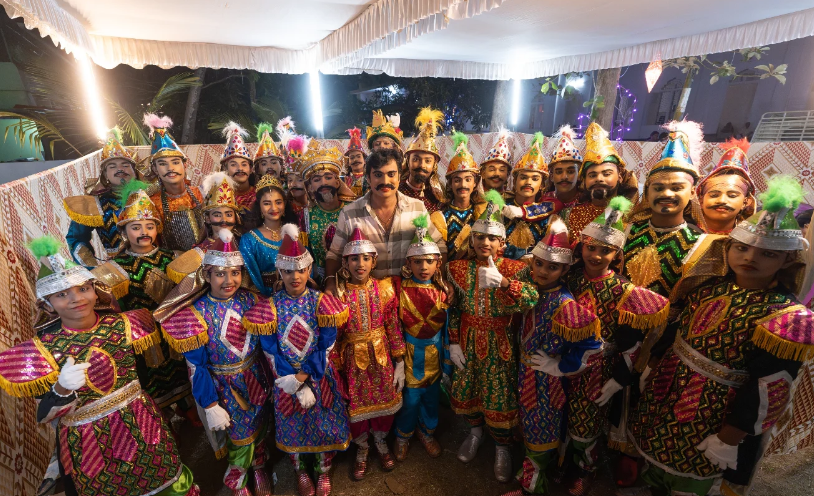
Yet, Gothuruth has persevered. Various factors contribute to this resilience: the island’s densely populated Latin Catholic community, its historical isolation from the mainland, and the enduring commitment of families and asans dedicated to Chavittu Nadakam through generations. The Chuvadi Fest, organized by Biennale in Gothuruth in 2012, reignited interest in the art form and brought the island into the limelight. Subsequently, Kerala Tourism designated it a Special Chavittu Nadakam Performance Centre under the Muziris Heritage Project, while the Kerala Chavittu Nataka Academy and Kerala Folklore Academy have conferred institutional legitimacy upon the art. Since 2012, its inclusion in the state School Youth Festivals (Kalolsavam) has also enhanced access and awareness among younger audiences, though these events feature only snippets rather than complete performances.
In December 2023, a Guinness World Record was set for the “most participants in a Chavittunadakam performance,” involving 504 artists and marking a significant moment for publicity. This event demonstrated that Chavittu Nadakam can still captivate audiences, although challenges related to long-term training, documentation, and sustainable livelihoods persist.
Why it Counts
Chavittu Nadakam holds significance that transcends mere heritage conservation and cultural tourism; it embodies a unique narrative of historical intercultural exchange without succumbing to the dichotomy of conquest or victimhood. The Portuguese arrived in Kerala as conquerors and missionaries, yet the Latin Christian fisherfolk of the Kochi coast transformed these influences into something distinctly their own. They made the stories of Charlemagne accessible to their children, blending the dynamic movements of Kalaripayattu with the actions of Frankish soldiers, thereby rendering their faith vibrant and theatrical.
In Gothuruth, one can still witness a carpenter or fisherman don the crown of a king in an open-air performance, experiencing firsthand the power of a community that chooses to narrate its own history. The wooden stage, steeped in centuries of tradition, continues to resonate with a thunderous spirit.
Ros Elizabeth Thomas is a graduate in journalism who works in the field of public relations and corporate communications, with a deep interest in culture. Based in Kerala, she has worked on multiple projects documenting the traditions and communities that give the state its texture, with a focus on the people who keep these practices alive. Her writing sits at the intersection of documenting, attentive to the quiet, ongoing work of preservation.