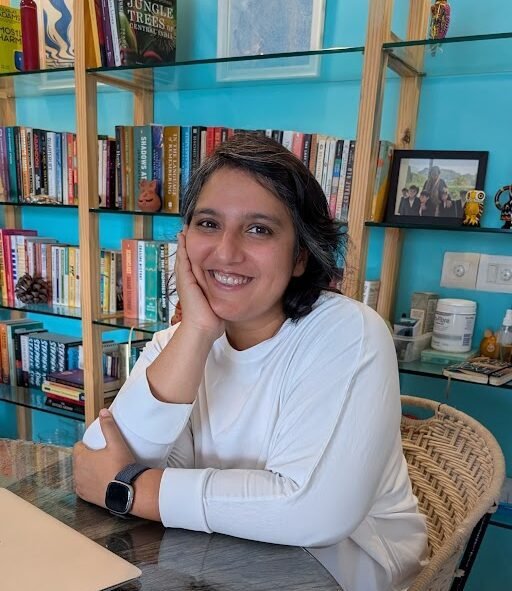
By Bhavya Balamurali
India makes more films than almost any country in the world, yet women remain underrepresented in its behind-the-scenes leadership. For nearly two decades, Aditi Anand has built a career at the intersection of cinema, culture and social change. As the Founder of Little Red Car Films and Co-Founder of Neelam Studios with Pa. Ranjith, she has backed films including Writer, J Baby, Bison: Kaalamaadan and the internationally acclaimed The Extraordinary Journey of the Fakir. Across languages, industries and formats, her work has consistently championed stories that challenge convention, expand representation and centre voices that have historically been pushed to the margins.
A producer, activist, queer parent and one of Indian cinema’s most quietly influential voices, Aditi Anand’s work is united by a single conviction: that stories about marginalised communities are most powerful when told by the people who have lived them. As Anand explains in the conversation below, this is not simply an ideological position but a creative philosophy, one that asks who holds the camera, who finances the story, and ultimately, who gets to decide which lives deserve to be portrayed with full, 360-degree complexity rather than reduced to a single narrative of suffering. Throughout her career, she has consistently backed filmmakers telling stories from within their own communities, rather than speaking on their behalf.
In conversation with ACF India, she talks about the difference between visibility and inclusion, the comforting villains Indian cinema still prefers to real systems of power, and much more.
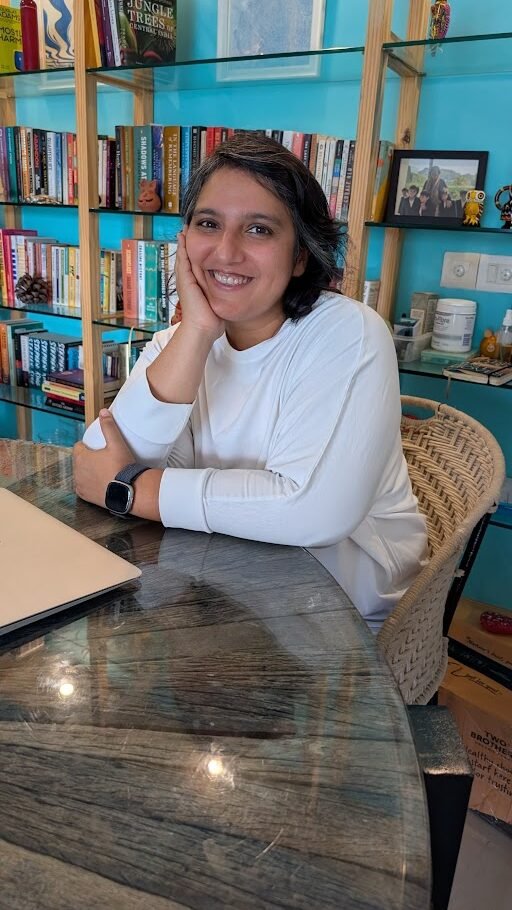
ACF India: From No One Killed Jessica and Paan Singh Tomar to Writer, J Baby and Bison: Kaalamaadan, your work consistently gravitates towards stories that challenge power, question institutions and centre voices often left at the margins. What draws you to these narratives, and what do you believe makes a story worth telling?
Aditi Anand: I cannot really speak to No One Killed Jessica or Paan Singh Tomar in this context because I was working within a studio at the time. The decisions to make those films were not decisions any one of us was singularly responsible for; they were very clearly studio decisions. I can speak more directly about The Extraordinary Journey of the Fakir and the work I have produced independently—Writer, J Baby, Bison: Kaalamaadan and the films we now have forthcoming.
Even within that work, it has never been a conscious decision to say, “I am now going to make films about disenfranchised people.” In fact, that framing itself is complicated. Sometimes making a film about someone is not nearly as powerful as making a film with someone.
That was one of the most important turning points for me when I began working with Ranjith sir and Neelam Studios. What excites me about these films is that they are not an outsider’s interpretation of a community. They are films made by people drawing from their own experiences, worlds, cultures, histories, memories and points of view. When a film approaches its characters through the lens of, “This is a story about the disenfranchised,” those characters can remain disenfranchised even within the storytelling. They are often reduced to their oppression. They become one-sided, monochromatic figures defined entirely by struggle.
We see this even in programming where Dalit and Adivasi characters may be central to the story. They may be pivotal characters, but the casting, costumes and the way the camera looks at them can still come from an external gaze. They are made representative of their suffering rather than being allowed to exist as complete, 360-degree human beings.
People are more than the battles they fight. They desire, despair, love, laugh, have style, make music, carry contradictions and imagine different futures for themselves.
What draws me to the filmmaking I am engaged with in Tamil cinema is this flipping of the lens. These are stories in which people have agency over their own destinies. They are not waiting to be explained, rescued or saved by somebody else.
The other part of it is purely creative. We have worked extensively with debut filmmakers, and that is enormously exciting. Working with a new director can sometimes be frustrating, because they are still discovering how to translate what is in their head into a film. But it is also deeply rewarding. They bring something to the table that you have not seen or experienced before. The wealth of new talent, imagination and lived experience within this space is extraordinary. I have agreed to work with amazing people.
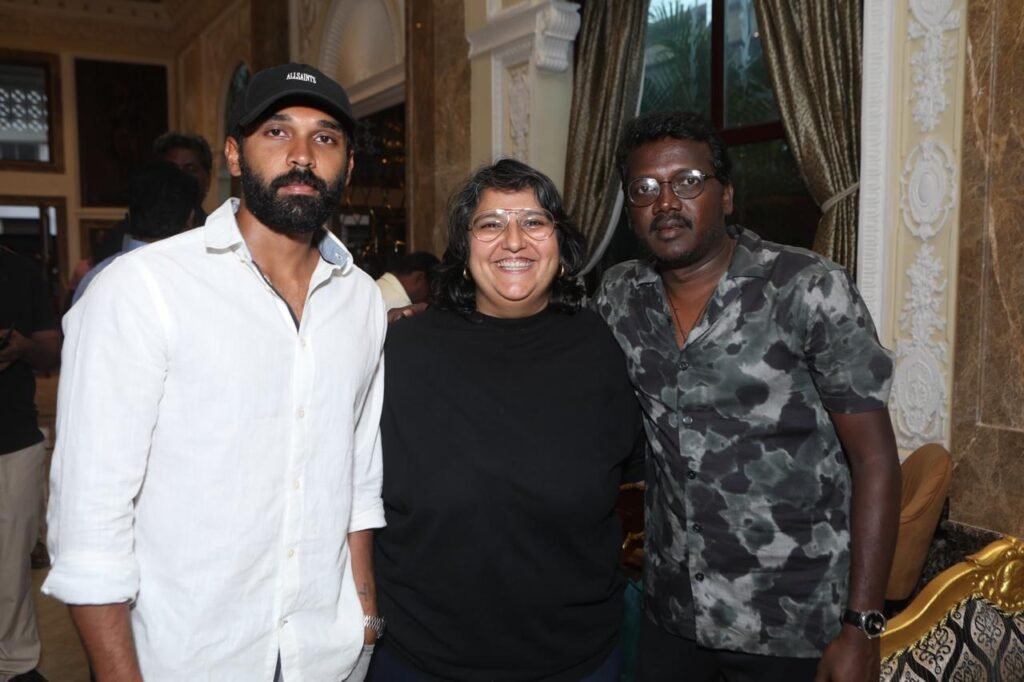
ACF India: You founded Little Red Car Films and later co-founded Neelam Studios with Pa. Ranjith, creating spaces for stories that may not always fit conventional commercial formulas. In an industry driven by scale and certainty, what does it take to build and sustain a production house with a clear creative and political vision?
Aditi Anand: I think the first thing it requires is accepting that clarity of vision does not eliminate uncertainty. In fact, sometimes it increases it.
A production house with a strong creative or political identity cannot survive on intention alone. It still has to understand budgets, markets, contracts, distribution, recoveries and risk. The romantic idea is that one must simply be brave enough to back the right films. The less romantic truth is that courage without structure can become unsustainable very quickly.
At Little Red Car Films, and later at Neelam Studios, the challenge has always been to build systems around instinct. You have to protect the film while also protecting the company that makes the film. You have to know when to fight, when to compromise and, most importantly, what cannot be compromised.
Working with Ranjith has taught me that a political vision does not have to exist outside commerce. The question is not whether a film is commercial or political. The question is whether its politics are diluted in the pursuit of commerce, or whether the two can strengthen each other. Films such as Bison: Kaalamaadan demonstrate that rooted, politically conscious cinema can also be emotionally accessible and expansive in scale.
Sustaining such a company also requires building an ecosystem of writers, directors, technicians, actors and partners who understand the larger purpose of the work. You cannot build a meaningful production house around one filmmaker or one successful film. It must become a space in which new voices can enter, grow, fail, learn and make work without being asked to flatten themselves into what the market already understands.
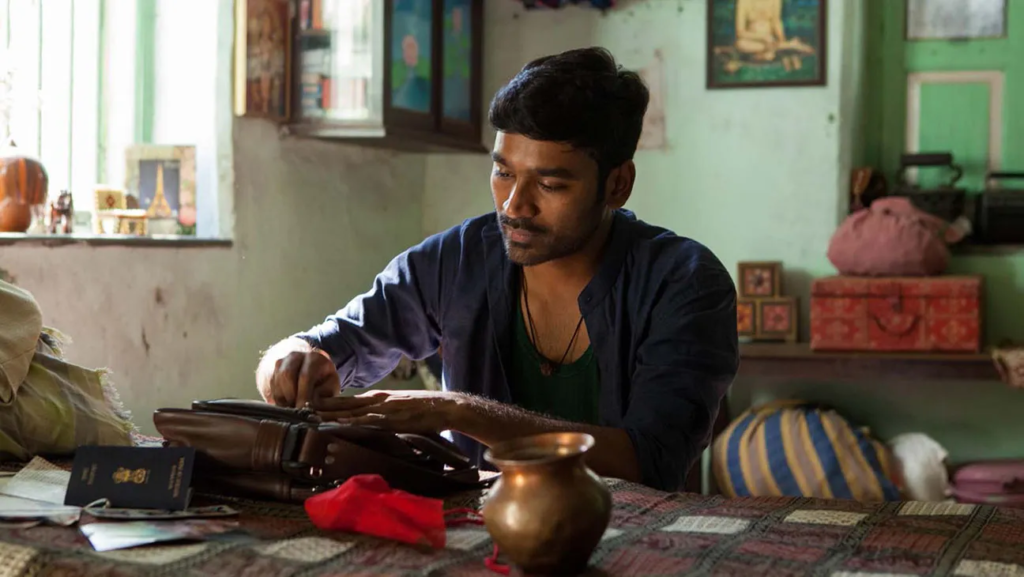
ACF India: The Extraordinary Journey of the Fakir was one of India’s most ambitious international co-productions, travelling across dozens of countries but finding very different responses in different markets. Looking back, what did that experience teach you about storytelling, audiences and the kinds of stories that truly transcend borders?
Aditi Anand: Firstly, that film broke my heart, many times! We like to say that emotion is universal, and of course it is. But the way emotion is read is deeply cultural. Humour travels differently. Irony travels differently. Sentiment travels differently. Even the pace at which an audience is willing to surrender to a story changes from one country to another.
The Extraordinary Journey of the Fakir was released across an extraordinary number of territories, and the response varied sharply from market to market. That experience made me less interested in the idea of making something “global” and more interested in making something specific enough to travel. The films that cross borders most powerfully are not usually those that have removed all cultural particularity. They are often the ones that are most deeply rooted in a place, a language or a worldview, but which contain an emotional or philosophical truth that audiences elsewhere can recognise.
It also taught me that international co-productions are not only creative exercises. They are negotiations between different industrial cultures, financing structures, expectations and ideas of authorship. That can be enriching, but it can also create a film that is being pulled in several directions at once.
The lesson I carried forward was that scale and reach cannot substitute for a clear point of view. A film can travel physically across the world and still struggle to connect. Another film can emerge from a very specific village, community or language and speak to people thousands of kilometres away. Transcendence comes from truth, not neutrality.And that pretending to be a producer who knows how to deliver a film but shys away from the hard calls on marketing and distribution is still a failed producer, you have to fight for a film right to the end.
ACF India: Producers are often seen as the gatekeepers of cinema, they decide which stories receive time, money and belief. How do you approach that responsibility, particularly when backing stories that challenge dominant narratives rather than reinforce them?
Aditi Anand: For me, the responsibility begins with interrogating my own instinct. Why do I believe one story or film maker deserves attention “more than another? Why do I find one character relatable and another too difficult? Often, what the industry calls audience instinct is simply accumulated prejudice dressed up as market wisdom.
At the same time, backing a challenging story does not absolve us from making it well. Political agreement is not a substitute for rigour. In fact, when a film challenges dominant narratives, the craft has to be stronger because the film will often be judged more harshly.
A producer’s belief has to be practical. It means finding the right budget, the right partners, the right release strategy and the right language in which to communicate the film without simplifying it. It also means standing by the filmmaker when the work becomes inconvenient, not only celebrating the politics once the film is successful.
I also think producers must be willing to redistribute belief. The industry repeatedly backs the same kinds of people because they are seen as safe. New voices are asked to prove themselves before being given the resources with which they might prove themselves. That circular logic has to be broken.
ACF India: Your personal life and your work have both been rooted in conversations around identity, belonging and representation. As a queer parent, activist and producer, how have your lived experiences shaped the stories you choose to tell? And do you think Indian cinema is moving beyond symbolic representation towards genuine inclusion?
Aditi Anand: My lived experience has certainly shaped how I understand exclusion, but I would be wary of claiming an equivalence between different forms of marginalisation.Being queer, being part of a family that the law still does not recognise equally, and raising a child within that reality has made questions of belonging very personal to me. It has shown me how institutions can erase people without necessarily using overt violence. Sometimes exclusion is a missing box on a form, an absent relationship in a legal document, a passport office that does not know what to call your family, or a right that is available to everyone except you.
That experience has made me attentive to the quiet ways in which power functions. It has also made me deeply interested in the distinction between visibility and belonging. A person can be visible and still not be allowed full citizenship, dignity or complexity. Indian cinema has undoubtedly moved forward in terms of representation. There are more queer characters, more conversations around caste and gender, and more filmmakers from communities that were historically excluded from authorship. But visibility is not the same as inclusion. Genuine inclusion means asking who is writing, directing, producing, casting and making decisions. It means allowing people from marginalised communities to tell stories that are not only about their marginalisation. It means that a queer actor does not have to remain confined to queer roles, and that a Dalit filmmaker is not expected to repeatedly explain caste to an upper-caste audience.
Symbolic representation often places difference inside the frame while leaving power unchanged behind the camera. Inclusion begins when authorship, ownership and institutional authority begin to shift.
ACF India: After decades of building stories across languages, regions and cultures, what conversations do you still feel Indian cinema is reluctant to have? Is there a film you’ve long wanted to make that the industry or perhaps even society isn’t ready for yet?
Aditi Anand: Indian cinema is still reluctant to talk honestly about power without creating comforting villains. We are willing to condemn individual cruelty, corruption or prejudice. We are less comfortable examining systems that benefit ordinary, respectable people. We prefer the corrupt politician to the functioning institution that quietly excludes. We prefer the violent patriarch to the loving family that still reproduces patriarchy. We prefer caste as an atrocity rather than caste as everyday structure. We prefer queerness as tragedy, courage or identity rather than as ordinary domestic life.
In my case specifically I think it’s not about the film I want to make but the role I want to play, perhaps I will find my voice as a director!