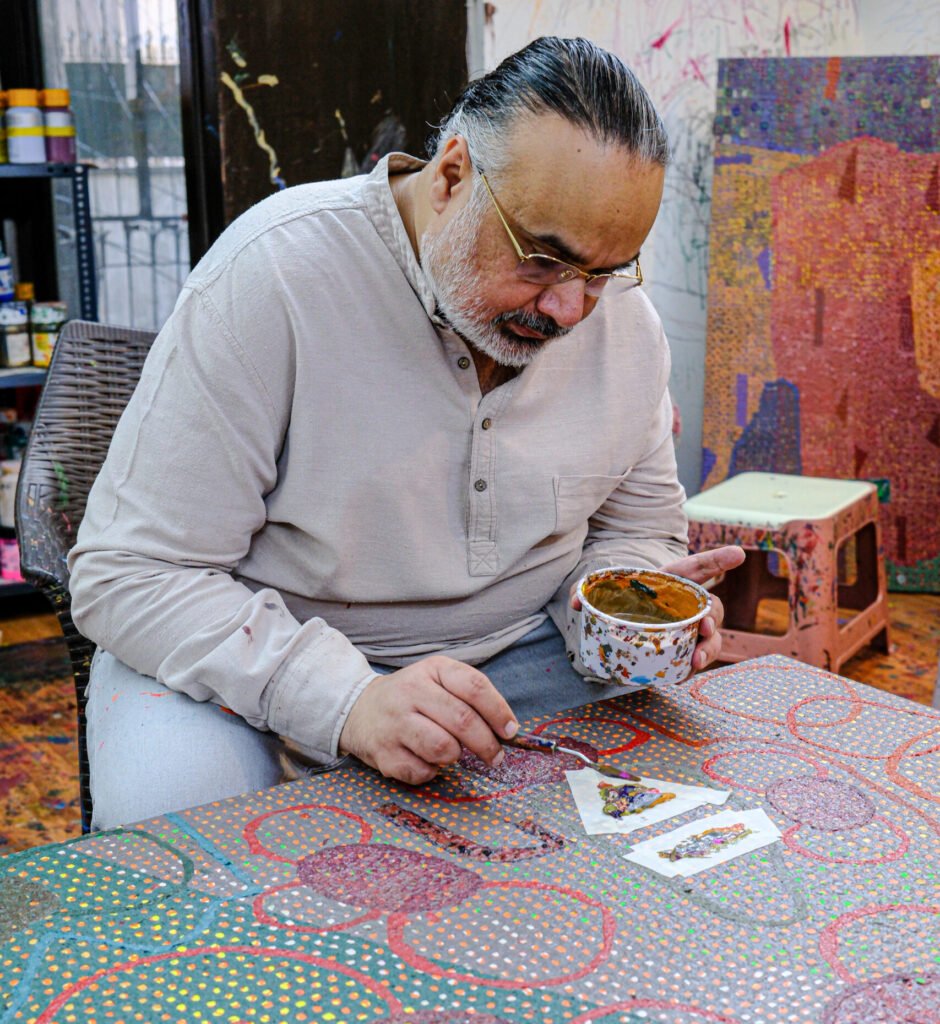
Couturier and textile designer Harpreet Narula makes his solo debut with Inward, a new exhibition of abstract paintings at Art Explore, New Delhi.
By Bhavya Balamurali
Harpreet Narula has spent his career designing for other people, an outcome that has to be right by a fixed date. His paintings come from somewhere else entirely, an impulse he’s followed quietly for years, built on habit, repetition and memory rather than a deadline. That’s the difference he keeps coming back to.
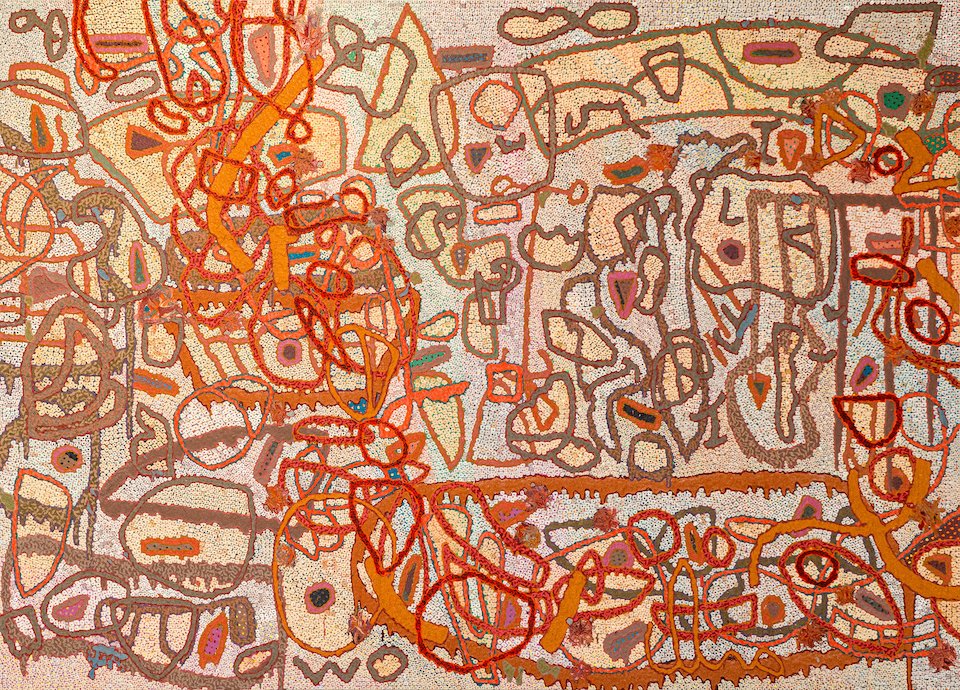
His first solo exhibition, Inward, opened on 3 August 2026 at Art Explore in New Delhi and runs through 21 August. Curated by Vikram Singh, the show brings together a body of abstract paintings shaped by three things Narula has lived with for years: the painted walls of Rajasthan and Punjab, the structural language of the loom, and the discipline of repetition.
Narula didn’t set out to build a show. “There wasn’t a single moment when I decided to make an exhibition,” he says. “I simply kept painting. Every work led naturally to the next one.” Over time he started noticing the paintings were in conversation with each other, colours that kept showing up, rhythms that got stronger from one canvas to the next. “The works started to belong together. That was the point when I realized there was an exhibition waiting to happen.”
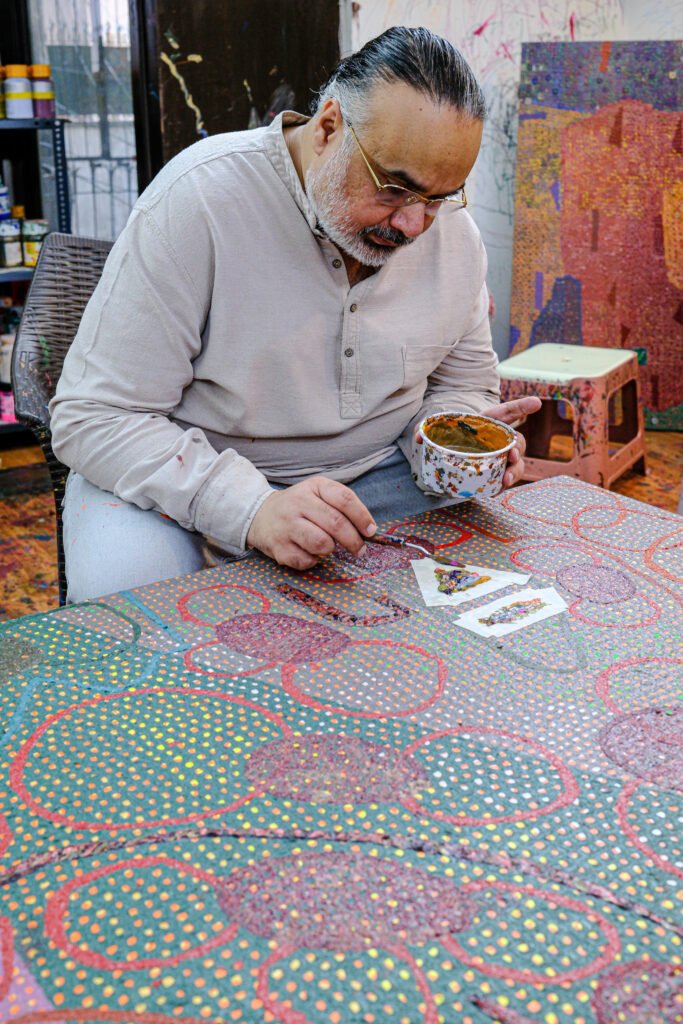
He’s known for a long career in textile and garment design, and he doesn’t draw a hard line between that work and this one. “I think the instinct has always been the same,” he says. “Design and painting both begin with observation. They both ask for discipline, patience and attention to detail.” What’s different is time. “There is no brief to respond to. I can stay with a painting for as long as it needs me. Every mark is a decision I make for myself.”
That freedom shapes how the paintings come together, built up mark by mark, over thousands of decisions, rather than arriving all at once. Pattern turns into rhythm, rhythm into structure, in the same way his years with textiles taught him to think.
Much of what surfaces in the work comes from the frescoes of Shekhawati and the painted havelis and kothis of Punjab, buildings and surfaces Narula has known since he was young. He’s not interested in reproducing them. “I never think about translating tradition. I think about memory,” he says. “I am not trying to recreate those walls. I am painting what they left behind in me.”
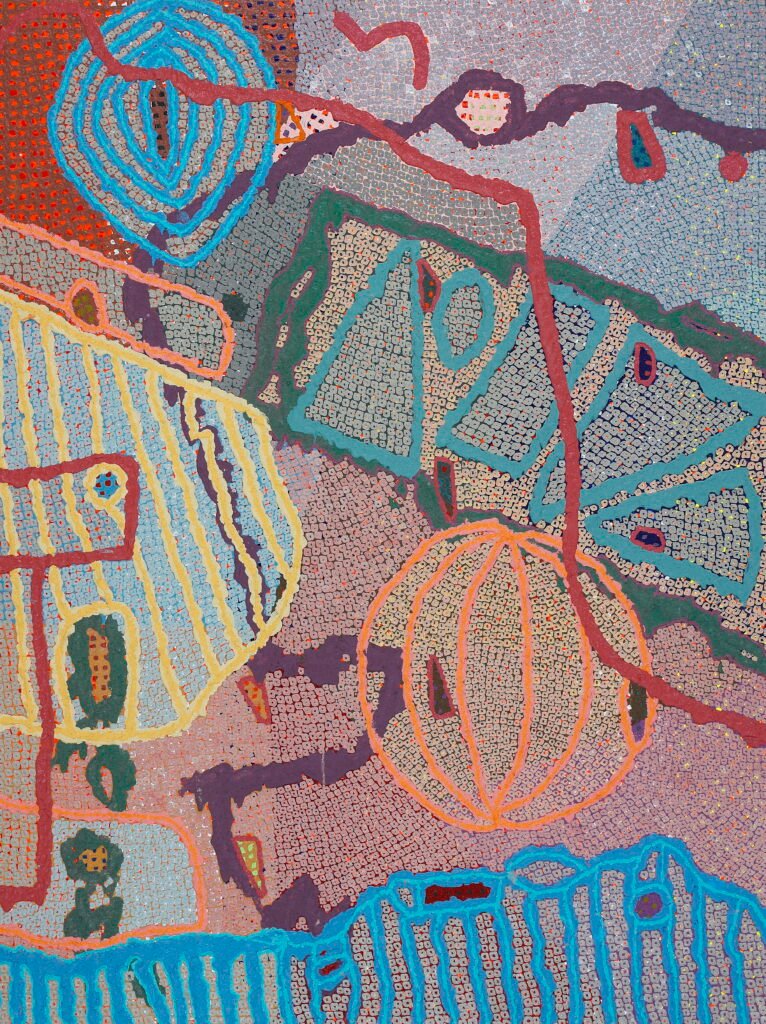
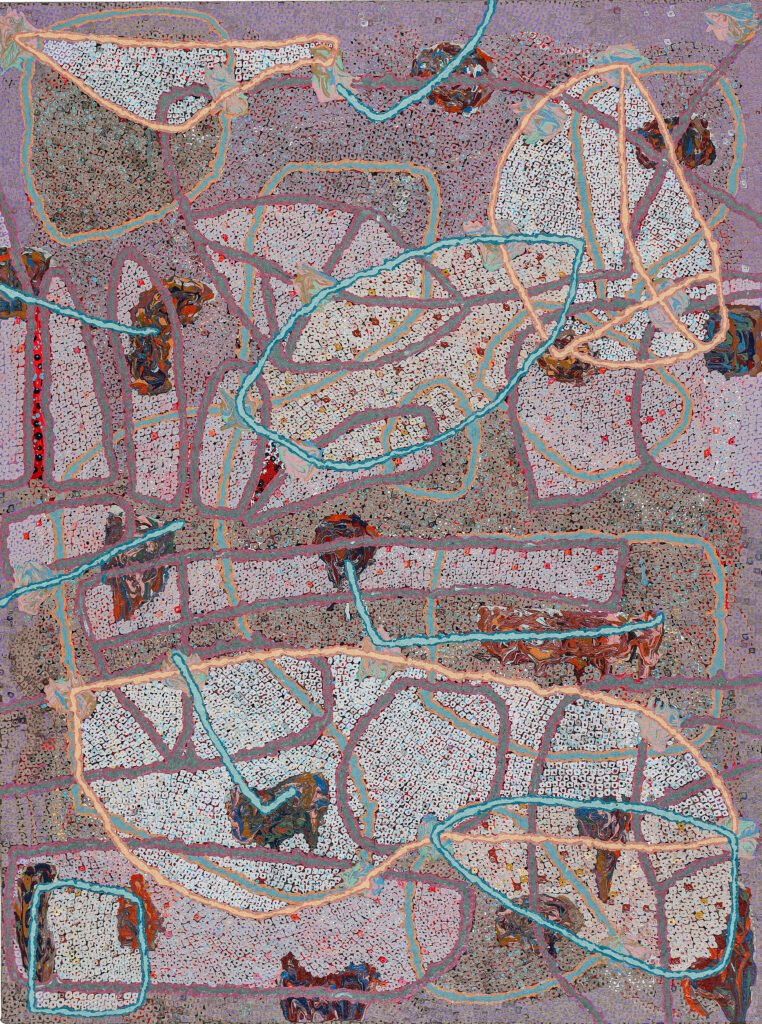
Textile design gave Narula a way of thinking in pattern and structure, but painting asked something different of him, sitting with not knowing where a piece is headed. “In design, there is usually a clear destination. Painting doesn’t work that way,” he says. “Sometimes I begin with one idea and the painting asks to go somewhere completely different. Learning to trust that process took time.”
The title comes from what painting has become for him day to day. “Painting has become a quiet part of my life. It is where I find clarity and peace,” he says. “It isn’t about stepping away from one world. It is about arriving at another part of myself.”
Asked what he hopes people take from the show, Narula isn’t thinking about how they’ll categorize him. “I hope they don’t think about me as a couturier or as a painter. I hope they simply experience the work with an open mind,” he says. “If someone spends time with these paintings and leaves feeling a little quieter, a little more attentive or a little more curious, I think the work has done what it needed to do.”
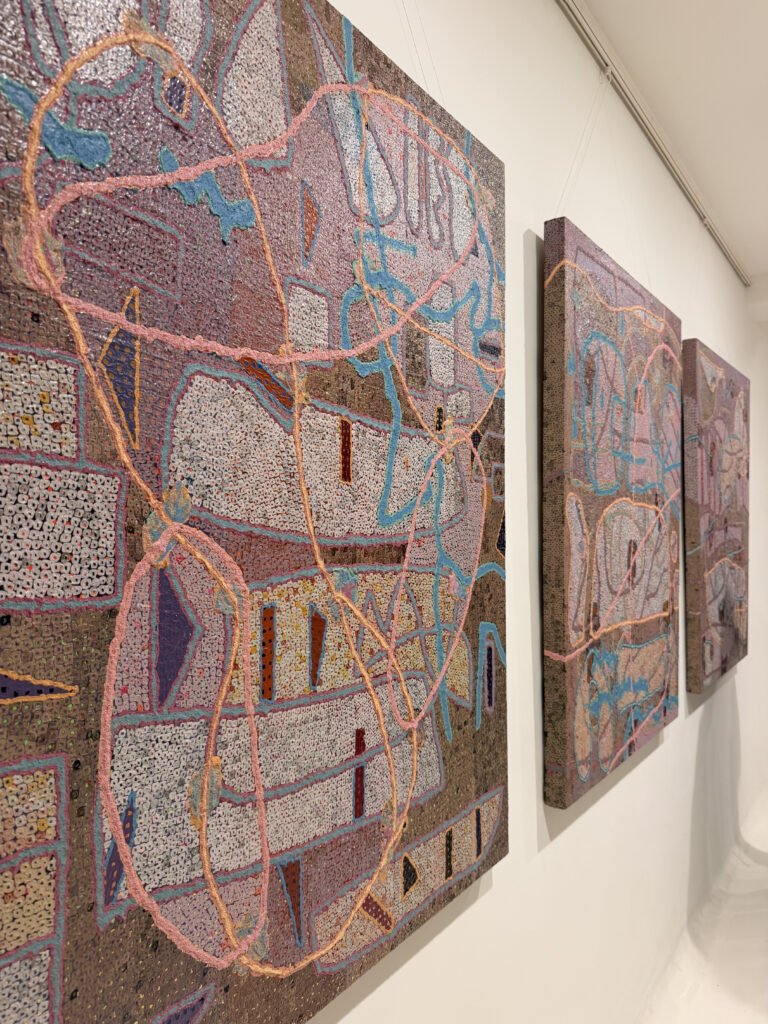
Harpreet Narula was born in 1974 and lives and works in New Delhi. Alongside his career in textile and garment design, he works in mixed media on canvas, drawing on the fresco traditions of Rajasthan and Punjab and the structural language of textiles. Inward is his first solo exhibition.
In an art world that often celebrates immediacy, Inward takes a quieter approach. The exhibition is shaped not by dramatic shifts or bold declarations, but by the consistency of returning to the studio, observing closely and allowing each work to develop over time.
Inward is on view at Art Explore, New Delhi, from 3 to 21 August 2026.