By Avni Jain
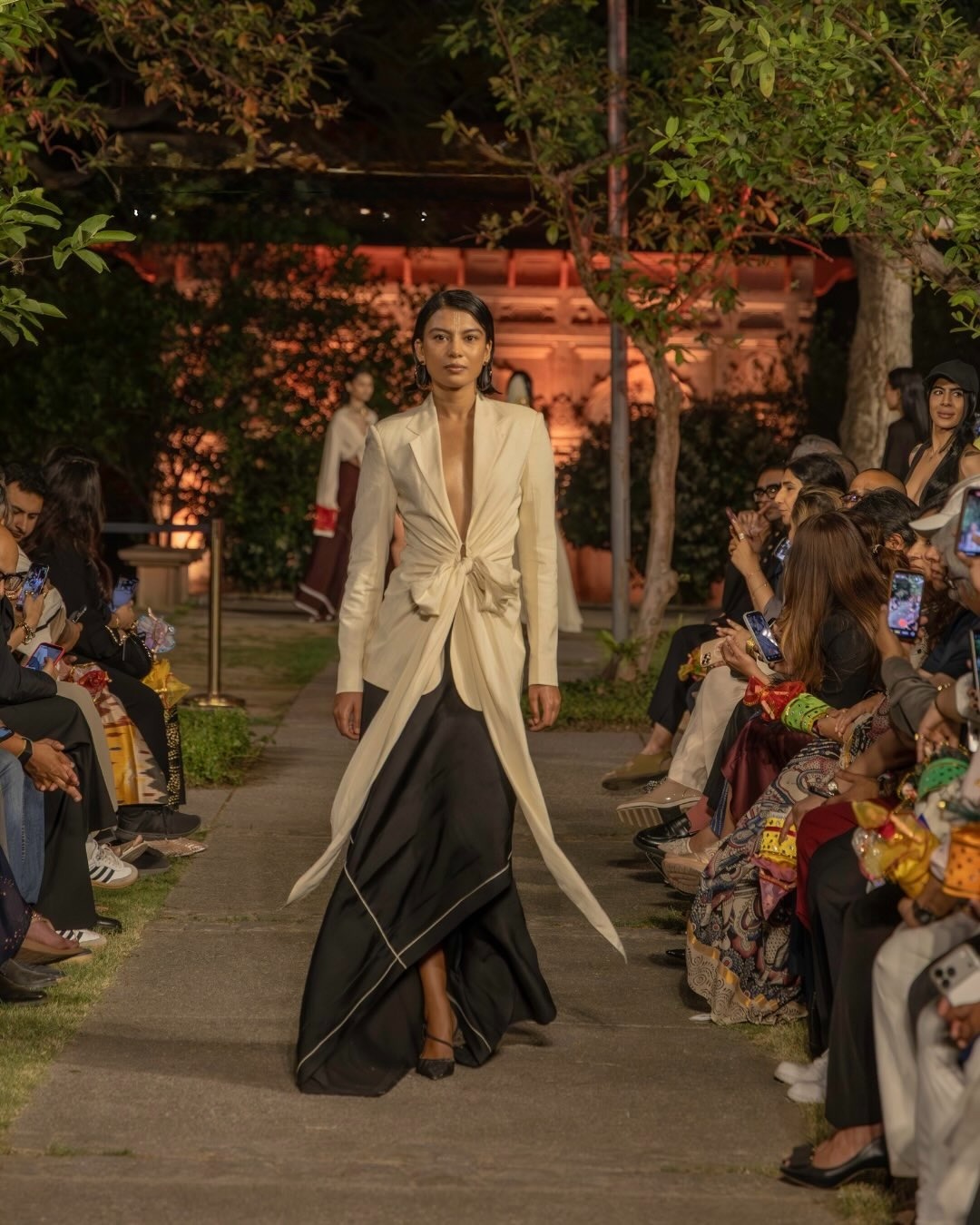
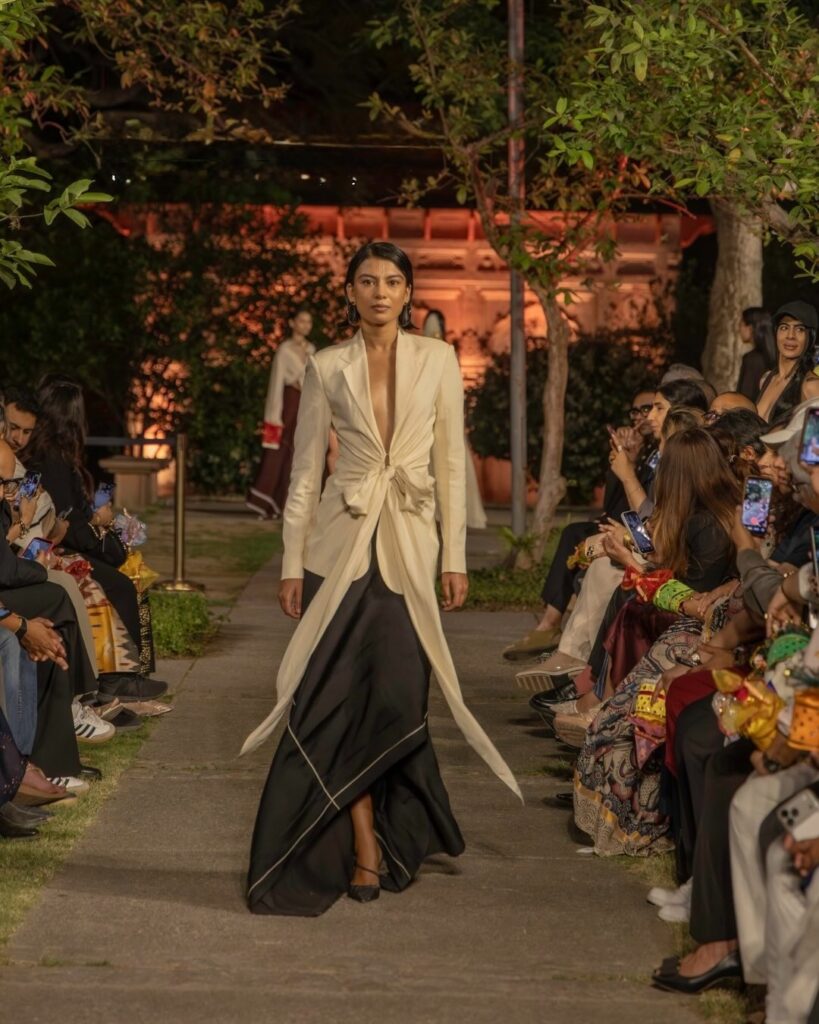
On 09 April 2026, the sixteenth-century heritage gardens, Sunder Nursery, transformed into a stage of Manipuri culture. When Jayshree Koijam and Reena Ahanthem, the designers and founders behind 11Tareng, chose Sunder Nursery as the stage for their latest collection, they shared the process of creation with the audience, bringing them closer to the type of environment the collection was conceptualised in, mirroring the roots of their textiles, the landscapes, the stillness and the organic rhythm in which these weaves are created.
“In many ways, the collection has “grown” from a similar connection to nature, so presenting it in a space like this made the experience more immersive and honest.”
It is not often a culture is so well represented through one of the most prominent art forms there is – fashion. One of the most striking visual element of the show was the traditional Manipuri tilak worn by each model, establishing the collection’s grounding in cultural authenticity.

At the heart of this collection lies an expanded vocabulary of Manipuri silk. In previous work, 11Tareng had built their language primarily around Khurkhul silk. In contrast, the designers chose to bring together several varieties of handwoven Manipuri silk this time, exploring how each adapts to different silhouettes and how, despite their material differences, they cohere into a single unified vision.
The choice carries weight beyond aesthetics. Khurkhul silk, the designers note, is increasingly being adulterated, blended with other yarns as cost and convenience crowd out tradition. By working closely with the few weavers who still practise pure Khurkhul, 11 Tareng is performing an act of cultural custodianship as much as design. To show it on a runway is to make a public case for its survival.
Chosen for the seamlessness with which they answered the collection’s silhouette the collection draws on two distinct embroidery traditions along the silk: the Kanap embroidery of Andro village and Kheiroithek. The motifs themselves have been kept in their original form, their meaning and identity intact. What 11Tareng has played with is placement, scale and layering; the traditional is made contemporary through a more thoughtful arrangement of what was always there.
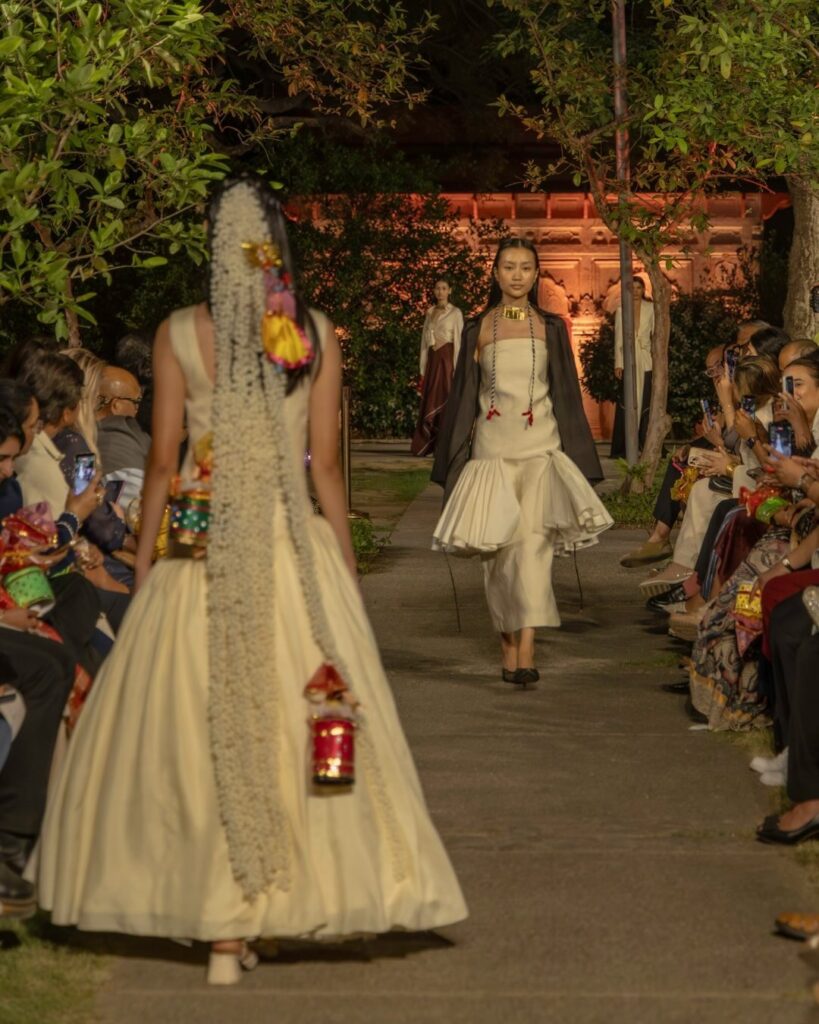
One of the defining qualities of the collection is its embrace of juxtaposition: between motifs and modern placement, between traditional textiles and contemporary silhouettes, between the hand-stitched simplicity of Manipuri draping and the structured shapes through which that draping moves. The designers shared that this is not a strategy imported from the outside. Juxtaposition, they point out, has been part of Manipuri culture for centuries. It is not tension; it is balance, a way of holding different elements together in the same breath without forcing either to disappear.
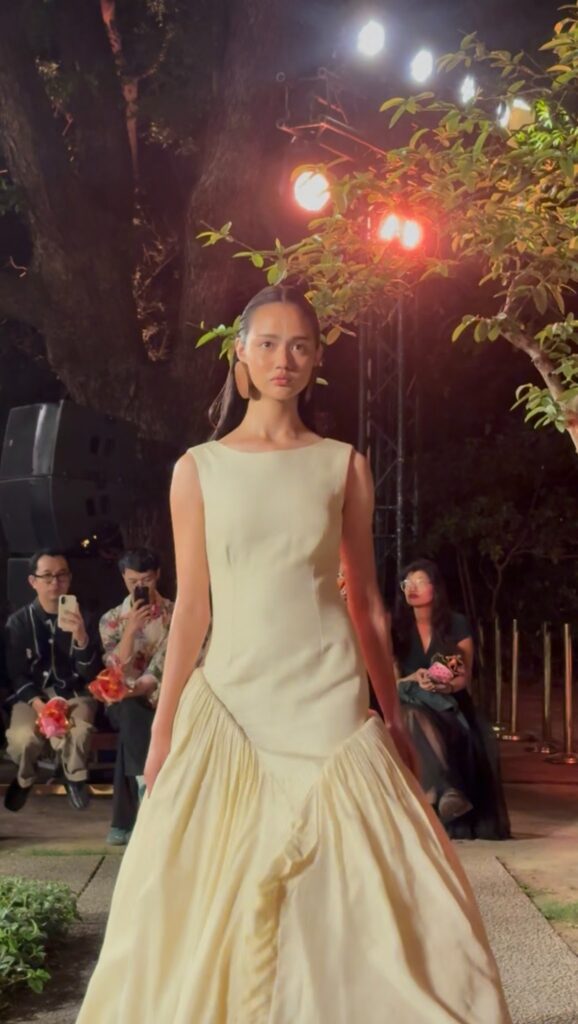
The draping, in particular, rewards attention. Manipuri garments have traditionally involved minimal stitching, often hand-stitched; their forms arrived at, through folding and wrapping rather than cutting and seaming. 11Tareng has stayed as close to this approach as the collection allows: simple drapes, natural falls, forms that remember how they were first worn. Against these, the more structured and layered pieces create a contrast that felt authentic; the past and the present held in the same.