By Avni Jain
There is something quietly disorienting about standing before a two-thousand-year-old terracotta figurine and asking it a question out loud. Yet at Travancore Palace in New Delhi on 20 February 2026, that is precisely what visitors were invited to do.
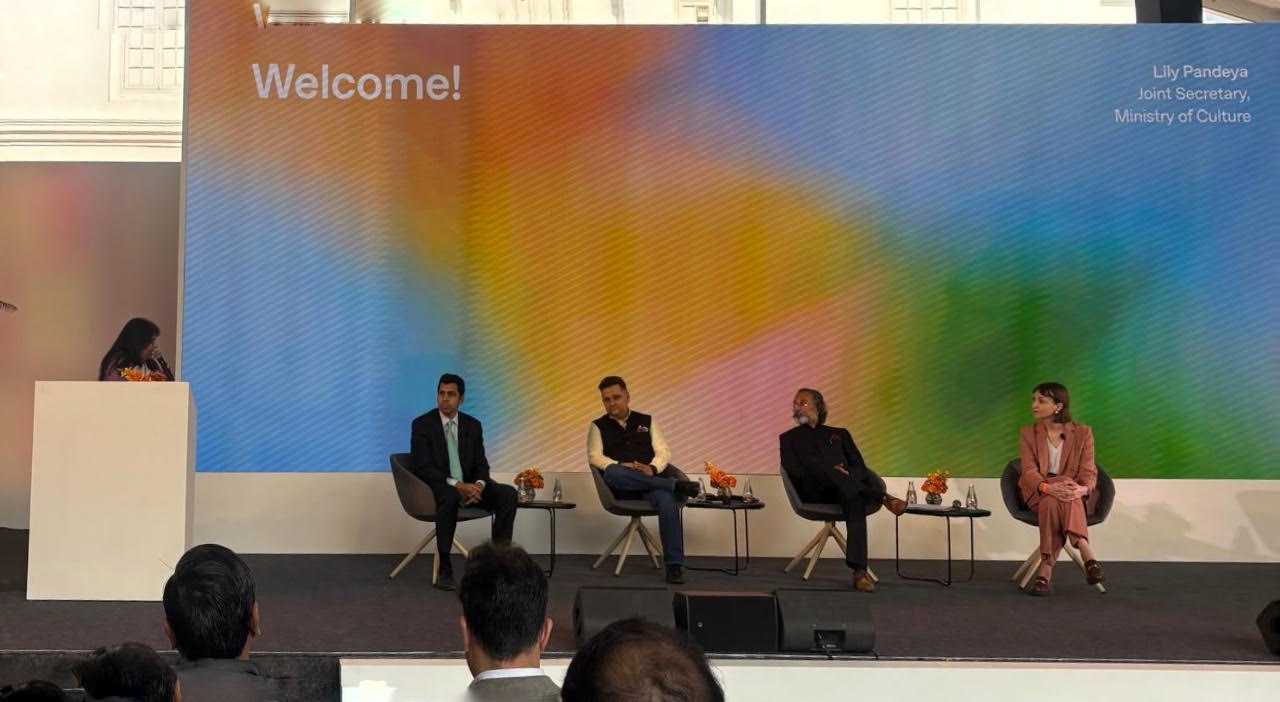
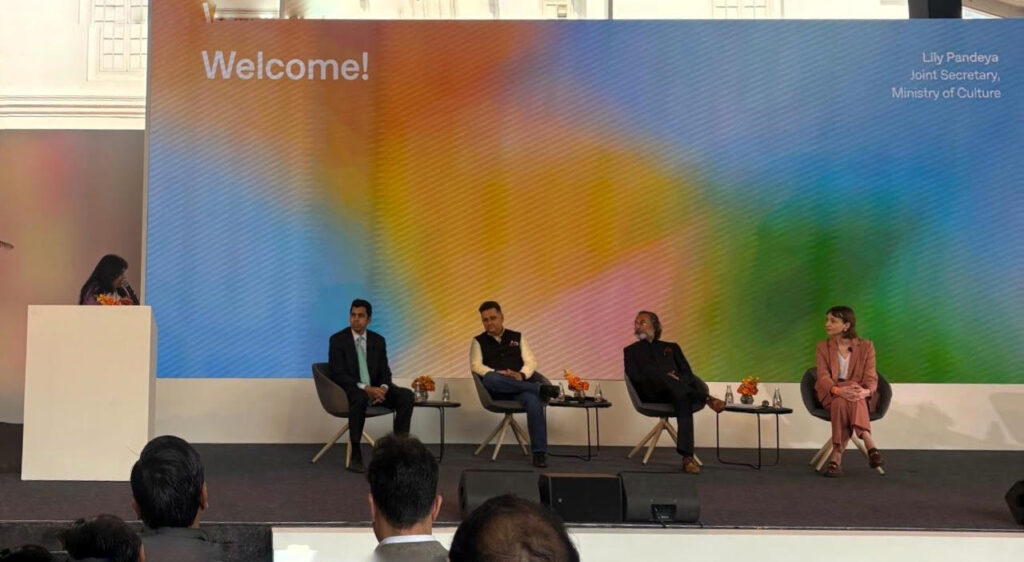
OpenAI marked its presence in India at the India AI Impact Summit 2026 with Reimagining Cultural Heritage, featuring Marion Carré (Founder & CEO, Ask Mona), Varun Jain (Managing Trustee, Sanskriti Foundation), Ronnie Chatterjee (Chief Economist, OpenAI) and Amish Tripathi (Author, Broadcaster, and Former Diplomat). The morning brought together technologists, diplomats, curators and artists around a singular proposition: that artificial intelligence, applied thoughtfully, might bring the depth of the museum’s knowledge to every person who walks through the door.
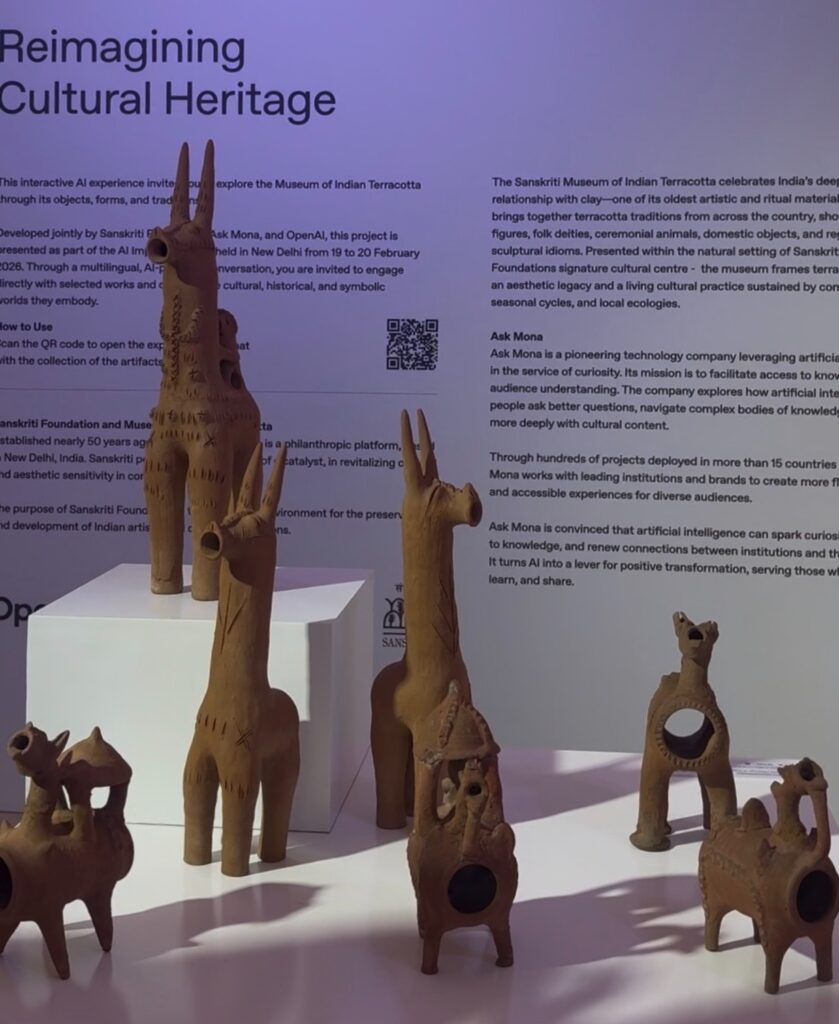
Visitors were welcomed by historic terracotta pieces from the time-honoured Sanskriti Museum, spanning eras and regions and showcasing votive figures, ceremonial animals, domestic objects and distinct sculptural idioms. As they engaged with the artworks, they scanned the QR codes placed beside each piece and connected to a multilingual AI-powered docent, capable of fielding questions in real time through audio or text. The experience fostered curiosity by focusing on conversation over the structure of a guided tour, expanding access to knowledge.
Lily Pandeya, Joint Secretary at the Ministry of Culture, Government of India, opened the programme with remarks on the importance of deploying new technologies in the service of cultural access. This was followed by a panel discussion that shared revelatory ideas on advancing the field while preserving the heritage and legacy of museums.
Bringing the programme to a close on a note of dialogue and discovery, the thoughtfully curated networking session by OpenAI, facilitated by Longform India, brought together artists, gallerists and journalists in a dialogue poised to shape how art is experienced and shared in India and beyond.
‘The Visitor Becomes a Participant’: A Conversation with Marion Carré
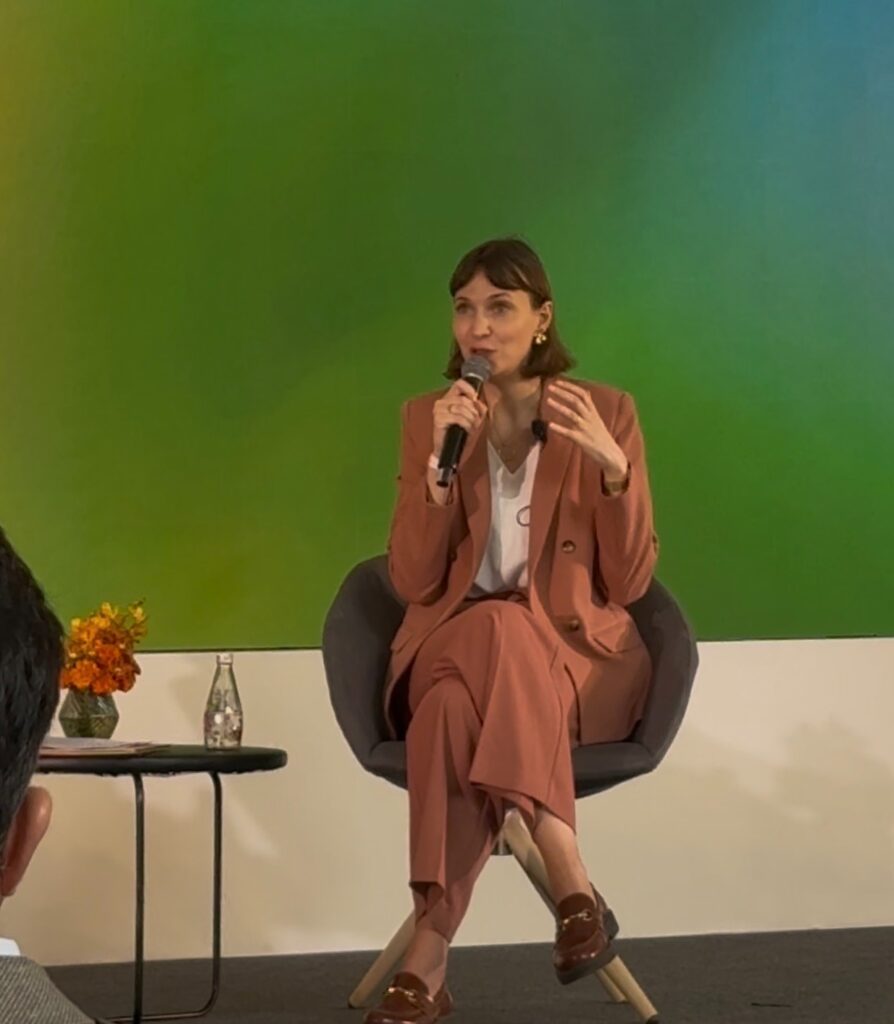
Marion Carré has spent nearly a decade at the intersection of art and artificial intelligence. As co-founder of Ask Mona, she has worked with over two hundred cultural institutions across fifteen countries, developing AI systems designed not to answer questions, but to provoke them. In a brief conversation with ACF, she articulated the inclusive vision for AskMona. Instead of transforming museums themselves, she seeks to build a space where scholarly heritage is translated for and shaped by diverse audiences, bringing people closer to art without the implicit barriers they may have once experienced.
Q: At its core, art invites us to engage and ask questions. Do you see AI as helping us democratise knowledge, ask better questions or answering them too quickly?
Marion Carré: What strikes me is that the traditional museum experience is fundamentally one-size-fits-all. Every visitor walks through the same rooms, reads the same labels, follows the same narrative. Yet every person comes with their own curiosity, their own sensitivity, their own level of knowledge. A child, an art historian, a tourist visiting for the first time, someone from a completely different cultural background: they all receive the same content. That’s where AI changes things profoundly. It makes it possible for each visitor to engage with art from where they actually stand. Many people feel intimidated in museums. They feel they don’t have the right vocabulary or the right background to participate. AI removes that symbolic wall. But what I find most interesting is how it transforms the visitor’s posture entirely. You’re no longer passive, no longer just reading a panel and moving on. To ask a question, you first have to look. You have to notice something, be intrigued by something. That simple shift — from receiving information to actively engaging with an artwork — is immense. The visitor becomes a participant in the experience, not a spectator. And that, to me, is much closer to what art actually asks of us.
Q: When cultural institutions can both speak and listen through AI, do they become less like archives and more like living, evolving entities?
Marion Carré: I’d frame it slightly differently. Cultural institutions already hold an extraordinary wealth of knowledge: years of research, scholarly catalogues, curatorial expertise and conservation records. The challenge has always been circulation. Most of that knowledge lives in databases, in archives, in back offices. Only a fraction reaches the visitor, usually condensed into a few lines on a wall label. What AI does is give all of that content a new life. It creates a direct, conversational bridge between the depth of institutional knowledge and the curiosity of each individual visitor. Suddenly, anyone can interrogate that knowledge, in their own language, at their own level, on their own terms. A teenager can ask a question about symbolism, a researcher can dig into provenance, a foreign visitor can explore cultural connections to their own heritage. So it’s less about the institution becoming a ‘living entity’ in some abstract sense, and more about unlocking what was already there. The knowledge existed. The expertise existed. AI simply makes it circulate far more widely, far more accessibly, and in a way that meets people where they are.
Q: What role do you hope AI will play in shaping cultural memory — and what role should it never assume?
Marion Carré: For me, the principle is clear: AI should amplify the work of museum professionals, never replace it. The people who build exhibitions, who research collections, who interpret artworks, who make curatorial choices — they hold the expertise. They are the ones who understand context, nuance and cultural sensitivity. That human judgment is irreplaceable. What AI brings is scale and personalisation. It allows those same professionals to reach audiences they could never reach before: visitors who speak a different language, people who can’t physically come to the museum, communities who have historically felt excluded from cultural spaces. It lets one curator’s knowledge touch thousands of people, each in a way that resonates with them personally. So the role I hope AI will play is that of a multiplier.
‘Understanding is a Prerequisite for Preservation’: A Conversation with Varun Jain
Founded in 1978 by visionary collector Shri O.P. Jain, Sanskriti Foundation was built on a conviction that the hand-made object, the village potter’s goddess, the weaver’s loom, the brass vessel passed between generations, must be archived. Its South Delhi campus houses three distinct museums: one dedicated to terracotta, one to Indian textiles, and one to everyday objects of utility and beauty. Together, they hold one of the most significant collections of folk and craft heritage in Asia. As Managing Trustee of Sanskriti Foundation, Varun Jain has been central to the programme, navigating what it means to introduce AI into spaces where the heritage is not abstract but familial. In a brief conversation with ACF, he offers an insider perspective on the transformative potential of AI within cultural ecosystems.
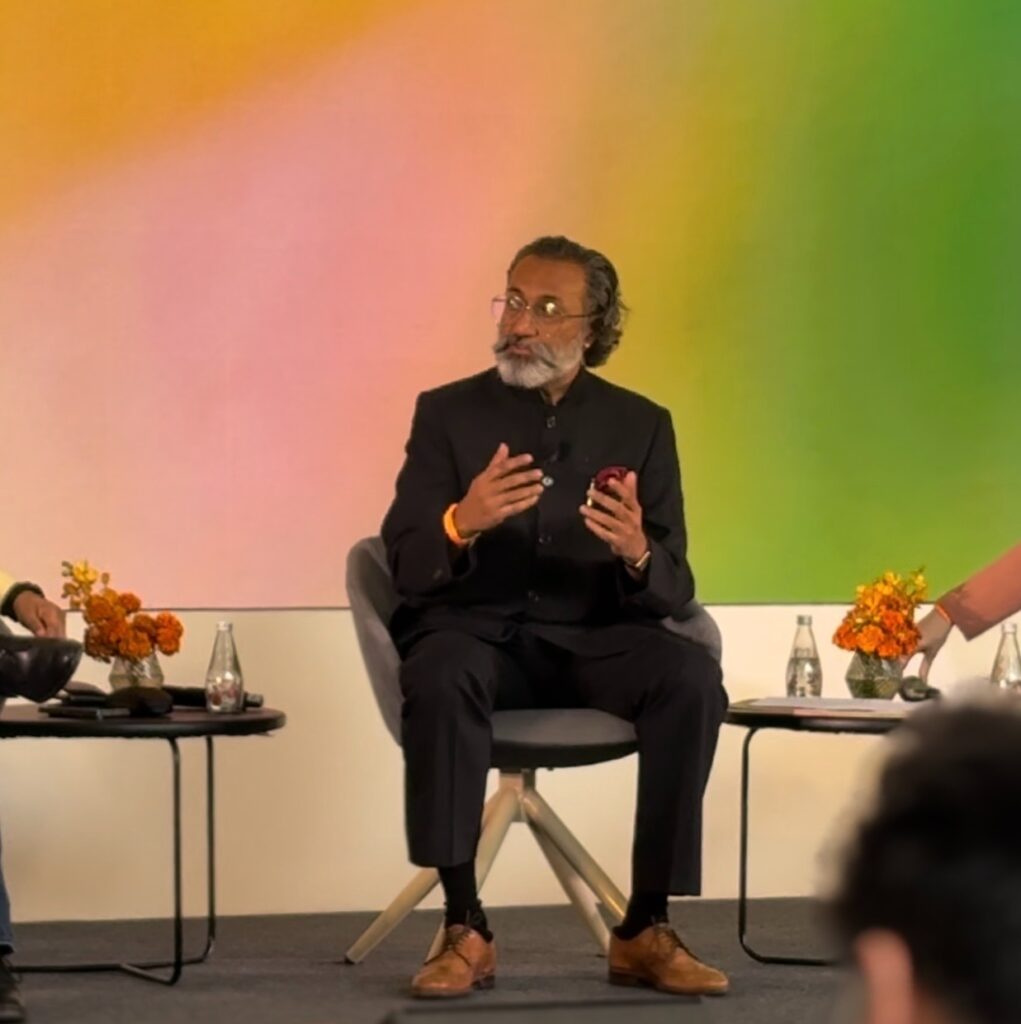
Q: As institutions rooted in heritage face a technologically accelerated future, how do you ensure innovation strengthens cultural depth rather than diluting it?
Varun Jain: The innovative use case we built with OpenAI and Ask Mona, around Sanskriti’s Terracotta Museum, is a good example of adding cultural depth to a heritage experience. The use of AI not only deepens the historical context of the object; it makes engaging with the objects much more democratic and accessible. A conversation format levels the playing field and allows engagement according to the user’s comfort level. That is a powerful force multiplier in understanding the rich traditions that accompany these craft objects.
Q: As AI begins to reshape how culture is preserved and experienced, how is Sanskriti Foundation approaching its potential integration within your programmes and archives?
Varun Jain: Sanskriti can play a catalytic role in the responsible adoption of AI. At the Kendra, our cultural centre, we intend to collaborate on offering artist residencies that explore how technology and the arts can intersect, innovate, and inform each other’s domains. We can offer capacity building for the development sector regarding AI adoption. Our serene and idyllic campus encourages reflection, blue-sky thinking, and imagining new use cases for the AI sector as a force for public good across sectors. We also plan to offer continuing education around the themes of creative economy, aesthetics, and contemporary craft — this is another area where AI can be tremendously beneficial for teachers, students, and industry practitioners.
Q: Do you see AI primarily as a tool for preserving cultural heritage, or as a force that will transform how future generations experience and understand it?
Varun Jain: Understanding and appreciation is a prerequisite for preservation. AI can play a seminal role in developing the next generation of aesthetes. A new-age user who is well-equipped to harness technology to be a more sensitive, informed, and engaged audience of heritage.
Q. How might AI enable more personalised or interactive ways for audiences to engage with Sanskriti Foundation’s museums and programmes?
Varun Jain: One of the best ways to use AI is to bring to life the stories and myths that permeate Indian craft and traditions. And to make the whole experience more playful, mindful, and multilingual.
A New Grammar of Attention
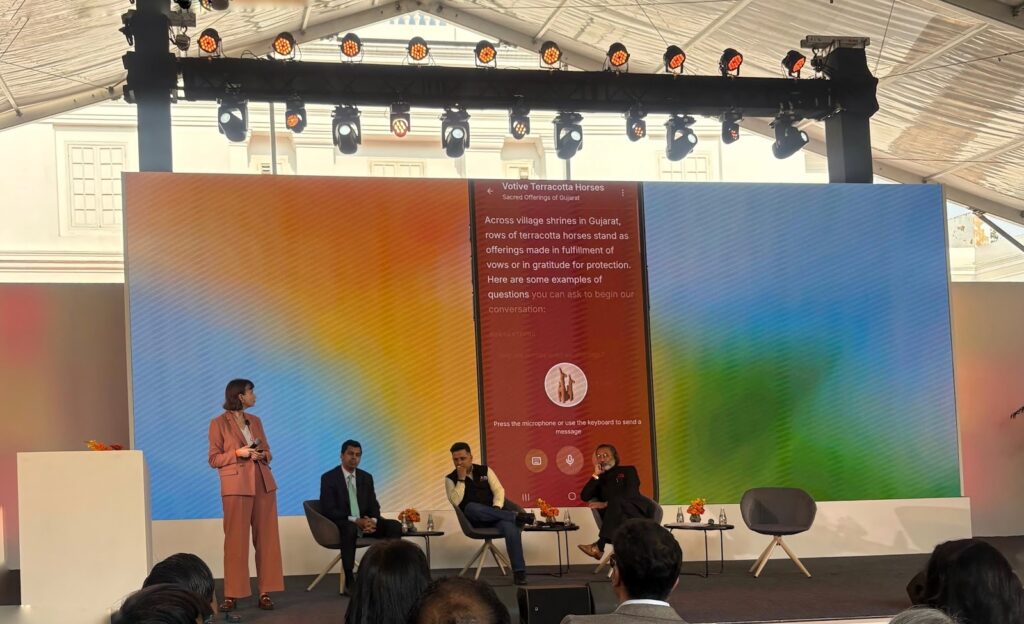
By the end of the programme, the terracotta figures remained as they always have been: still, ancient, indifferent to the century around them. What had changed was the grammar of attention that visitors brought to them. AI cannot make heritage more spectacular, but it makes it more available to the curious visitor, from where they stand, culturally and intellectually. The project stands at the Sanskriti Museum of Indian Terracotta in New Delhi, bringing historic and intricate knowledge of these objects into closer reach, drawing people towards heritage and art, one QR code at a time.
What remains is a question that no AI system can yet answer for us: what do we owe the objects of the past? Perhaps, at minimum, we owe them a wider audience.
OpenAI will be hosting a virtual replay of this event here. Register soon to engage with insights shaping the future of art and technology.