By – Chahat Sharma
On the warm morning of 21st February, under a bright blue Amritsar sky and a sun that seemed to bless the day with a gentle radiance, something quietly transcendent unfolded at Sarovar Premiere. Supported by Burgoyne Original Masters, the morning music session at Sacred Amritsar became a space where sound, devotion and stillness met.
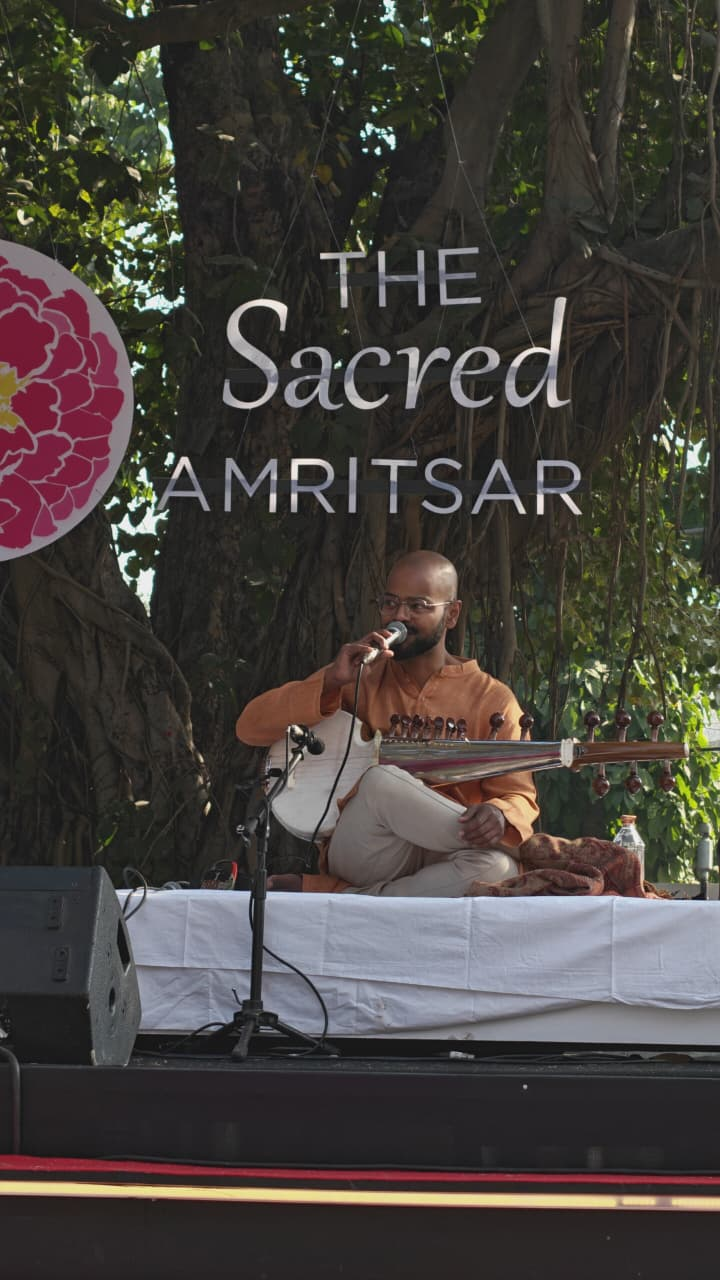
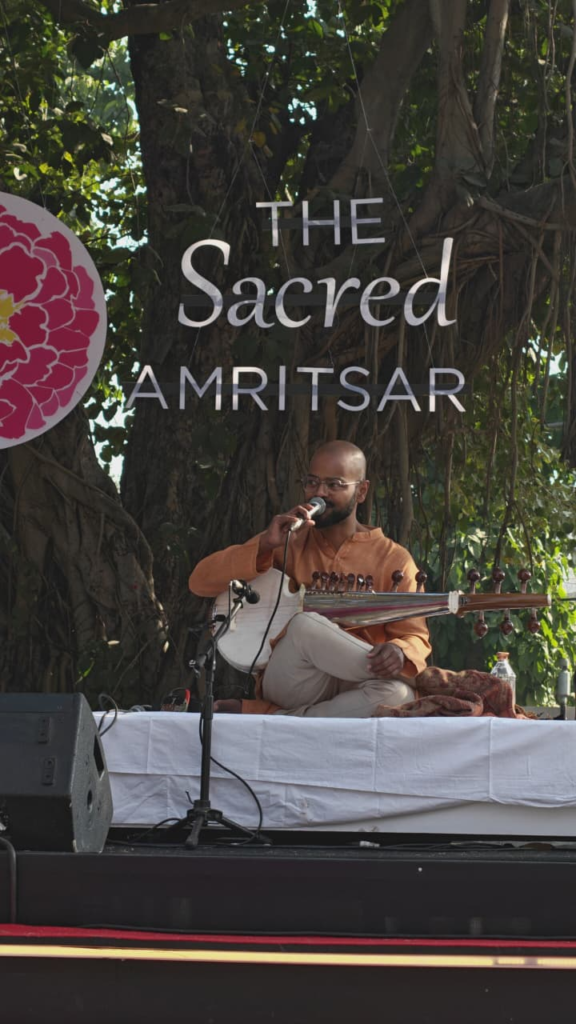
The stage was set beneath a sprawling Banyan tree, its roots deep in the earth and its branches sheltering those gathered below. There was something profoundly symbolic about the setting; it was ancient, grounded and expansive, much like the music that was about to fill the air. Soumik Datta walked onto the stage with quiet humility, accompanied by a dear friend Debjit Patitundi on tabla, he seated himself cross-legged with his sarod resting gently against his body. He began with Raag Bhairavi and suddenly the city’s hum softened.
Bhairavi, often associated with devotion and closure, carries a timeless spiritual weight. It is a raag that feels like a prayer whispered at dawn. As the first notes emerged from his sarod, the morning transformed. The metallic resonance of the strings shimmered in the open air, carrying both tenderness and depth. It did not feel like a performance, it felt like an invocation.
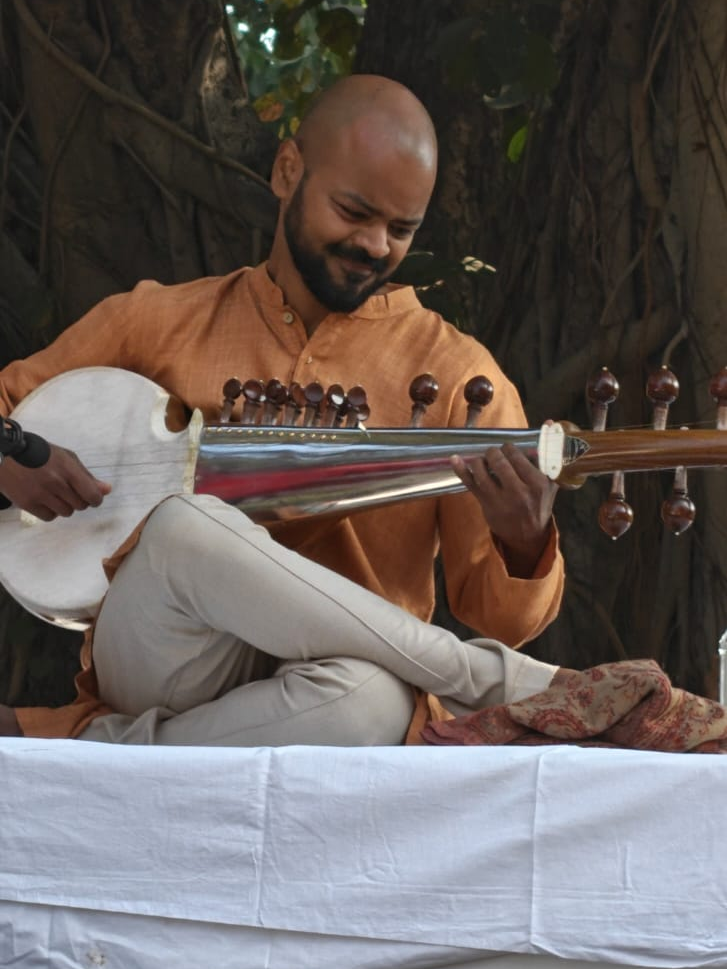
Soumik Datta is not merely a sarod player, he acts like a bridge. A British-Indian composer and virtuoso, he has spent his life weaving together classical Indian traditions with contemporary global influences. Trained rigorously in the Maihar gharana tradition, he carried forward a lineage deeply rooted in discipline and devotion. Yet his work extends far beyond preservation. From international concert halls to collaborations across genres, to composing for films and theatre, to experimenting with cross-cultural dialogues, Soumik’s practice reflects a fearless curiosity.
At Amritsar that day, the audience sat in silence, drawn inward. As the performance deepened, the jugalbandi between Soumik and Debjit became the heartbeat of the morning. They did not merely play alongside each other, they conversed. Their energies met and separated like waves, playful yet respectful. There was a joy in their exchange, an unspoken understanding forged between the two through shared love for music. At one point, it felt as though everyone present had slipped into a trance.
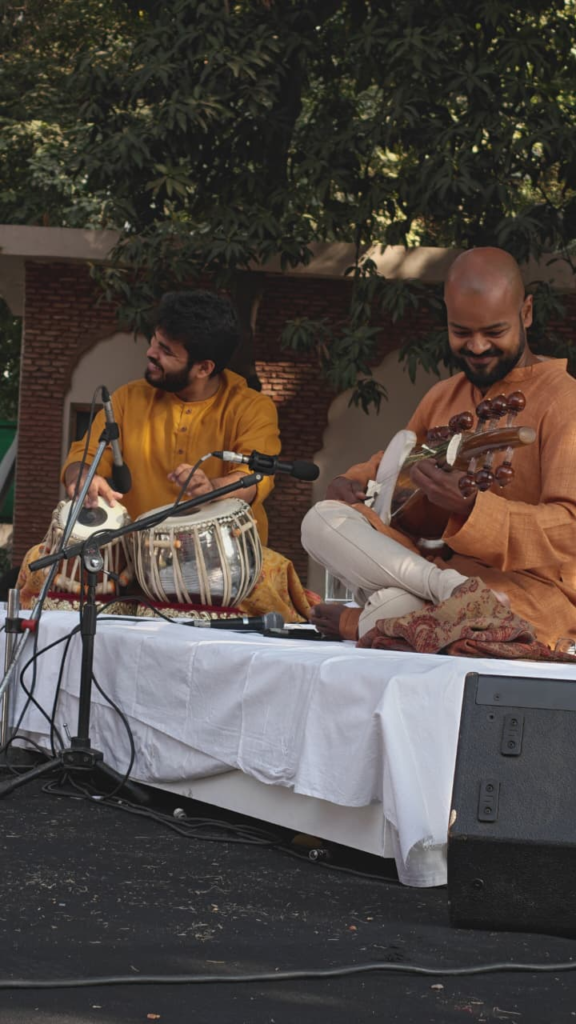
I had often heard that music has the power to connect one to the divine. It is a sentiment repeated so frequently that it risks becoming cliché. But on that morning, in that moment, beneath the Banayan tree, with Soumik’s sarod echoing in the open sky, I truly felt it for the first time. The music did not feel external; it felt internal, like something ancient being remembered rather than newly heard. Soumik’s playing carries that rare quality, it does not demand attention, rather it invites surrender. His technique is extraordinary, yes. The speed, the tonal precision, all unmistaken. But what lingers long after than virtuosity is intention. There is a sincerity in his music where every note is displayed.
As the tempo picked up and the rhythmic dialogue intensified, the sunlight grew brighter, almost golden. The Banyan leaves cast moving shadows on the stage. The jugalbandi became more spirited, the tabla patterns interlocking seamlessly with the sarod’s melodic arcs. It was enchanting, the kind of enchantment that feels effortless yet is born of years of discipline.
And then, as all beautiful moments must, it began to conclude. But the audience was not ready. There was an audible murmur, gentle yet insistent, asking him to continue. Smiles, applause, hopeful calls from different corners. It was evident that no one wanted the music to end. Soumik looked up, almost shyly and agreed to offer a few additional minutes. Those final notes felt like a gift, unplanned, generous and intimate. A quiet extension of grace.
In many ways, that morning encapsulated what Sacred Amritsar stands for, a confluence of spirituality, art and lived experience. And with the support of Burgoyne Original Masters, platforms like this allow artists such as Soumik Datta to create spaces where tradition feels alive and accessible, not distant or museum-bound. When asked what such support means to him as an artist, Soumik responded with warmth and gratitude:
“Thank you so much for supporting us. There are so many people involved in making something like this happen. Bringing artists from across the country — and even across the world — to a place like this requires immense effort and belief. So truly, thank you for your support.”
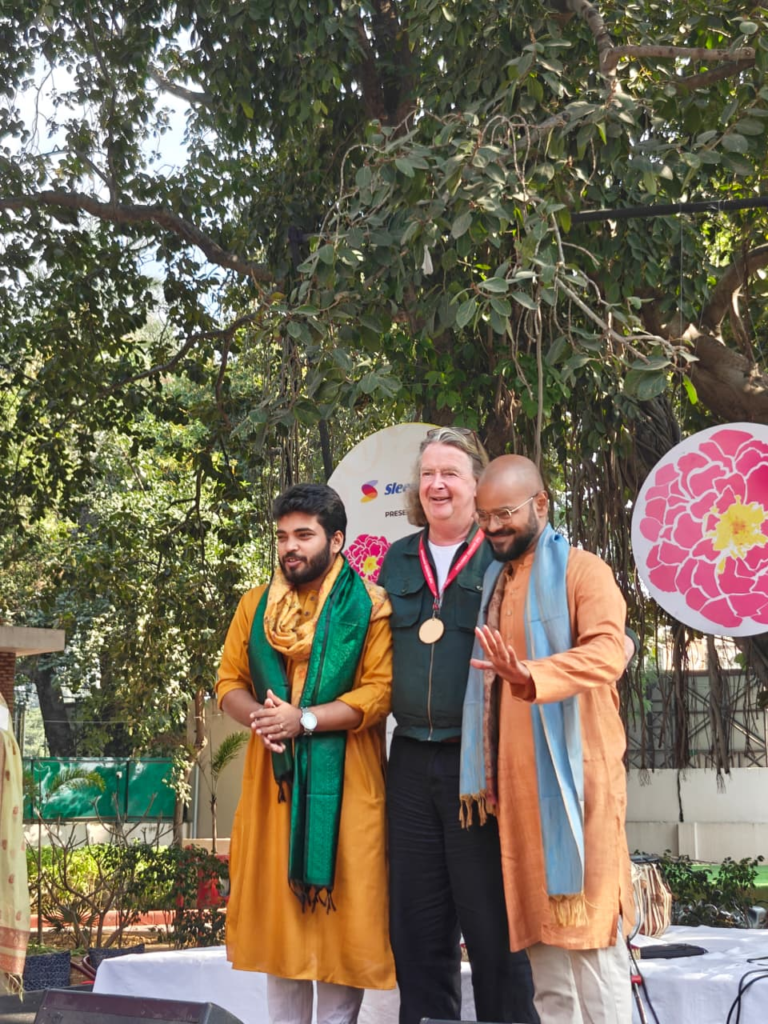
His words served as a gentle reminder that moments like these, a musician under a banyan tree, a raga unfolding in the morning air, an audience quietly listening, are rarely solitary achievements. They are the result of a shared commitment to keeping music, culture and community alive.