By – Nandini Upadhyay
Charu Suri speaks about her Grammy nominated album SHAYAN, and how her unique style of “Raga Jazz” came about.
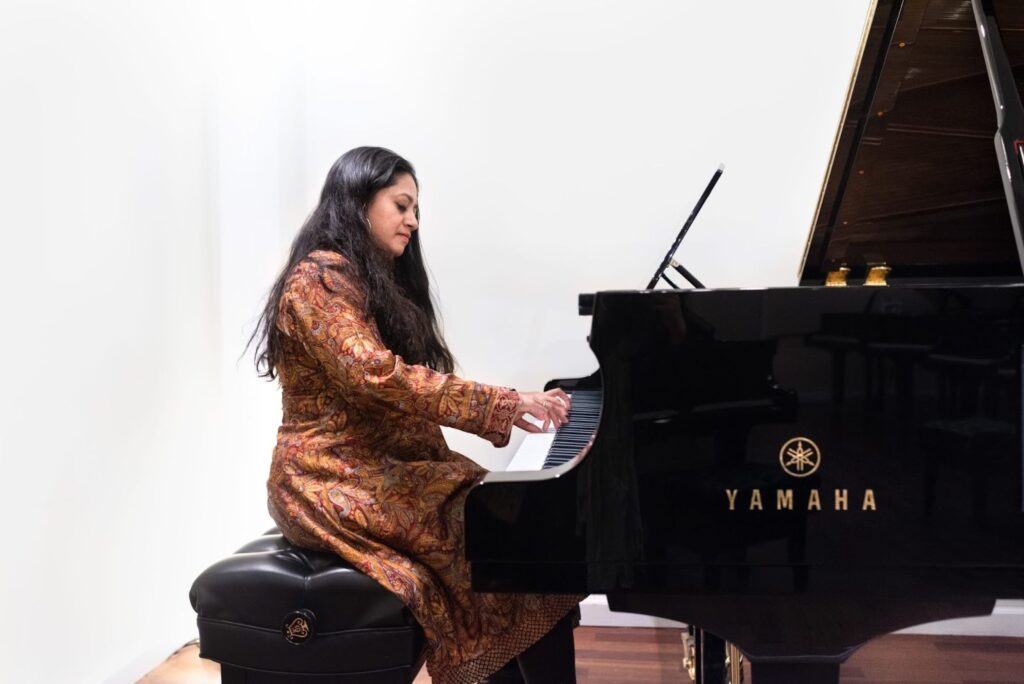
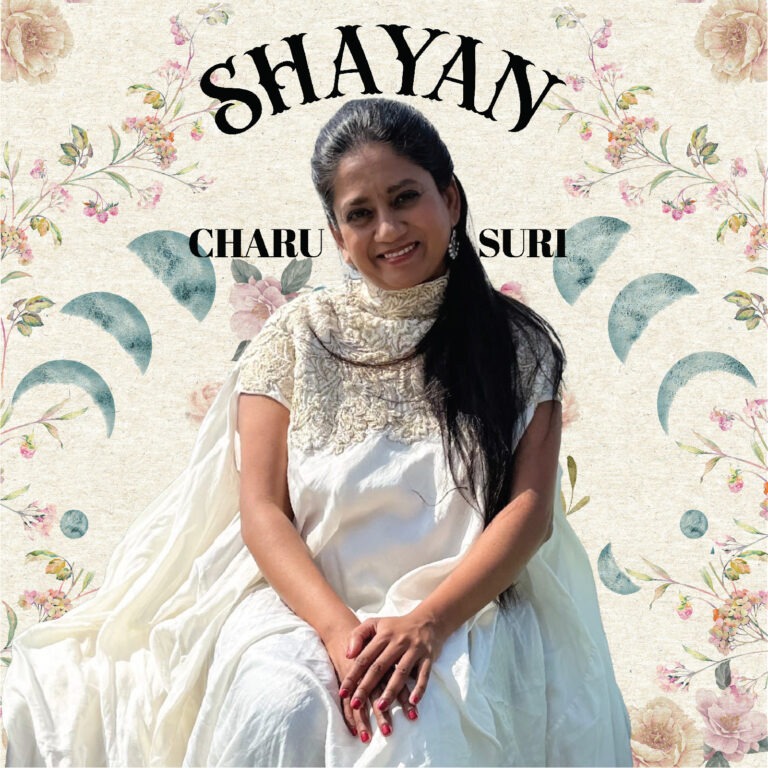
Another year, another Grammy season, and this year, there has been a lot of talk on the Indian and Indian-origin Grammy nominees. One of them is Charu Suri, whose album SHAYAN is nominated for the Best Contemporary Instrumental Album category, and who has also secured a nomination as a producer on the record Sounds of Kumbha, which is the Indian album competing in the category of Best Global Music Album. Before SHAYAN, Charu Suri toured around the world performing her unique style of Raga influenced Jazz, making a stop at Royal Opera House Mumbai and The Piano Man in Delhi, which is where I met her in person after being connected with her since 2022. SHAYAN is a stylistic departure from her previous work like Ragas And Waltzes and Rags And Ragas, and in this exclusive interview she details her work spanning Classical, Jazz and Carnatic music and her unique approach to blending them.
1. How did your musical journey begin? What were the works which inspired you the most in the beginning, which you loved as a child?
I started playing the piano when I was five years old, and when I lived in Africa because my father had a job in Nigeria as the CEO of a record label. I had a piano in my house and my mom said I took to it like a fish took to water. When I relocated to India at the age of nine, I dove deep into piano literature and loved playing the works of Chopin and Debussy the most. They still are huge influences in my music even today.
2. What motivated you to make the transition from classical to jazz?
About five years ago, I visited New Orleans on a journalistic assignment and went to a concert by Preservation Hall Jazz Band. I just fell in love with everything, the vibe, the jazz, the feeling, the spirit of camaraderie and instantly just knew jazz was my real calling even though I was a classical musician by training. I went back to my hotel room and started composing my first jazz pieces that eventually became the album, Lollipops for Breakfast. And four years later, Preservation Hall drummer Joe Lastie and I collaborated on our first record. It was kind of miraculous really, it still feels like a dream, but that’s really what happened.
3. How did you discover or re-discover Indian classical music? Which works inspired you to look at Indian classical music in more depth?
I have always listened to classical music and it has been in my mind and subconscious ever since I started taking Carnatic music lessons as a young girl. I guess it was always in my head. When I started creating jazz works, it occurred to me that my jazz didn’t sound “normal” enough, for lack of a better word. I would always end up ragafying everything and I just resigned myself to saying, well, hey, that’s how I think about music and about jazz in general.
4. How did the idea of “Raga Jazz” come about, which is featured prominently in your early albums like Rags and Ragas and Ragas and Waltzes?
It sort of evolved. I initially penned Raga No. 1 (using evening raga Kirwani) as my first “raga jazz” piece and audiences loved it. It had so much energy, it was different, it was similar but opened new sonic worlds, and then I started experimenting with other ragas I knew like Kalyani, which I’ve used a few times now. The feedback from audiences was always “wow that’s cool and different. Tell us more.” Then that style developed, expanded, became more refined. And yes then blossomed with albums like RAGAS & WALTZES and RAGS & RAGAS.

5. What was the idea behind Shayan? What was your approach behind composing it, and how was it different to your approach towards the jazz albums, if it was at all?
Shayan is really different from my previous albums in that it is much more introspective. It doesn’t try too hard, it just shines a spotlight on evening ragas in a quiet way. My vision was to compose an album of healing, first for my mother who had trouble sleeping after my father died, and then really, for the entire world, all of humanity, because we are going through such stressful times and periods of great unrest.
So SHAYAN is a mature work, because I felt like I needed to write this work and really didn’t care what people thought of it, whether it was New Age, classical, jazz, it didn’t matter. It just needed to be written. I slowed down, dove deep into rarer ragas (for me) ilke Jog and Bagesri, and leaned wholeheartedly into the journey of the ragas and what it would unfold. And then I assembled the largest musical ensemble, ever, from vocals (which acted like instrumental voices), cello, violin, hammered dulcimer and flute, with virtuosi like Grammy winners Ron Korb, Jim Kimo West, Raniero Palm’s Venezuela Strings Recording Ensemble which brings the main theme as a reprise.
It is almost orchestral in scope, and completely an instrumental album, despite the vocal flairs, which is why I put it in Contemporary Instrumental , which is a jazz category. Some people said, well it feels classical, but quite honestly, a lot of Chick Corea’s amazingly deep works have had prominent classical influences too so I said it is what it is. It’s a quiet maturity, not a flashy album.
6. Shayan has been nominated for a Grammy. How did that feel for you?
Just surreal. I’m still processing it. My first thought was, wow, this is amazing! Finally the world can hear what my “raga jazz” style is about and hopefully that will open doors and more concerts and more interest in learning about my heritage and its influences on world and jazz music. I was so happy too for my extraordinary band and production team, which has gone above and beyond to really make the ragas sing on this album.
7. What was the most notable achievement for you before the Grammy nomination? Is there any moment that sticks out to you which changed the trajectory of your musical career?
I basically was touring non stop, doing show after show after show, promoting ragas and jazz until it snowballed. I premiered Shayan at my fifth sold out Carnegie Hall concert in July and was not sure what to expect. Would the audience love SHAYAN and its gentleness? Would they want more “jazzy” numbers? So much to take in. That show was a defining point for me because most of the performers for SHAYAN were onstage, from Premik Russell Tubbs playing flute to Tess Remy-Schumacher performing cello.
But everyone loved it. It was just a stupendous standing ovation and applause and I had people in tears after the show saying, WOW. SHAYAN is my most favorite album. And then I started getting so many messages from people saying how they use SHAYAN to sleep better. And a lot of wonderful messages from all over the world on complimenting my unique style. So I guess it was the cumulative rush.
8. How did your association with The Recording Academy begin?
One of my friends suggested that given my catalog and musicianship, I apply for a membership with the Recording Academy. I didn’t know what to expect and I was very nervous to join, but I am so happy I did. It has been a life changing experience for me. I secured a few recommendations from key jazz musicians including Arturo O’ Farrill and Chick Corea’s engineer, Bernie Kirsch. They all believed in my music way back when, and said they would be most happy to write me a recommendation letter.
9. You have performed in notable venues in both the US and abroad, such as Carnegie Hall. Which city or venue in the world sticks out as the most memorable experience?
Well definitely Carnegie Hall, but also the Royal Opera House in Mumbai, which was so warm and welcoming, and jazz clubs like Dazzle in Denver and Blues Alley in DC.
10. You have put in a lot of effort towards building a supportive community of musicians. How important is collaboration, community and mentorship to you in music?
It is everything! Musicians have to build communities—they don’t just happen. That requires time and effort. The communal aspect of music is one key reason why I tour, why I have concerts and love to bring people together. It’s important to feel like you belong to a group that truly cares.
11. What would you say was the biggest challenge for you when you were a young musician?
Just breaking through all the “noise.” I was pretty prodigious as a concert pianist, and as a composer. But getting the industry to take notice of a relatively unknown young brown girl trying to compose “different” music was –and still is— a challenge. I had to prove it, concert after concert, record after record, year after year. It was just never enough.
12. What are you looking forward to now? Are there any notable gigs or projects which you are working on?
I am truly looking forward to taking my album and my raga jazz style on the road. That is really what I am most excited about. This isn’t about the awards or nomination, this is about can this style have an impact on the evolution of the jazz genre. That’s what I am most excited about. And collaborating with many musicians to open it up.
13. Is there any genre of music or style of world music which you would like to learn more of and explore in the future?
Yes, I think R&B would be great, and also jazz pop and more vocal jazz. I can totally see the SA RE GA MA being used in scatting and fast raga jazz pieces!
14. Any advice you would give to younger musicians?
Be true to yourself. There is a ton of noise out there, but the music will always win, and don’t cut corners. Be the best musical version of yourself you can be, and do it for yourself, and for no other reason.