By: Chahat Sharma
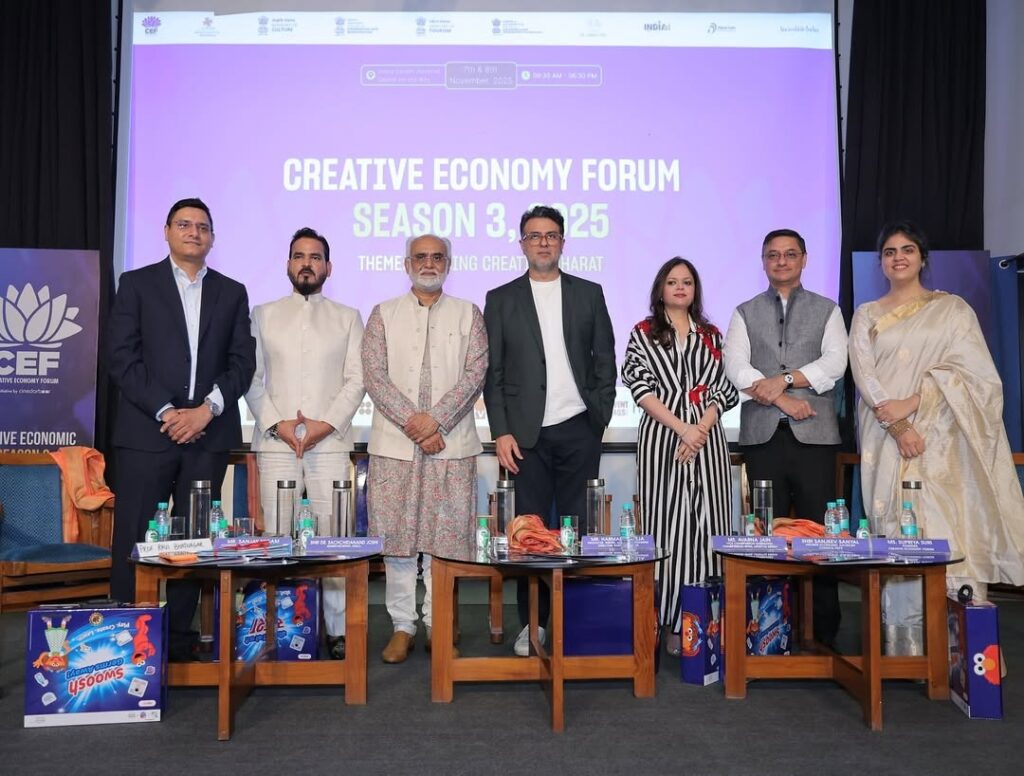
In a country where creativity has always been abundant but rarely acknowledged as a serious economic force, Supriya Suri has emerged as one of the most dynamic voices championing India’s Creative Economy. A filmmaker turned entrepreneur, Suri is the founder of the Creative Economy Forum (CEF), a platform that has quickly evolved into a national movement bringing together policymakers, creators, founders, investors, and cultural leaders.
Since its inception in 2022, CEF has become a space where conversations around culture, creativity, and commerce converge with purpose. Under Supriya’s vision, the forum has expanded from a one-day gathering into a multi-sector, multi-state platform that not only celebrates creative excellence but also recognises the business and policy foundations required to strengthen India’s creative ecosystem.
As India prepares to step into a new decade of global cultural influence, Supriya’s theme for 2025 “Building Creative Bharat” captures an urgent and compelling mission: to position creativity as a driver of identity, economic growth, and international soft power.

In this in-depth conversation with ACF, she reflects on CEF’s journey, the evolving role of India’s creative industries, the opportunities in mythic and cultural IP, and the possibilities that lie ahead for a nation steeped in tradition yet brimming with contemporary creative potential.
1) What was the original inspiration behind launching CEF in 2022, and how has that vision evolved over the three seasons, especially now with “Building Creative Bharat” in 2025?
The inspiration for CEF emerged in 2022, at a time when India was preparing to host the G20. I felt the need for a platform that could spark meaningful cultural dialogues while placing the Creative Economy at the centre of both national and global conversations. I have always believed creativity and culture are not just soft power but powerful economic engines.
From the beginning, CEF’s mission has remained clear: to celebrate the business of creativity, explore its vast possibilities, and enable serious, future-shaping conversations around it. The Creative Economy influences far more than GDP or employment; it shapes identity, innovation, global influence, and expression. This larger impact has always guided our work.
Over the past three seasons, our vision has expanded significantly in scale and ambition. What started as a one-day forum evolved into a two-day experience by Season 3, bringing together policymakers, creators, founders, and industry leaders. Along with policy-driven sessions, we introduced fireside conversations with exemplars who have shaped India’s creative industries, because learning from those who lead the way is invaluable.
Experimentation remains central to our curation. We continue to explore new formats, whether vertical-wise, track-wise, or theme-wise, and this experimentation will continue in the coming editions. A consistent pillar has been representation, with an active effort to bring truly Pan-India voices to the forefront.
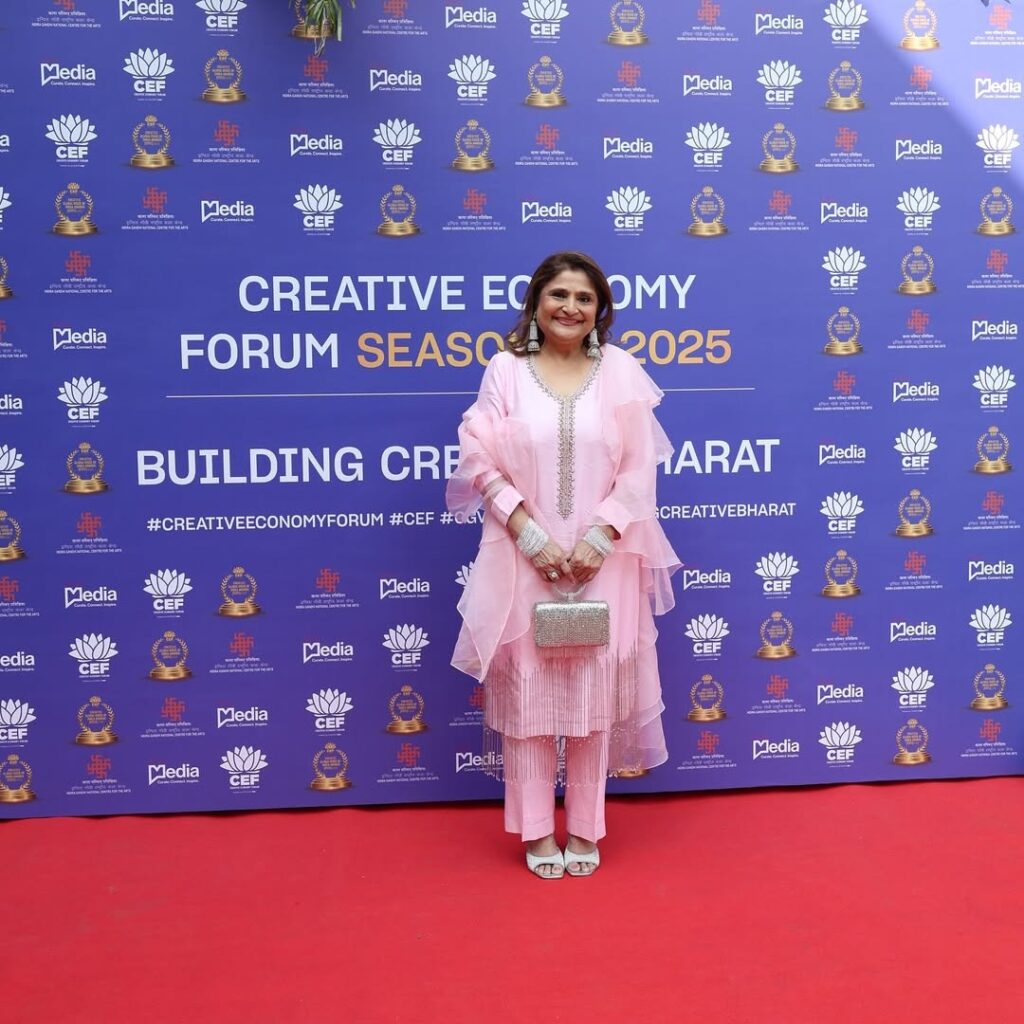
To further support the ecosystem, we instituted the Creative Global Voice of India Awards, recognising entrepreneurs and creative businesses shaping India’s cultural narrative globally. We also introduced a Red Carpet to honour trailblazers within the Creative Industries because few platforms celebrate creative entrepreneurship with the respect it truly deserves.
The theme “Building Creative Bharat” for 2025 reflects our commitment to fostering an ecosystem where culture, creativity, and commerce move together, uniting diverse creative India through the immense power of the Creative Economy.

2) For 2025, the theme is “Building Creative Bharat.” In your words, what does “Creative Bharat” ideally look like in the next decade, in terms of economic impact, cultural influence, and creative identity?
To me, Creative Bharat is a future where India’s creative industries, films, fashion, crafts, music, gaming, design, and cultural heritage, all come together to project a unified, confident, and globally resonant creative identity.
Over the next decade, Creative Bharat will continue telling powerful stories, shaping national identity, building our own narratives, and exporting culture in ways that strengthen India’s soft power, global branding, and international influence. Culture gives us belonging, pride, and identity, and its expanding impact will shape a confident, contemporary creative India rooted deeply in heritage.
India’s Media & Entertainment sector is already among the fastest growing worldwide, and fashion and cultural enterprises are scaling rapidly. As these sectors formalise, digitise, and globalise, creativity will contribute a significantly larger share to India’s GDP, employment, and exports.
The next ten years present India with an opportunity to show the world the strength of a creative India that has always existed—now consciously shaped, nurtured, and branded.
3) CEF is built on the pillars of policy, business, and creativity. How do you navigate the potential clashes between these areas, for example, protecting artistic freedom while encouraging commercialisation, or safeguarding IP while advocating for accessibility?
I don’t see these pillars as clashing; in fact, they reinforce each other and strengthen the ecosystem. Arts and commerce must go hand in hand. Anyone pursuing creativity professionally needs basic business and IP literacy, this should be taught in every art school. Art is not in conflict with commerce or accessibility; friction only arises from lack of awareness or skill.
Similarly, those coming from the business side must understand creative expression beyond just numbers and methodology. When both sides understand each other, policy, business, and creativity form a powerful, interconnected foundation.
4) The 2025 agenda includes diverse sessions, from music-tech and animation to AI, mythic IP monetisation, and legal rights for creatives. Is there a story behind any session? Was there one you felt was absolutely necessary?
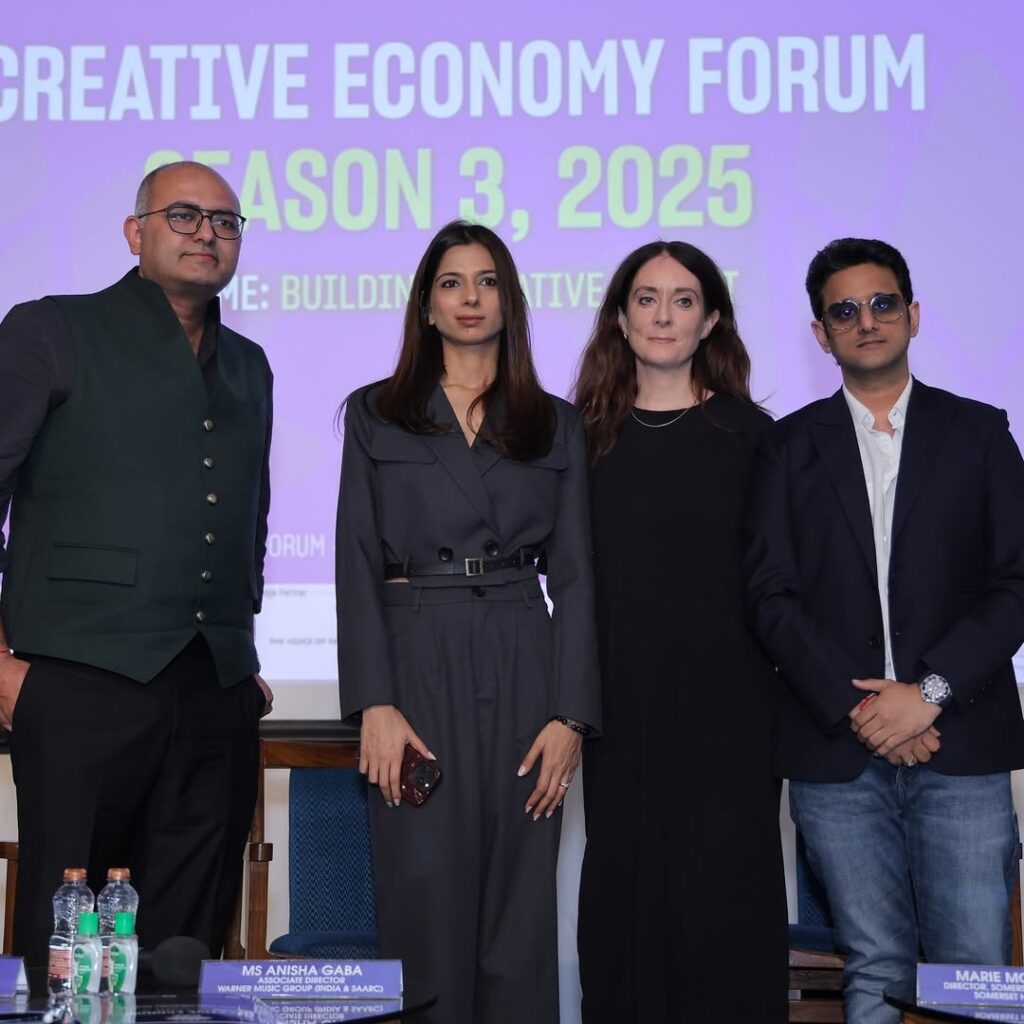
While designing the 2025 agenda, we identified several foundational areas essential for the growth of India’s Creative Economy: creative infrastructure (physical and digital), creative tech and AI, intellectual property as an asset, the judicial ecosystem, investments, market expansion (domestic and international), and creative skilling.
These are not just topics, they represent gaps that urgently need attention. That’s why our curation consistently includes them. Each of these conversations is crucial to building Creative Bharat, so rather than choosing one, I genuinely believe all of them were necessary.
5) How do you and your team measure the “success” of a CEF edition? What are the parameters, policy outcomes, collaborations, community growth, or shifts in mindset?
For us, three markers matter most:
1. Meaningful Networks & Opportunities
We’ve seen creators get commissioned by brands, volunteers find pathways into creative companies, and interstate business explorations emerge simply because people met at CEF. When connections strengthen belief in India’s Creative Economy, it’s a true win.
2. Community Growth
Each year, the community should grow, not just in numbers but in diversity and depth. More creators, more states, more sectors, more entrepreneurial voices.
3. Cross-Sector Speaker Participation
Meaningful dialogue requires creators, producers, investors, policymakers, and industries coming together to openly discuss challenges. These conversations lay the groundwork for future change.
If the ecosystem grows even a little because of CEF, we consider it a successful edition.

6) With sessions like “From Epics to Enterprises: Monetising India’s Mythic Legacy,” what opportunities and challenges do you see in adapting mythological or heritage IP for contemporary creative business without diluting cultural significance?
There is immense potential in monetising India’s mythic legacy through merchandise, animation, films, music, storytelling, comics, gaming, advertising, and long-term fandoms. India’s epics, folktales, and regional stories offer world-class narrative universes and provide the foundation for India to build its own Disney-, Marvel-, or Game-of-Thrones-scale worlds.
The challenge is not the content, it is the ecosystem. Producers must open up to new story worlds, and the market must be willing to take risks rather than repeat safe formulas. At the same time, creators need support and freedom to reinterpret responsibly, without compromising cultural authenticity. Mythological IP can become one of India’s strongest creative industries.
7) As CEF grows, how do you ensure it remains inclusive, representing not just big-city entrepreneurs but also grassroots artists, traditional artisans, regional creators, and underrepresented voices across India?
In Season 3, we ensured speaker representation from 12 states, and many award winners travelled from nearly 10 states. We actively work to ensure the platform reflects the full spectrum of India’s creative talent and is not limited to metropolitan voices.
To deepen this further, CEF is now preparing to launch dedicated South India and North East India chapters. These will allow us to engage directly with regional creators and grassroots entrepreneurs, ensuring their voices, challenges, and successes are meaningfully represented at our annual Delhi forum.
8) Given India’s growing role as a global content hub, how do you envision CEF contributing to India’s soft power internationally? Are there plans to collaborate globally or export creative IP through the forum?
CEF absolutely sees itself as part of India’s soft-power story. We are exploring the idea of taking the CEF IP to other countries, because building cultural and creative bridges between India and the world is central to our vision.
Our aim is to create B2B pathways, enable cross-border collaborations, and showcase the breadth of India’s contemporary Creative Economy. International partnerships and exporting Indian creative IP are very much on the horizon, though these will evolve gradually.
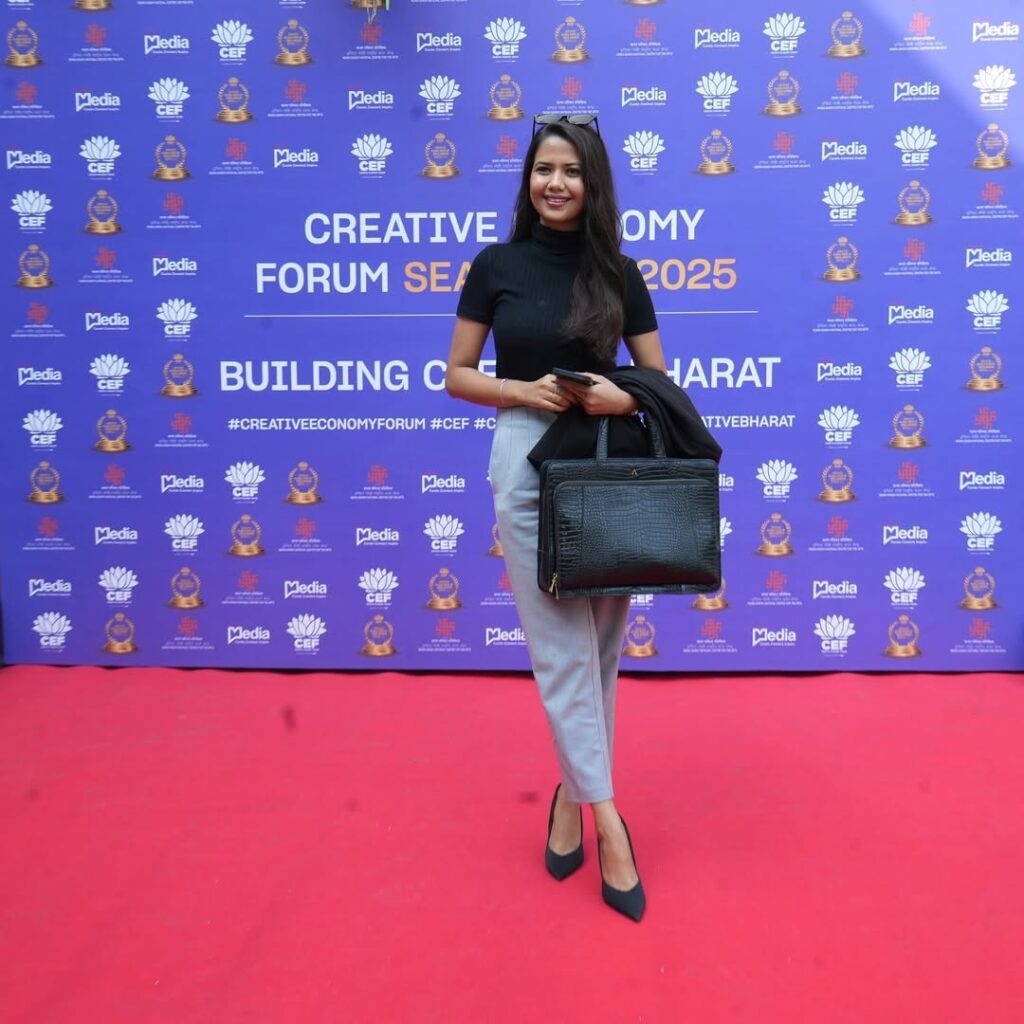
9) Looking back at Season 1 (2023) and Season 2 (2024), what lessons shaped the design of CEF 2025?
CEF began purely as a passion project, a one-off forum with no expectations about its future. The response to the first edition showed clearly that there was a deep, unmet need for a platform encouraging meaningful dialogue within the Creative Economy. That was my earliest and most important lesson.
By the second edition, when we introduced the Creative Global Voice of India Awards, we realised how impactful it is to honour creative entrepreneurs. Acknowledging them brought seriousness and legitimacy to the sector—something long overdue.
Another major learning was the importance of building financial sustainability. As a creative IP ourselves, we take our business model seriously because we want CEF to grow as a long-term asset.
In the early editions, programming focused heavily on policy. Over time, we recognised the need for more practical, business-focused know-how sessions for creators. Expanding these in Season 3 became one of our most valuable additions and strongly shaped how we approached the 2025 design.
10) What has been the most surprising, rewarding, or humbling experience since founding CEF? And what keeps you motivated as you lead this ambitious vision forward?
Every year, I’m humbled by the moment everything finally comes together. After months of uncertainty, seeing 60 speakers from across India gather with a shared purpose, to champion the Creative Economy, is incredibly rewarding. It reaffirms the belief system that CEF was built on.
My own journey began with filmmaking and entrepreneurship, and very early I realised that creativity and money must move together. That balance is difficult, and my journey hasn’t been easy either. So making that path a little easier for upcoming creative entrepreneurs is what inspires me most.
One of the most rewarding experiences was hosting a roundtable with Delhi’s Minister of Arts & Culture, bringing multiple stakeholders together to discuss developing Delhi as a Creative Capital. Seeing CEF spark real conversations and real possibilities—that is what keeps me motivated.
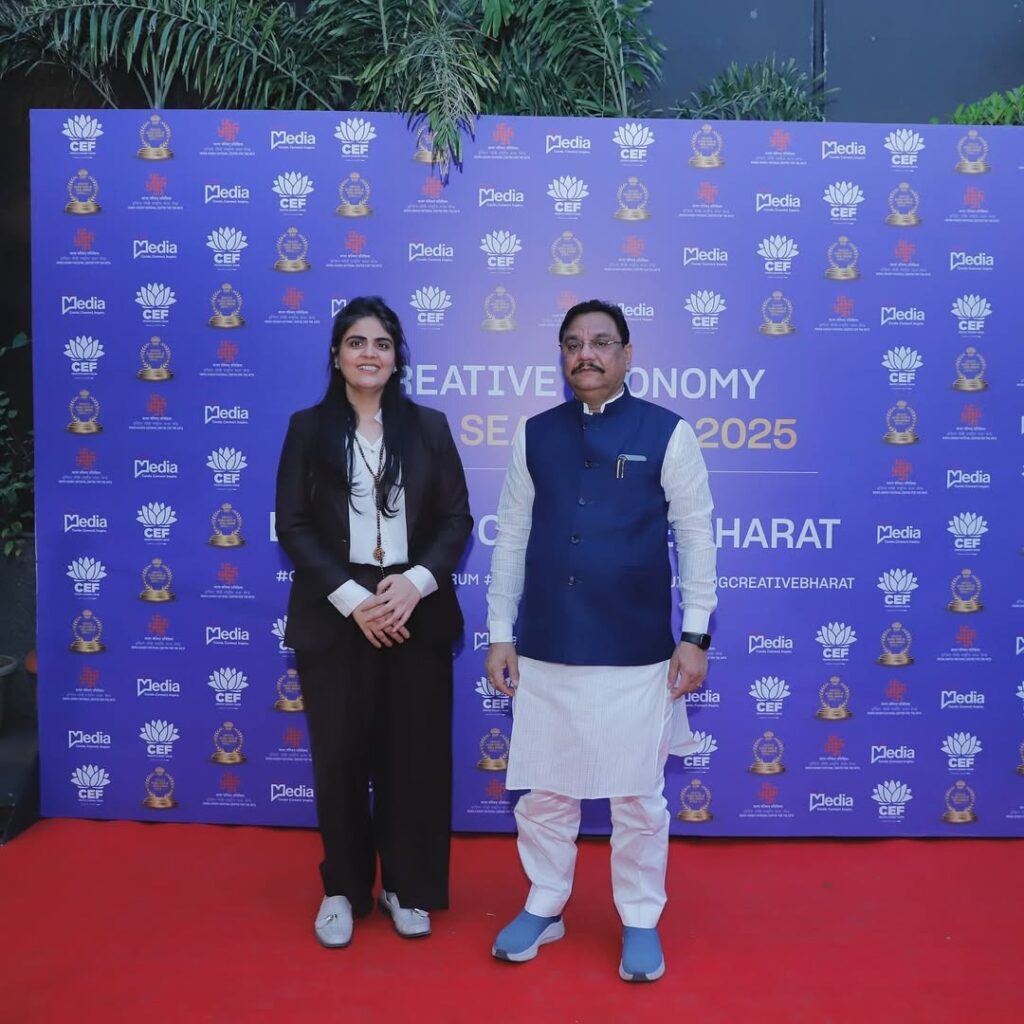
As Supriya Suri looks toward the next chapter of CEF, her vision remains both ambitious and deeply grounded. What began as a passion project in 2022 has grown into a national platform that not only sparks conversations but also forges pathways, relationships, and opportunities within India’s Creative Economy.
Her reflections reveal a consistent belief: that creativity, when backed by policy support, financial literacy, infrastructure, and community, has the power to shape nations. “Building Creative Bharat” is not just the theme for CEF 2025, it is a long-term manifesto for a cultural and economic shift already underway.
Through CEF’s growing chapters, expanding networks, and evolving agenda, Supriya continues to champion a creative India that is inclusive, confident, globally engaged, and rooted in its own stories. Her work signals a future where culture and commerce rise together, and where Indian creators, from grassroots artisans to digital innovators, all find themselves part of a larger, united creative force shaping the country’s global narrative.
As she leads CEF into its next era, one thing is clear: Supriya Suri is not just curating a forum, she is helping shape the blueprint for Creative Bharat.




1 thought on “Building Creative Bharat: A Conversation with Supriya Suri on India’s Cultural Future”
It’s fascinating to see the creative economy being recognized as a serious economic force in India, as Supriya Suri is advocating – this aligns with some of the problem-solving skills highlighted on https://tinyfun.io/game/water-sort, which also require creative thinking. I wonder what specific policy changes CEF is prioritizing to support this growth?